
ISLAMABAD, November 18, 2026: A flat or underinflated tyre can disrupt a daily commute, delay a family trip or leave motorists searching for roadside assistance. Portable tyre inflators offer a practical solution, but choosing the right device requires more than comparing prices or selecting the model with the highest advertised pressure.
A detailed comparison published by PakWheels examines four portable air compressors available through its Auto Store, highlighting their features, electrical requirements and suitability for different vehicles.
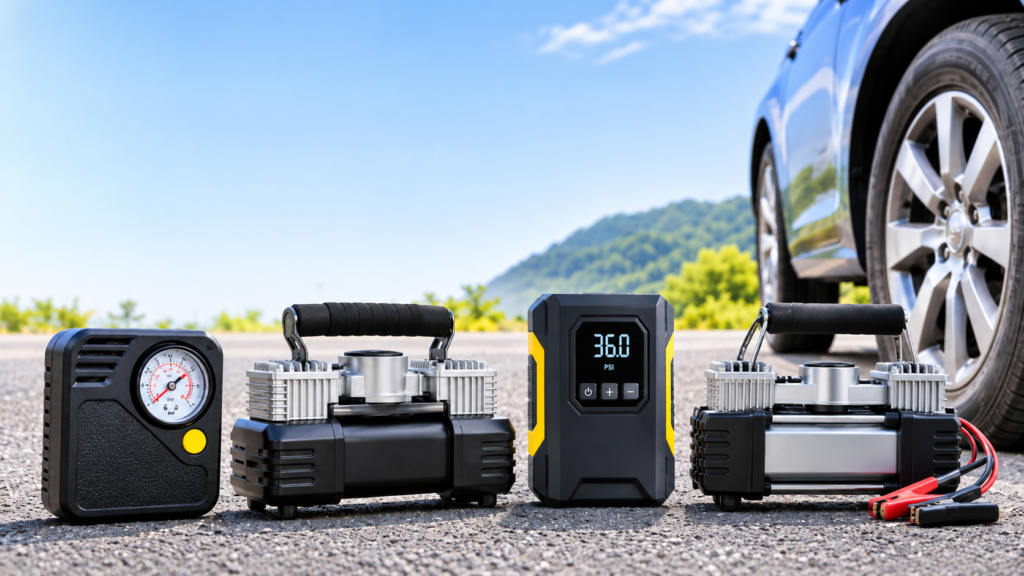
The comparison covers the Steel Mate PO3, Dera Double Cylinder, Goodyear Digital Inflator and SOGO Dual Cylinder. Each serves a different purpose, from occasional tyre pressure adjustments to more demanding inflation requirements.
Importantly, the recommendations are based on published specifications and practical suitability rather than independent performance testing.
Steel Mate PO3: Compact Option for Everyday Drivers
The Steel Mate PO3 is designed for motorists who prefer a small, easily stored tyre inflator.
It operates through a compatible 12-volt cigarette lighter socket and features a built-in analogue pressure gauge, one-button operation and an LED light for nighttime use.
The device also includes multiple nozzle attachments, making it suitable for applications beyond car tyres, including compatible motorcycle tyres and sports equipment.
For owners of smaller vehicles such as the Suzuki Alto, Wagon R and Honda City, its compact design may be particularly convenient.
However, its published listing does not specify maximum pressure, airflow or continuous operating time. Buyers should therefore confirm whether it meets their tyre requirements before purchasing.
Dera Double Cylinder: Higher Advertised Air Delivery
The Dera Double Cylinder is intended for motorists seeking greater air delivery capacity.
Its published specifications include a maximum pressure of 150 PSI, an advertised airflow of 80 litres per minute and a rated power consumption of 180 watts.
The compressor operates on a 12-volt electrical supply and has a current rating of 15 amperes.
It also comes with a carrying case for storage and transportation.
Among the compressors in the comparison with published airflow figures, the Dera has the highest advertised rating.
However, this does not establish that it will inflate every tyre faster than competing models because testing conditions and actual inflation times have not been provided.
Motorists must also verify that their vehicle’s electrical outlet can safely support the compressor’s current requirement.
Goodyear Digital Inflator: Tyre Inflation and Power Bank
The Goodyear Heavy Duty Digital Tire Inflator offers a different combination of features.
Unlike models with traditional needle-based pressure gauges, it provides a digital display that allows users to read tyre pressure numerically.
Its integrated power bank can also charge compatible electronic devices, potentially making it useful during road trips, camping and other outdoor activities.
The device features a compact design and multiple nozzle attachments for different inflation applications.
However, the product listing does not specify its maximum pressure, airflow, inflation power source or battery capacity.
Motorists considering this model should confirm those details with the seller, particularly if they intend to use it without a vehicle power connection.
SOGO Dual Cylinder: Designed for Battery Connection
The SOGO Dual Cylinder compressor is aimed at motorists requiring a more substantial inflation setup.
It features two 30mm cylinders, a maximum pressure rating of 150 PSI and an advertised airflow of 60 litres per minute.
Its three-metre air hose and 2.85-metre power cable provide additional reach, which may be useful when accessing tyres on larger vehicles.
The compressor weighs approximately 2.7 kilograms and operates on a 12–13.5-volt DC supply.
Unlike socket-powered alternatives, the SOGO must be connected directly to the vehicle’s battery terminals.
Its maximum current requirement is 23 amperes, making electrical compatibility an important consideration.
The product may appeal to owners of SUVs, pickups and other vehicles requiring greater hose reach, although its actual performance and continuous operating limits have not been independently established.
How the Four Tyre Inflators Compare
| Model | Key feature | Power source | Advertised airflow |
|---|---|---|---|
| Steel Mate PO3 | Compact, LED light | 12V car socket | Not specified |
| Dera Double Cylinder | Higher air delivery | 12V socket, 15A | 80 L/min |
| Goodyear Digital | Digital display, power bank | Not specified | Not specified |
| SOGO Dual Cylinder | Longer hose, dual cylinders | Direct battery connection | 60 L/min |
The comparison shows that no single compressor is automatically suitable for every motorist.
A compact model may be sufficient for occasional pressure adjustments, while drivers of larger vehicles may prioritise airflow, hose length and electrical capacity.
Does Higher Pressure Mean Faster Inflation?
One common misconception is that a compressor advertising 150 PSI will necessarily inflate tyres faster than a lower-rated model.
PSI measures air pressure, while airflow measures the volume of air delivered over time.
Both specifications matter, but they describe different aspects of performance.
Many passenger vehicles have recommended tyre pressures around 30 to 35 PSI, although the correct figure depends on the vehicle and loading conditions.
A compressor capable of producing 150 PSI should never be taken as an instruction to inflate tyres to that pressure.
Motorists should follow the tyre pressure recommended by their vehicle manufacturer, normally displayed in the owner’s manual or on a vehicle information label.
Check Electrical Compatibility Before Buying
Portable tyre inflators generally obtain power through a vehicle’s accessory socket, a direct battery connection or an internal rechargeable battery.
These arrangements are not interchangeable.
For example, the Dera compressor has a 15-ampere current rating, while the SOGO requires direct battery connection and can draw up to 23 amperes.
Connecting a compressor that exceeds a vehicle’s accessory socket capacity could blow a fuse or damage electrical components.
Buyers should check the vehicle handbook and the compressor’s instructions before use.
Motorcycle owners must also ensure that their chosen inflator has a suitable power source, as not all motorcycles provide compatible 12-volt accessory sockets.
Can Portable Compressors Inflate Completely Flat Tyres?
Some portable compressors can inflate a fully deflated tyre, provided the tyre is undamaged and remains properly seated on its wheel rim.
However, a compressor cannot repair a puncture, damaged sidewall or other structural tyre defect.
If a tyre cannot retain pressure, has been damaged or was driven while flat, motorists should seek professional assistance rather than relying solely on inflation.
Continuous operating time is another important consideration.
Some compressors require cooling breaks after running for a specified period. Repeatedly inflating several tyres without following the manufacturer’s instructions may cause overheating.
Which Tyre Inflator Is Best for Your Vehicle?
For everyday commuting and occasional tyre pressure adjustments, the Steel Mate PO3 offers a straightforward, compact option.
The Goodyear Digital Inflator may appeal to motorists who prefer numerical pressure readings and additional device-charging functionality.
Drivers seeking higher advertised airflow can consider the Dera Double Cylinder, provided their vehicle’s electrical system supports its requirements.
The SOGO Dual Cylinder offers direct battery operation and extended hose reach, making it another option worth evaluating for larger vehicles.
For commercial vehicles or frequent heavy-duty use, buyers should confirm continuous operating limits, supported tyre sizes and cooling requirements before purchasing.
The PakWheels comparison concludes that selecting an inflator should depend on the vehicle’s needs and the driver’s circumstances rather than pressure ratings or marketing descriptions alone.
A practical, compatible compressor kept in the vehicle may prove more useful during an unexpected tyre problem than a larger device that is difficult to operate or unsuitable for the available power supply.