
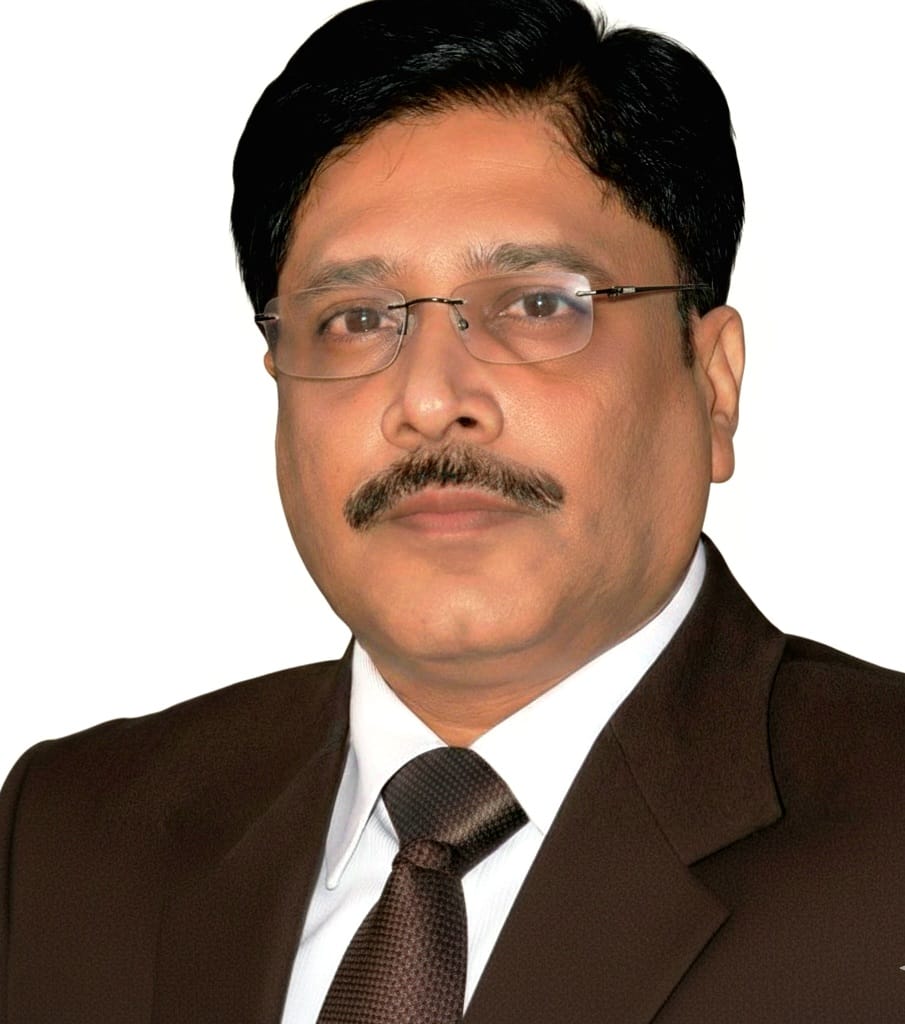
By Sheikh Abdul Rashid
In the history of literature, a dictionary is far more than a graveyard of words. It is a vital measure of a living language. When the sound system of a language falls into confusion, its literature also begins to weaken. Urdu, a major civilizational and linguistic identity of the subcontinent, has long faced problems of phonetic uncertainty and lexical neglect.
In this context, Professor Rana Muhammad Umar Khan’s work, Farhang-e-Talaffuz ka Tahqeeqi o Lisani Jaiza — A Research and Linguistic Analysis of the Dictionary of Pronunciation — emerges as an important contribution to Urdu lexicography. A dedicated researcher from the Department of Urdu at Government College Sahiwal, Professor Khan has undertaken a serious scholarly review of pronunciation, linguistic accuracy and dictionary-making in Urdu.
Compiling a dictionary is never a simple task. It requires patience, technical skill and a deep understanding of language. In world literature, the history of the Oxford English Dictionary recalls the extraordinary commitment of Sir James Murray, who devoted years to tracing the development of English words. Samuel Johnson’s dictionary also stands as a landmark effort to bring order and authority to the English language.
In a similar scholarly spirit, Professor Rana Muhammad Umar Khan has examined Shan-ul-Haq Haqqi’s Farhang-e-Talaffuz with care and precision. Haqqi laid important foundations for the scientific study of Urdu pronunciation, but time, editorial oversight and proofreading errors left certain issues unresolved. Professor Khan approaches these matters not merely as a reader, but as a linguistic researcher who studies the structure, sound and accuracy of the language.
In the Eastern literary tradition, lexicography has often been treated as a serious intellectual and cultural responsibility. Works such as Farhang-e-Anandraj and the contributions associated with Amir Khusrau were not limited to definitions alone. They helped preserve language within its cultural and historical continuity.
Professor Khan brings new scholarly energy to this tradition. His discussion of the pronunciation and diacritical structure of words such as Kunj, Abaaq, Imlaas, Picket and Takhbeer shows that pronunciation is not a minor technical concern. It is closely linked to the discipline, identity and continuity of a language. Accepting incorrect pronunciation as standard can gradually weaken the linguistic foundations of a literary culture.
One of the most valuable aspects of this work is its technical and scientific approach. Professor Khan’s attention to inconsistencies in dates, including references to historical figures such as Aristotle, highlights the challenges created when Urdu and English scripts interact without proper scholarly care. The conventional treatment of pre-Christian dates in some dictionaries has created errors that require careful correction.
This kind of research demands long hours of study and a sustained commitment to the details of language. Hafiz Safwan Muhammad’s observation that Professor Khan has “expended the oil of his eyes” is an appropriate recognition of the effort behind this work. The book represents not only criticism, but a serious attempt at reform.
At a broader level, this study reminds readers that Urdu lexicography must be held to high academic standards. If scholars remain uncertain about the pronunciation, structure and documentation of their own language, it becomes difficult for international researchers to rely on that scholarship with confidence.
Another strength of the book is its objective tone. Literary criticism can sometimes become personal, exaggerated or polemical. Professor Khan avoids these tendencies and places evidence at the centre of his work. His study is therefore useful not only for established scholars, but also for students who wish to understand the principles of linguistics and lexicography.
Language is one of the strongest markers of civilizational identity. When a language loses its discipline and accuracy, its historical memory also begins to suffer. Professor Rana Muhammad Umar Khan’s work is a reminder that languages require continuous care, correction and renewal. A dictionary should not be seen as a static list of words, but as a living scholarly record that must be revised and purified with time.
It is fair to say that this book will hold an important place in the study of Urdu linguistics. For researchers, teachers and students of Urdu, it offers both guidance and a model of serious academic inquiry. It shows that sincere scholarship, supported by evidence and intellectual discipline, can strengthen the foundations of an entire language.
Farhang-e-Talaffuz ka Tahqeeqi o Lisani Jaiza is not merely a review of a dictionary. It is a call to protect the intellectual identity of Urdu. Every student and lover of language should read it as a valuable addition to the study of Urdu pronunciation, lexicography and linguistic reform.