
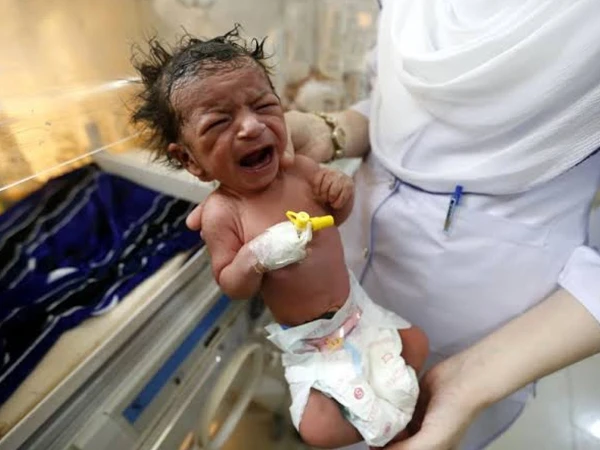
KARACHI: Government hospitals in Karachi and other parts of Sindh are facing a shortage of paediatric emergency beds as large numbers of sick infants and children seek treatment each day, according to hospital officials and child-health specialists.
The province’s paediatric emergency departments reportedly have between 450 and 500 beds across 10 government hospitals. Health professionals say the available capacity remains insufficient compared with the number of children requiring emergency care, forcing some families to visit multiple hospitals or seek expensive private treatment.
Sindh has a population of more than 55 million, while official health programmes serve a substantial number of infants and children requiring vaccination and medical services each year. The World Health Organization says it supports Sindh’s immunisation programme in reaching about 1.5 million children annually.
Hospitals Report More Patients Than Available Beds
Civil Hospital Karachi reportedly has around 30 paediatric emergency beds but receives more than 100 children daily.
The National Institute of Child Health is said to have 68 emergency beds while treating more than 400 children on some days. Lyari General Hospital has around 30 beds against more than 100 daily patients, while Sindh Government Hospital North Karachi reportedly operates 10 beds and receives between 30 and 40 children a day.
These figures indicate that patient arrivals can significantly exceed the number of beds available, particularly during seasonal outbreaks of respiratory and infectious diseases.
One Karachi resident said his seven-month-old daughter, who was experiencing breathing difficulties, could not be admitted to a paediatric emergency department because no bed was available. The family was advised to take the child to another hospital.
Rising Private Treatment Costs Add Pressure
Families unable to secure treatment at public hospitals often turn to private facilities, where consultation fees reportedly range from Rs2,000 to Rs5,000.
Private hospitals may also require advance payments of between Rs100,000 and Rs200,000 for intensive care admission, while daily paediatric ICU costs can reach Rs80,000 to Rs100,000, according to estimates cited by families and healthcare professionals.
Such expenses can place treatment beyond the reach of low- and middle-income households.
Specialists Highlight Vaccination and Infant Feeding Concerns
Paediatric specialists say incomplete vaccination, delayed treatment and inappropriate use of infant formula can increase the risk of illness among young children.
Research based on Sindh’s immunisation system has identified continued challenges in vaccination coverage and child survival. Available data places the province’s infant mortality rate at around 39 deaths per 1,000 live births and the under-five mortality rate at approximately 46 per 1,000.
Doctors also identify premature birth, infection, breathing difficulties, maternal malnutrition, inadequate prenatal care and unsafe home deliveries as major contributors to neonatal illness and death, particularly in rural areas.
Child Healthcare Network Expanding Across Sindh
The Sindh Institute of Child Health and Neonatology operates specialised neonatal and paediatric services and has expanded facilities in Karachi and other districts. The institute is a Sindh government initiative established to provide specialised healthcare for children and newborns.
Its network includes Children’s Hospital Korangi and facilities in Sukkur, Larkana and Shaheed Benazirabad. The Korangi hospital began operations as the institute’s first major project in August 2023.
Sindh increased the institute’s budget from Rs6.68 billion to Rs7.18 billion for 2026-27, while further neonatal and paediatric facilities are being developed.
Despite these expansions, health specialists say emergency capacity must grow in line with the province’s child population. They have called for more beds, trained staff, intensive care facilities and stronger referral systems to ensure critically ill children receive timely treatment.
Also Read : Study Links Microplastics in Blood to Higher Heart Attack Risk