
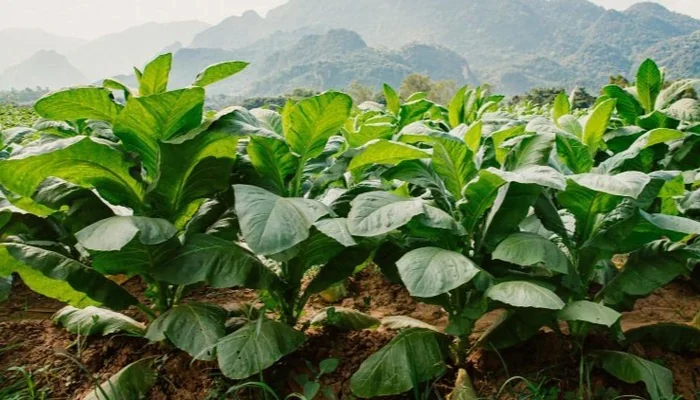
Scientists have successfully produced paclitaxel, an important cancer treatment drug, using tobacco plants in a breakthrough that could reduce future reliance on yew trees for its production.
Also known by its brand name Taxol, paclitaxel is widely used in cancer treatment. However, its complex chemical structure and limited natural availability have made production challenging.
According to research published in the journal Nature Chemical Biology on November 23, researchers from the University of Copenhagen, working with scientists from the University of Athens and the University of Fiume, developed the complete biological production process in a tobacco plant species called Nicotiana benthamiana.
Complete Drug Production Process Achieved
Led by Soterios Kampranis, the research team successfully established the full biosynthetic pathway for producing paclitaxel in tobacco plants.
Previous studies had proposed different partial biological production methods, but this research confirmed the complete process for the first time.
Scientists examined the different stages involved in drug production, enzyme activities and intermediate chemical compounds. They also isolated key compounds and used Nuclear Magnetic Resonance (NMR) to confirm their chemical structures.
Production Increased More Than 500 Times
Researchers discovered that different stages of paclitaxel production take place in separate parts of plant cells, including plastids, the endoplasmic reticulum, cytoplasm and peroxisomes.
The process also requires intermediate compounds to move between these cellular compartments.
One of the study’s major achievements was increasing paclitaxel production by more than 500 times through specific genetic and biological techniques.
The researchers obtained 61.05 micrograms of paclitaxel per gram of dried plant material, a yield close to the amount obtained from yew tree bark.
The findings could open new possibilities for producing an important cancer medicine through plant-based biological systems and potentially reduce dependence on traditional natural sources.