
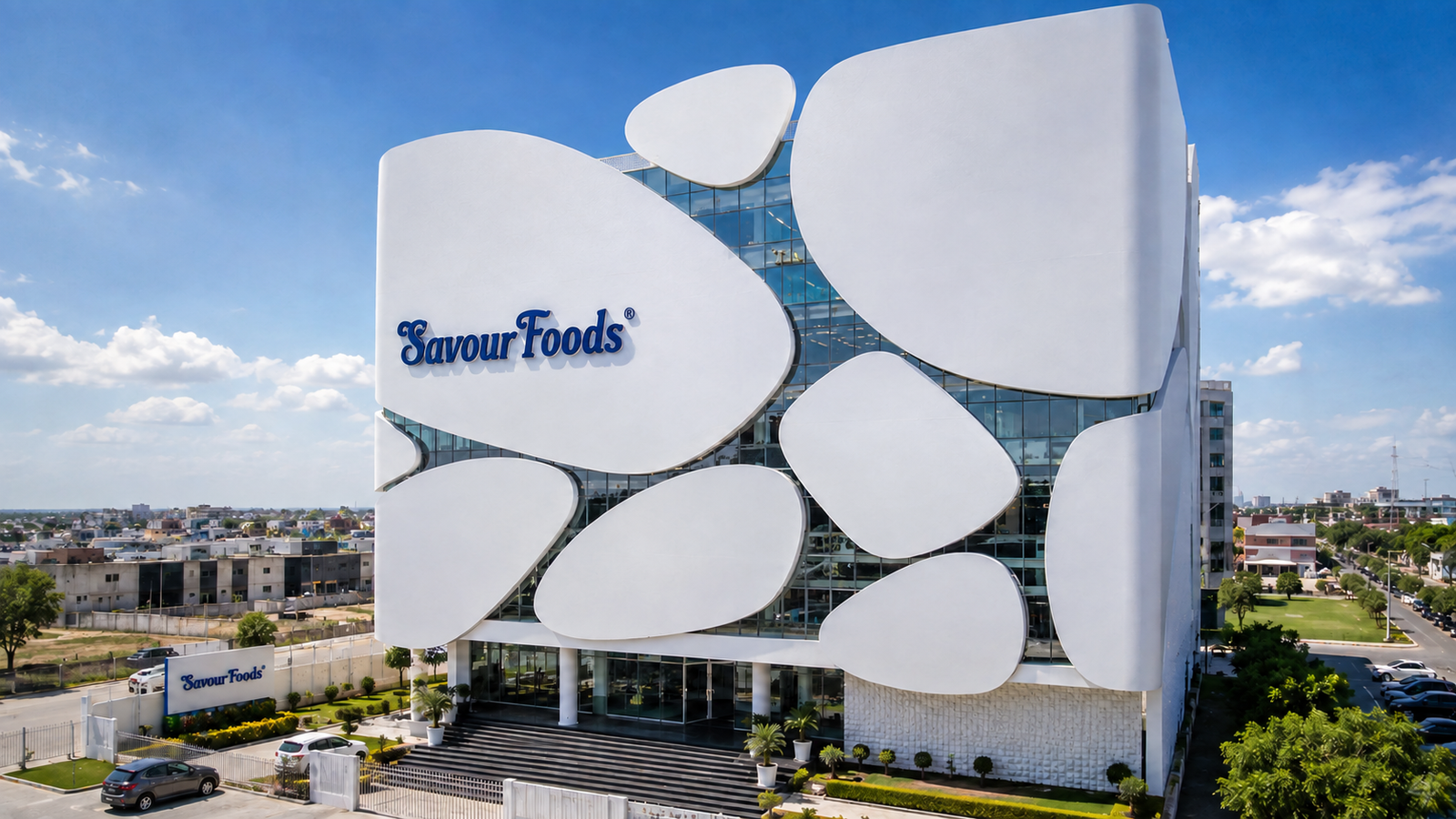
ISLAMABAD: Savour Foods is facing criticism from customers over rising prices, putting renewed attention on one of Pakistan’s most recognisable restaurant chains and the remarkable journey that took it from a small Rawalpindi eatery to a food brand with a presence across major cities.
For decades, Savour Foods has been closely associated with affordable pulao, generous portions and a simple menu. That reputation for value helped turn the business into a household name, particularly in Rawalpindi and Islamabad.
But recent complaints over higher prices have triggered a familiar question among longtime customers: Is Savour Foods still the affordable food brand they grew up with?
The debate has also revived interest in the business behind the famous pulao — how Savour Foods started, how it expanded and how a relatively simple food concept became one of Pakistan’s best-known homegrown restaurant brands.
How Savour Foods Started in Rawalpindi
The story dates back to 1988, when the first formal Savour Foods restaurant was established on Gordon College Road in Rawalpindi.
The business is associated with founder Haji Muhammad Naeem, who built the brand around a straightforward formula: filling meals, consistent taste and prices accessible to a broad range of customers.
From its modest beginnings, the restaurant gradually developed a loyal following. Its pulao, served with shami kebab and accompanying sides, became the product most closely associated with the Savour Foods name.
Rather than trying to compete as a luxury restaurant, the business focused on the mass market.
That approach proved successful.
Students, office workers and families could all find essentially the same uncomplicated meal at a price that historically remained within reach of a large customer base.
From Rawalpindi to Islamabad and Lahore
As demand grew, Savour Foods expanded beyond its original Rawalpindi location.
Branches were subsequently established at prominent locations across Rawalpindi and Islamabad, helping transform what had started as a local restaurant into a recognised regional chain.
The company later entered Lahore, taking the brand beyond its traditional Rawalpindi-Islamabad stronghold.
Its expansion demonstrated the strength of a relatively simple business model: build one highly recognisable core product, maintain consistency and serve large numbers of customers rather than relying primarily on premium pricing.
Over time, Savour Foods also moved beyond traditional dine-in operations by embracing takeaway, delivery and digital ordering.
The official Savour Foods app has recorded hundreds of thousands of downloads on Google Play, illustrating how the decades-old restaurant business has adapted to changing consumer habits.
Why Savour Foods Became So Popular
Savour Foods’ success cannot be explained by pulao alone.
Its competitive advantage was the combination of price, portion size, familiarity and consistency.
For many customers, particularly in the twin cities, Savour Foods became an everyday dining option rather than a restaurant reserved for special occasions.
That positioning helped the company build something particularly valuable in the restaurant business: habit.
Customers knew what they were ordering, how much food they would receive and approximately what they would pay.
The formula allowed the brand to appeal to consumers across different income groups while maintaining high customer volumes.
Why Savour Foods’ Prices Are Now Drawing Attention
That history also explains why price increases can generate an unusually strong reaction.
Customers generally expect prices at premium restaurants to change, but affordability forms a much larger part of Savour Foods’ identity.
When customers perceive a significant increase, therefore, the debate is not only about the additional rupees charged for a meal. It becomes a question about whether the brand’s traditional value proposition is changing.
Like Pakistan’s wider restaurant industry, food businesses have also faced higher costs for ingredients, utilities, wages, transport, rents and other operating expenses in recent years.
However, the central challenge for a value-focused restaurant is deciding how much of those costs can be passed on to customers without undermining the affordability that originally helped build the brand.
How Much Does Savour Foods Earn?
The size and popularity of Savour Foods naturally raise another question: how much money does the restaurant chain actually make?
Various online estimates have attributed substantial annual revenue to the company, including figures running into billions of rupees.
However, Savour Foods is a privately held business and verified audited financial statements establishing its annual revenue are not readily available publicly.
For this reason, claims that Savour Foods generated $80.6 million, or approximately Rs22.5 billion, in revenue in 2026 cannot be independently confirmed from authoritative public financial records and should not be presented as established fact.
The company’s sizeable operations, multiple branches, workforce and customer volumes clearly indicate a substantial restaurant business, but estimating exact annual sales without audited accounts would be speculative.
How Much Tax Does Savour Foods Pay?
There is similar public curiosity about Savour Foods’ tax contribution.
As a major restaurant business, the company is subject to applicable federal and provincial taxation. However, a verified public figure showing exactly how much Savour Foods pays in tax annually is not readily available.
Without official tax records or a disclosure from the company, assigning a specific annual tax amount would therefore be misleading.
This distinction is important because revenue, profit and tax payments are three different financial measures. A company’s sales cannot be used on their own to determine either its profits or its final tax liability.
What Is Known About Savour Foods Employees and Tips?
Claims have also circulated about salaries and the treatment of tips received by Savour Foods’ waiting staff.
Some accounts allege that workers receive relatively low basic salaries while customer tips are pooled or distributed among employees.
However, there is insufficient authoritative public documentation to establish the precise salary and tip policy applied across Savour Foods branches.
Without employment contracts, payroll records or an official company statement, such claims should be treated as unverified allegations rather than confirmed company policy.
From Three Tables to a Pakistani Food Success Story
Price criticism aside, the rise of Savour Foods remains a notable example of how a locally founded Pakistani food business can develop a powerful brand without relying on an elaborate menu or luxury positioning.
The company took a simple product, made it recognisable and built an identity around affordability, portion size and consistency.
More than three decades after its first restaurant opened in Rawalpindi, the Savour Foods name is familiar well beyond the city where its story began.
Its current challenge, however, may prove just as important as its earlier expansion.
As operating costs rise and consumer purchasing power remains under pressure, Savour Foods must balance the economics of running a large restaurant business against the expectation that helped make it famous in the first place: a filling meal at a price ordinary customers consider reasonable.
For a brand built around value, that balance may determine whether Savour Foods can preserve the customer loyalty that transformed a small Rawalpindi restaurant into one of Pakistan’s most recognisable food names.
Also Read: Pakistan Receives 258 Chinese Farm Machines as Agriculture Modernisation Drive Expands