
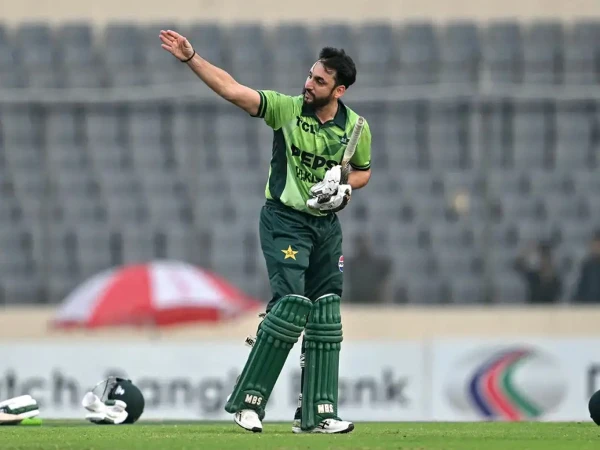
Salman Ali Agha has experienced a dramatic rise and fall in Pakistan cricket over a relatively short period, going from leading the national side to being dropped from both the T20I captaincy and the squad for the upcoming series against Sri Lanka.
Salman is regarded as Pakistan’s second-most successful captain in T20 cricket among players who have led the national team in more than 10 matches. He has captained Pakistan in 50 matches, the second-highest figure after Babar Azam, who has led the side in 85 games.
Under Salman’s captaincy, Pakistan won 31 of those 50 matches, lost 18 and had one match end without a result. His win-loss ratio of 1.720 ranks second behind former captain Sarfaraz Ahmed’s 3.620.
However, the past few months have been particularly challenging for Salman.
He captained Pakistan in the first Test against England in Leeds but was left out of the playing squad for the second Test at Lord’s. Before the third Test in Birmingham, he was sent back to Pakistan.
Salman then made an impressive return to domestic cricket, scoring a first-class triple century in the President’s Trophy. Despite that remarkable performance, his difficulties at the international level continued.
He has now been removed as Pakistan’s T20I captain and left out of the squad for the T20I series against Sri Lanka.
Pakistan’s overall performance under Salman at the 2026 T20 World Cup was relatively positive. The team won four of its seven matches, lost two and had one abandoned or ending without a result.
However, Salman’s individual performance during the tournament became a major concern. He scored only 65 runs in six innings at an average of 9.28, leading to growing speculation that he could lose the captaincy.
Those concerns have now resulted in a change of leadership, with Sahibzada Farhan appointed as Pakistan’s permanent T20I captain.
Farhan had been in outstanding form during the T20 World Cup, scoring 383 runs in six innings, including two centuries and two half-centuries. He also led Pakistan against India in the final of the Asian Games earlier this month.
Salman’s removal therefore comes despite his strong overall captaincy record, with his limited personal contribution with the bat and the team management’s decision to move toward a new leadership option appearing to be key factors behind the change.