
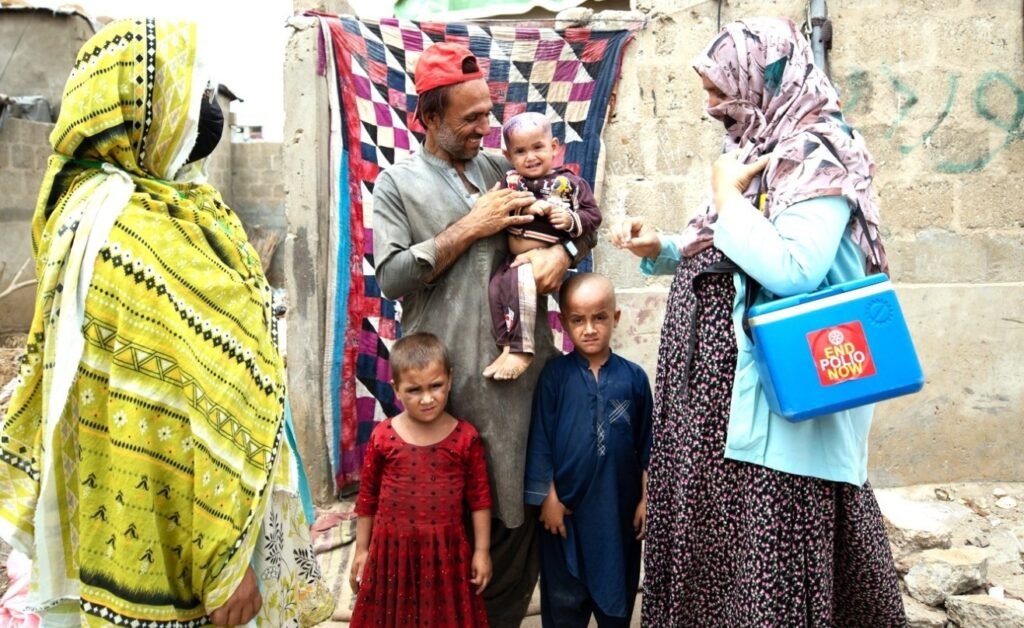
ISLAMABAD, October 23, 2026: Rotary International has reaffirmed its commitment to eliminating polio in Pakistan ahead of World Polio Day, highlighting progress in vaccination efforts while calling for sustained government support, community engagement and international cooperation to eradicate the disease.
Pakistan remains one of only two countries, alongside Afghanistan, where wild poliovirus transmission is still endemic. Despite significant progress, vaccine refusals and difficulties reaching every child continue to challenge eradication efforts.
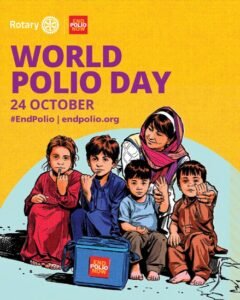
In a statement issued ahead of World Polio Day, observed annually on October 24, Rotary International said it would continue supporting Pakistan’s vaccination campaigns, frontline health workers and community-based initiatives to stop the spread of the virus.
Rotary highlights decades of progress against polio
Rotary International was among the founding partners of the Global Polio Eradication Initiative (GPEI), established in 1988 when polio affected approximately 350,000 children annually across 125 countries.
Since then, global polio cases have declined by more than 99.9 percent, with vaccination and eradication efforts preventing paralysis in more than 20 million people worldwide.
Rotary International President Olayinka Hakeem Babalola said the organisation had contributed more than $3 billion towards global polio eradication, including $1.3 million from Rotary members in Pakistan.
He said more than $500 million of Rotary’s funding, alongside extensive volunteer efforts, had been invested in protecting over 45 million children in Pakistan from the disease.
“We have contributed more than US$3 billion—including US$1.3 million from Rotary members in Pakistan—and invested more than half a billion of these funds and countless volunteer hours to protect over 45 million children in Pakistan from this paralyzing disease,” Babalola said.
Referring to Africa’s certification as free of wild poliovirus in 2020, he said the achievement demonstrated that eradication was possible through coordinated action and sustained political and financial commitment.
Babalola, who previously participated in polio eradication efforts in Nigeria, stressed that similar cooperation could help Pakistan achieve the same milestone.
Vaccine refusals remain a challenge
Rotary officials acknowledged that Pakistan had made considerable progress in reducing polio cases but warned that reaching every child remained essential to interrupting transmission.
Aziz Memon, Chair of Rotary’s Pakistan National PolioPlus Committee, said only a handful of cases had been reported in the country during 2026, reflecting continued progress in eradication efforts.
However, he emphasised that maintaining public trust and addressing community needs were equally important for sustaining vaccination coverage.
“Pakistan is demonstrating strong progress with only a handful of reported cases this year, and in order to safeguard our credibility and maintain trust, we are continuing to address other community needs,” Memon said.
He noted that vaccine refusals remained an obstacle and that Rotary members were working to strengthen awareness and community relationships to improve acceptance of immunisation.
Community projects support vaccination efforts
Alongside vaccination campaigns, Rotary has introduced several community-focused initiatives to strengthen public confidence and support frontline health workers.
According to Memon, the Pakistan National PolioPlus Committee has helped establish water filtration plants, community resource centres, support facilities for vaccination teams and permanent transit vaccination posts.
These initiatives aim to address local needs while ensuring that children travelling between different areas can receive polio vaccinations.
Permanent transit posts are particularly important for reaching mobile populations and children who may be missed during routine immunisation campaigns.
Rotary said its members would continue advocating for government support and raising awareness about the importance of protecting every child against polio.
Call for sustained global support
The organisation urged governments, donors and international partners to maintain polio eradication as a public health priority until transmission is completely interrupted.
World Polio Day was established by Rotary to honour Dr Jonas Salk, who developed the first safe and effective polio vaccine more than seven decades ago.
Rotary International, which brings together approximately 1.2 million members across more than 45,000 clubs worldwide, has supported disease prevention, clean water, education, maternal and child health, economic development and environmental protection.
The organisation said continued collaboration among governments, health authorities, communities and international partners would be critical to achieving a polio-free Pakistan and ultimately eradicating the disease worldwide.