
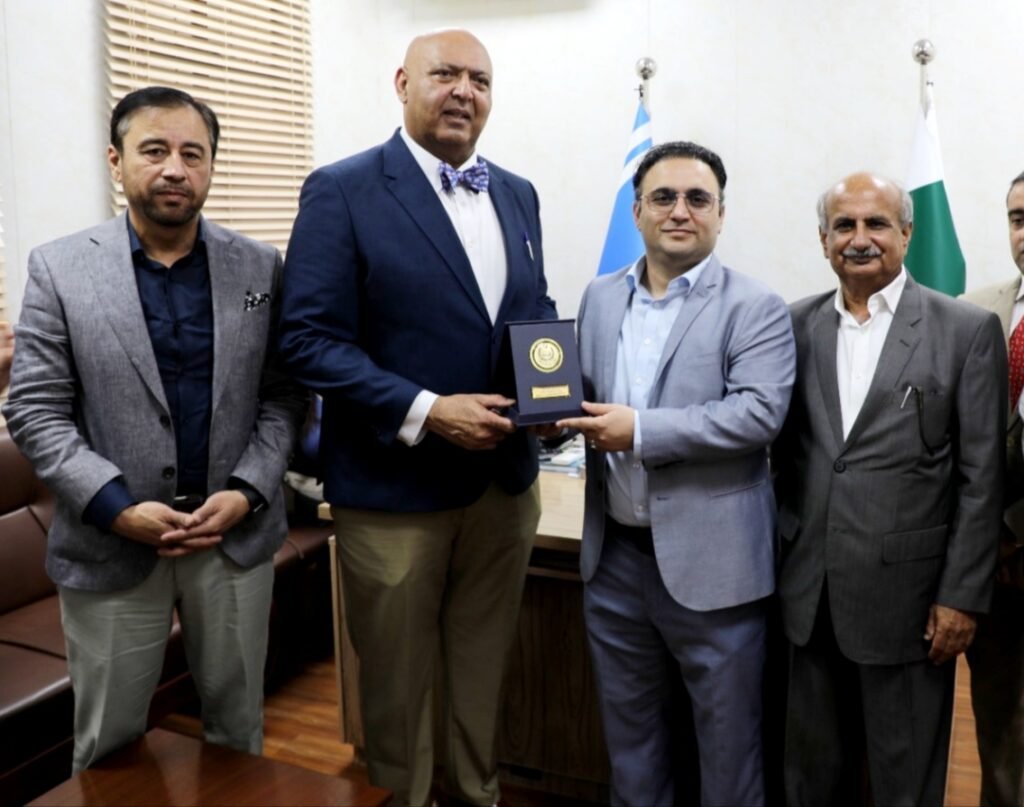
ISLAMABAD, Oct 13 — Quaid-i-Azam University hosted a seminar on Pakistan-U.S. relations, bringing together students and faculty for a discussion on the prospects, challenges and changing dynamics shaping ties between the two countries.
The seminar, titled “Pakistan–U.S. Relations: Prospects and Challenges,” was organised by the Area Study Centre for Africa, North and South America at QAU and featured Pakistani-American businessman, lawyer, strategist, civic leader and public affairs commentator Dr Sajid Tarar as the guest speaker.
Addressing the session, Dr Tarar discussed U.S. President Donald Trump’s Make America Great Again (MAGA) movement, outlining its political significance and the public expectations and electoral mandate that contributed to Trump’s return to power.
He also examined the domestic and foreign policy priorities associated with the movement and their wider implications for the United States.
Dr Tarar gave a historical overview of Pakistan-U.S. relations and stressed the importance of sustained diplomatic engagement and strategic cooperation between Islamabad and Washington.
He also praised Pakistan’s civil and military leadership for their role in strengthening bilateral ties.
Referring to the changing regional and international environment, Dr Tarar said Pakistan had effectively managed the diplomatic front following Operation Banyan-ul-Marsoos.
He also highlighted what he described as emerging diplomatic alignments, including the Makkah Joint Defence Pact, saying they reflected Pakistan’s growing diplomatic engagement and importance as a regional player.
Addressing students, Dr Tarar urged young people to take pride in their Pakistani identity, remain committed to the country and contribute positively through education, hard work and responsible citizenship.
Earlier, Dr Raja Qaiser Ahmed, Director of the Area Study Centre for Africa, North and South America, welcomed the guest speaker and outlined the Centre’s academic and research work.
He highlighted its contribution to the study of international relations, particularly the political, economic and strategic dynamics of Africa, North America and South America, with a special focus on the United States.
Dr Raja Qaiser also briefed participants on academic reforms at the Centre, including the launch of a new BS programme in Governance and Policy aimed at expanding academic opportunities and strengthening students’ understanding of governance, public policy and international affairs.
The session was moderated by Dr Munawar Hussain and attended by a large number of students and faculty members.