
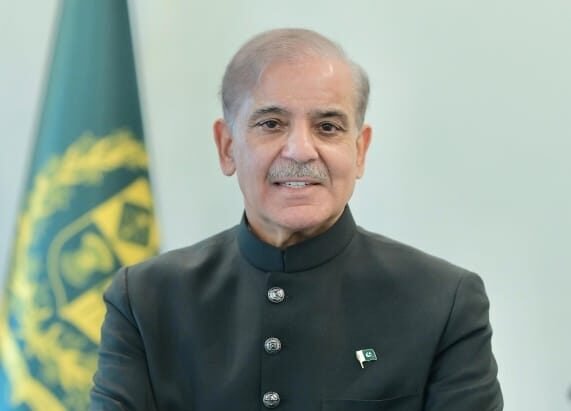
PESHAWAR, October 25, 2026: Prime Minister Shehbaz Sharif’s Rs160 billion development package for Khyber Pakhtunkhwa has drawn support from tribal elders and political representatives, who say the initiative could help revive economic activity, generate employment and improve public services in districts affected by terrorism and years of underdevelopment.
The package, announced during the prime minister’s interaction with representatives of the Area Development Council for 12 districts placed under emergency measures, has raised expectations of renewed investment in infrastructure, education, healthcare and livelihood opportunities, particularly in the merged tribal districts.
Former Khyber Pakhtunkhwa Governor and chairman of the 48-member Area Development Council, Haji Shaukat Ullah, described the initiative as a significant opportunity to address longstanding development challenges.
He expressed hope that federal investment, accompanied by improved security and administrative arrangements, would encourage economic activity and help restore normal life in areas affected by militancy.
Shaukat Ullah said tribal communities had suffered heavily from terrorism, which disrupted education, healthcare, businesses and everyday economic activities. He also emphasized the sacrifices made by tribal residents in the fight against militancy.
Highlighting the economic potential of the merged districts, he identified minerals, olive cultivation, livestock and agriculture as sectors capable of creating employment and supporting sustainable livelihoods.
He also welcomed the federal government’s commitment to addressing wheat flour shortages and ensuring the availability of essential commodities at affordable prices, calling for action against hoarding and profiteering.
Unemployment and education challenges
The development package comes against a backdrop of significant economic and social challenges in Khyber Pakhtunkhwa.
According to Labour Force Survey 2024–25 figures cited in the report, the province recorded an unemployment rate of 9.6 percent, compared with 7.3 percent in Punjab, 5.5 percent in Balochistan and 5.1 percent in Sindh.
The figures highlight the need for employment-generating investment, particularly for young people entering the labour market.
Development experts cited in the report emphasized that investment in education, infrastructure, tourism, agriculture, minerals, information technology and small and medium enterprises could help create jobs and strengthen the provincial economy.
Education remains another major challenge, with large numbers of children, particularly girls in remote and economically disadvantaged districts, remaining outside the formal education system.
Poverty, inadequate school infrastructure, difficult terrain and social barriers continue to restrict educational access in several areas.
Experts called for greater emphasis on school development, vocational training, girls’ education and market-oriented skills to ensure that young people benefit from the proposed development initiatives.
Security and governance remain major concerns
Former MNA Shahjee Gul Afridi welcomed the development package but stressed that restoring peace was essential for its success.
He said the eight merged tribal districts, along with Dera Ismail Khan, Bannu, Lakki Marwat and Tank, had experienced serious security challenges that disrupted economic activity and public services.
Afridi criticized the Pakistan Tehreek-e-Insaf leadership over its handling of security and governance, alleging that insufficient attention had been given to strengthening law enforcement and counterterrorism institutions.
He welcomed the prime minister’s directions to improve the effectiveness of the Counter Terrorism Department and accelerate Safe City projects across the province.
Afridi also called for empowering the Tribal Council to participate more effectively in development planning and improving access to justice in the merged districts.
Financial difficulties affect public universities
The province’s higher education sector is also facing financial pressures.
According to a fiscal analysis prepared by the Governor’s Secretariat for 2021–2024, public universities recorded combined surpluses of Rs4.113 billion in 2021 and Rs3.938 billion in 2022, while the projected surplus declined to Rs545 million in 2023–24.
The analysis attributed the decline largely to over-recruitment, inflation and weaknesses in financial management.
Federal grants to KP’s public universities reached Rs10.954 billion in 2023, supporting infrastructure, research, faculty development and student assistance.
The report highlighted the need for improved financial management, institutional reforms and sustained investment to strengthen higher education.
Project completion and transparency emphasized
Incomplete development schemes have also raised concerns about implementation and oversight.
The Arbab Niaz International Cricket Stadium in Peshawar remains unfinished despite substantial expenditure and rising construction costs, while work on the Kalam Sports Stadium in Swat has yet to begin, according to the report.
Political representatives and civil society members stressed that the success of the new development package would depend on transparent spending, effective monitoring and timely project completion.
Former provincial minister Wajid Ali Khan welcomed the federal initiative and expressed hope that it would improve economic conditions across Khyber Pakhtunkhwa.
He also alleged financial irregularities and administrative failures during previous provincial administrations, calling for stronger accountability mechanisms in the utilization of development funds.
The allegations included reported irregularities in drinking-water projects and the Kohistan corruption case.
Focus on sustainable development
Stakeholders emphasized that development spending should translate into practical improvements in roads, schools, hospitals, employment opportunities, electricity and drinking water.
They also identified the province’s mineral resources, tourism destinations, agricultural potential and young workforce as important assets for long-term economic development.
For residents of the merged districts, the proposed investment carries particular significance following years of insecurity, economic disruption and limited access to essential services.
While tribal elders and political representatives have welcomed the Rs160 billion allocation, its impact will ultimately depend on the restoration of peace, transparent implementation and the completion of projects that directly improve people’s lives.