
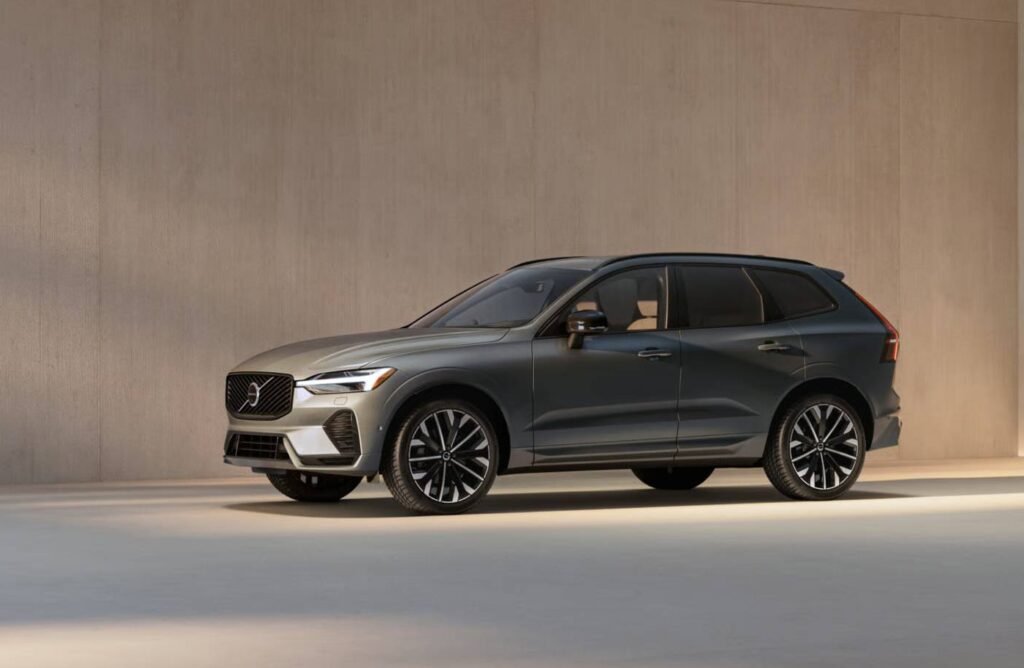
ISLAMABAD: Plug-in hybrid electric vehicles (PHEVs) are increasingly challenging fully electric cars as manufacturers introduce larger batteries capable of covering longer distances without petrol, with Volvo’s latest XC60 claiming an electric-only range of up to 200 kilometres.
The development could offer Pakistani motorists an alternative to fully electric vehicles, particularly those seeking lower fuel consumption without depending entirely on charging infrastructure.
According to an October 21 report by PakWheels, newer plug-in hybrids available in Pakistan are already delivering more than 100 kilometres of electric driving per charge, based on experiences shared by vehicle owners.
Volvo XC60 claims 200km electric driving range
Volvo announced upgraded plug-in hybrid versions of its XC60 and XC90 SUVs on September 15, 2026.
The company claims the XC60 can travel up to 200 kilometres on electricity alone under provisional WLTP testing figures, while the XC90 offers up to 160 kilometres.
The improvement comes from larger batteries and more powerful electric motors.
Unlike conventional hybrids, plug-in hybrids can recharge their batteries through an external electricity supply while retaining a petrol engine for longer journeys.
For drivers covering 30 to 40 kilometres daily, a vehicle capable of achieving a genuine 200km electric range could potentially handle several days of commuting between charges.
Plug-in hybrid cars in Pakistan cross 100km electric range
Owner experiences reported by PakWheels suggest that several PHEVs available in Pakistan can already cover substantial distances without using petrol.
| Vehicle | Battery capacity | Reported electric driving |
|---|---|---|
| MG HS PHEV | 24.7 kWh | 120–132 km per charge |
| Chery Tiggo 7 PHEV | 18.3 kWh | More than 100 km per charge |
| Jaecoo J7 PHEV | 18.3 kWh | 52% of recorded distance in electric-only mode |
Figures are based on individual owner experiences reported between July and September 2026, not independent controlled range tests.
An MG HS PHEV owner in Lahore reported achieving between 120 and 132 kilometres of electric driving with the air conditioning operating.
The vehicle has a manufacturer-claimed NEDC electric range of 140 kilometres. Its owner reported that charging with a portable 3kW charger took approximately 11 to 12 hours, compared with around three hours and 15 minutes using a 7kW wallbox.
A Chery Tiggo 7 PHEV owner reported travelling more than 100 kilometres on electricity per charge after driving approximately 3,000 kilometres.
Meanwhile, a Jaecoo J7 PHEV owner in Lahore recorded 6,487 kilometres in electric-only mode out of 12,500 kilometres of total driving, representing approximately 52 percent of the distance covered.
These experiences indicate that regular charging can significantly reduce petrol consumption, although actual performance varies with driving conditions and usage.
Why carmakers are increasing hybrid battery sizes
Manufacturers are installing larger batteries in plug-in hybrids to extend electric driving range and improve efficiency.
Volkswagen’s upgraded Tiguan eHybrid, for example, increased its claimed electric range from approximately 55 to 119 kilometres, while Audi’s updated A3 e-hybrid claims up to 143 kilometres.
Chinese manufacturers, including BYD, Chery and Great Wall Motor, are also investing in electric-focused hybrid technologies.
Research published by Transport & Environment in October 2026 found that average battery capacity among the upgraded plug-in hybrids it examined increased from 14 kWh to 24 kWh.
The study reported that this represented an increase of approximately 68 percent, while average vehicle prices in the analysed group rose by around two percent.
Real-world hybrid emissions raise concerns
Despite improvements in battery technology, research suggests that plug-in hybrids do not always deliver the fuel savings and emissions reductions indicated by official tests.
A September 2026 analysis by Transport & Environment examined European Environment Agency data covering approximately 220,000 plug-in hybrids registered in 2024.
It found that their average real-world carbon dioxide emissions were nearly six times higher than official test figures.
| Vehicle category | Average CO₂ emissions |
|---|---|
| Plug-in hybrids — official tests | 24 g/km |
| Plug-in hybrids — real-world driving | 145 g/km |
| Combustion-engine comparison vehicles | 169 g/km |
The findings suggest that plug-in hybrids deliver greater environmental benefits when owners regularly recharge their batteries and complete more journeys using electricity.
The European figures do not necessarily represent driving conditions or charging habits in Pakistan.
How much can Pakistani drivers save with a PHEV?
For motorists in Pakistan, electricity and petrol costs are important considerations when choosing between plug-in hybrids and conventional vehicles.
An illustrative calculation based on 800 kilometres of monthly commuting, electricity priced at Rs50 per kWh and petrol priced at Rs382.02 per litre on October 21, 2026, shows the potential difference.
Illustrative monthly energy costs — 800 km
PHEV on electricity
Rs8,889
Petrol SUV
Rs20,374
Potential monthly saving: Rs11,485
Assumes 20 kWh/100 km electric consumption, 10% charging losses and 15 km/litre petrol efficiency. Excludes vehicle purchase, maintenance and charger costs.
Actual savings depend on electricity tariffs, fuel prices, driving habits and the frequency of battery charging.
Are full electric vehicles still necessary in Pakistan?
The growing electric range of plug-in hybrids raises questions about whether buyers still need fully electric vehicles.
For motorists with reliable home charging and predictable daily travel, a full EV may remain attractive because it eliminates the petrol engine and its associated maintenance requirements.
However, plug-in hybrids offer additional flexibility for drivers who frequently travel between cities or visit areas where charging facilities remain limited.
Pakistan’s public charging network is expanding, but availability differs between cities and motorway routes.
Drivers without reliable home charging may also find conventional hybrid vehicles more practical.
As battery technology improves, the decision between a plug-in hybrid and a full EV increasingly depends on individual driving patterns, charging access, vehicle costs and the need for petrol backup.