
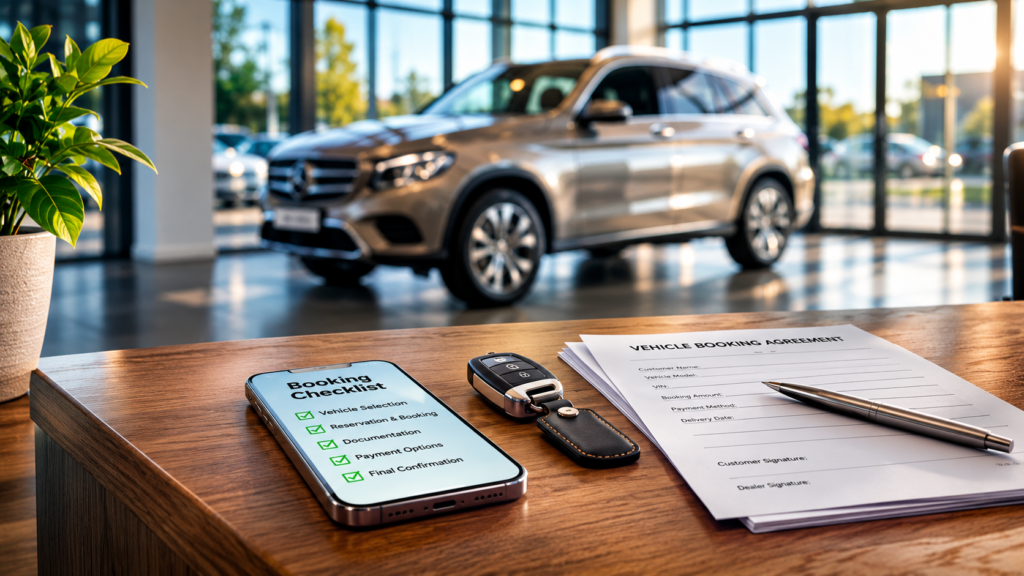
ISLAMABAD, November 22, 2026: Car buyers in Pakistan are being advised to verify dealership credentials, payment details and booking documents before transferring money for a new vehicle, as unauthorised sales channels and fraudulent payment arrangements pose financial risks.
A showroom’s branding, social media presence or payment receipt does not necessarily establish that a vehicle booking is genuine. Buyers need confirmation from the manufacturer to ensure their payments and orders have been officially recorded.
A consumer advisory published by PakWheels highlighted these precautions following a warning issued by Jetour Pakistan in July 2026 against unauthorised dealerships, third-party bookings and payments into unofficial bank accounts.
The guidance identifies several checks that prospective buyers should complete before committing funds.
Verify the dealership’s authorisation
Customers should confirm that a showroom appears on the vehicle manufacturer’s official dealership network and is authorised to accept new car bookings.
A business listed on Google Maps or Facebook may not necessarily be an approved sales outlet. Some locations may provide only vehicle servicing or spare parts.
Buyers approached through WhatsApp or social media should independently contact the manufacturer’s official customer service department to verify the dealership.
Confirm payment details before transferring money
Payments should be made only through methods and accounts authorised by the vehicle manufacturer.
Customers should verify the beneficiary’s name, bank account details and payment instructions before transferring funds or issuing a pay order.
Toyota Indus, for example, requires payment instruments to be issued in favour of Indus Motor Company Limited under its official booking procedure.
Buyers should avoid transferring money into personal bank accounts, mobile wallets or Raast IDs unless the manufacturer independently confirms that the particular arrangement is authorised.
Banking passwords, PINs and one-time passwords should never be shared with sales representatives or other individuals.
Examine the booking agreement
The Provisional Booking Order (PBO), or its equivalent, should clearly specify the buyer’s name, vehicle model, variant, colour, booking amount and remaining payment obligations.
Customers should also examine the expected delivery period, cancellation terms, refund conditions and provisions governing possible price revisions.
Any promises concerning priority delivery, complimentary accessories or fixed prices should be documented through an authorised channel.
Verbal assurances may be difficult to establish if disagreements arise later.
Obtain official booking confirmation
A dealership receipt alone does not confirm that the manufacturer has accepted a vehicle booking.
Customers should verify their order through the company’s official booking or customer support system.
Honda provides an online delivery-status facility, Toyota offers invoicing-status information, and MG operates an order-tracking service.
Where online verification is unavailable, buyers should contact the manufacturer’s customer relations department and request confirmation of their booking details.
Copies of booking agreements, receipts and official correspondence should be retained securely.
Understand the risks of immediate-delivery premiums
Some vehicles are sold through intermediaries who charge an additional amount, commonly known as own money, for immediate delivery.
Although such transactions are not automatically fraudulent, buyers should establish whether the vehicle is being purchased directly from the manufacturer or resold by an existing owner.
The original invoice, chassis number, ownership documents and registration requirements should be checked before payment.
Customers should also determine whether additional taxes or transfer charges will apply.
Check price revision and delivery conditions
Vehicle prices may change between booking and delivery, depending on the manufacturer’s terms.
Buyers should establish whether their agreement includes price protection or whether the final amount will be calculated closer to delivery.
Even full advance payment does not automatically guarantee a fixed price unless the applicable agreement explicitly provides that protection.
If a manufacturer announces a price increase, customers should request the official notification and review the relevant booking conditions before making additional payments.
For delayed deliveries, buyers should seek written updates and clarify cancellation or refund procedures.
Know where to report suspected fraud
Customers who suspect they have transferred money into a fraudulent account should immediately contact their bank through its official helpline.
They should preserve transaction records, booking documents, advertisements and communications that may support a complaint.
Disputes involving authorised dealerships should initially be raised with the manufacturer’s customer relations department.
Suspected online booking scams may be reported to the National Cyber Crime Investigation Agency (NCCIA), while banking complaints can be pursued through the bank’s complaint mechanism and relevant regulatory channels.
Consumer protection authorities and law-enforcement agencies may also handle complaints depending on the nature and location of the dispute.
The advisory emphasises that buyers should independently verify the dealership, payment recipient, booking agreement and manufacturer confirmation before transferring substantial amounts.