
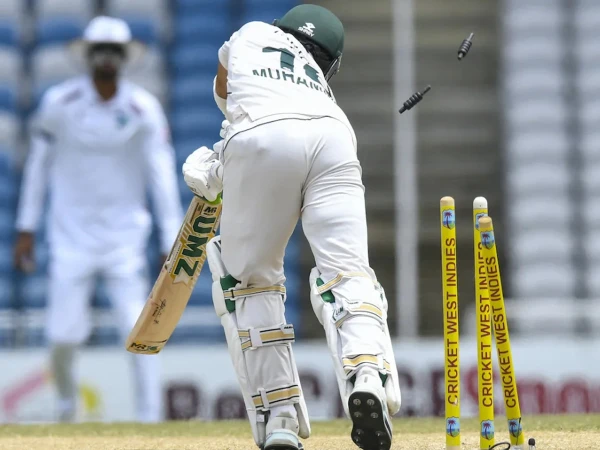
Pakistan’s defeat to the West Indies in the first Test has once again exposed the national side’s persistent struggles with the bat in the second innings, raising fresh concerns over its future in Test cricket.
Chasing 211 for victory at the Brian Lara Cricket Academy, Pakistan were bowled out for 120 and suffered a 90-run defeat. The result also extended their losing run to eight consecutive away Tests and pushed them to the bottom of the World Test Championship standings.
Opener Imam-ul-Haq, who scored a composed 63 in Pakistan’s first innings, failed to repeat that performance when the team batted again. He was dismissed after attempting an unnecessary shot against a short-of-a-length delivery, adding to concerns about Pakistan’s decision-making under pressure.
The contrast in Imam’s recent performances is particularly striking. Over the past two years, he has averaged 54.50 in the first innings of Tests but only 3.50 in the second innings, highlighting a sharp decline when batting conditions and match pressure become more demanding.
Similar drops have reportedly been recorded in the second-innings performances of Mohammad Rizwan and Saud Shakeel, suggesting that the problem extends beyond one batter and affects the wider middle order.
Pakistan’s overall numbers underline the seriousness of the issue. During the same two-year period, the team has recorded a second-innings batting average of only 19.90, the lowest among teams competing in the World Test Championship. ESPNcricinfo described Pakistan as suffering from a recurring “second-innings syndrome.”
The collapse against the West Indies followed a familiar pattern. Pakistan remained competitive during the earlier stages of the match but lost control once required to bat under fourth-innings pressure.
The team has lost 10 of its last 14 Tests, including eight consecutive matches away from home, reflecting deeper concerns over technique, temperament and the ability to respond in difficult match situations.
Pakistan’s coaching staff has acknowledged that second-innings batting remains one of the team’s biggest weaknesses. The batters have reportedly been engaged in repeated discussions over shot selection and game awareness, but sudden collapses continue to undermine otherwise competitive performances.
The failure is not solely technical. Batters often appear to abandon their initial plans when the ball begins to move, the pitch deteriorates or the required target creates additional pressure.
For Pakistan to become competitive abroad, the batting unit will need to show greater patience, improve its shot selection and develop clearer plans for the later stages of Test matches.
Unless the national side addresses its recurring second-innings failures, victories in overseas conditions are likely to remain difficult, while Pakistan’s prospects in the current World Test Championship cycle could deteriorate further.
Read more : FIFA Takes Action Against Argentina Over Political Banner and Final Brawl