
KARACHI, Oct 18: Pakistan’s cotton and textile industry remains under severe financial pressure, with nearly 50 percent of power looms, around 500 ginning factories and more than 150 textile mills lying idle amid rising production costs, falling competitiveness and concerns over the misuse of import concessions.
Industry representatives have warned that unfavourable weather could push domestic cotton production below initial estimates, adding to the difficulties facing manufacturers already struggling with expensive inputs and competition from imported yarn and fabric.
Cotton Ginners Forum Chairman Ehsanul Haq said the misuse of the Export Facilitation Scheme (EFS), including alleged under-invoicing of imported textile materials from China and other countries, had contributed to the industry’s prolonged financial crisis.
He alleged that substantial quantities of imported yarn and fabric intended for value-added export production were instead being sold in the domestic market, undermining local manufacturers.
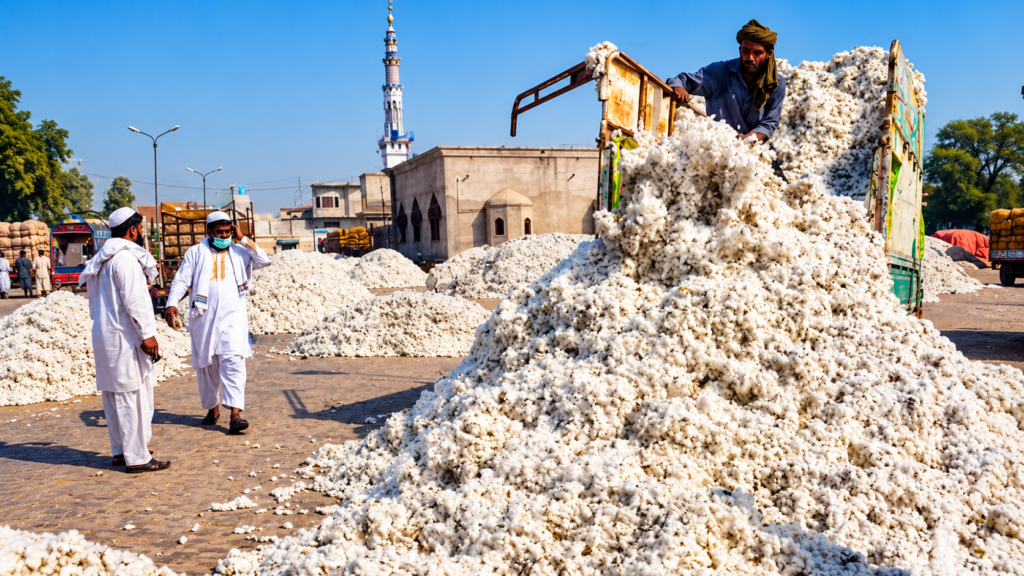
According to Pakistan Cotton Ginners Association (PCGA) figures, cotton arrivals at ginning factories reached 4.081 million bales by October 15, representing an 8 percent increase over the corresponding period last year.
Punjab accounted for 1.638 million bales, up 8 percent, while Sindh recorded 2.443 million bales, an increase of 7 percent.
During the same period, textile mills purchased 3.452 million bales from ginning factories, while exporters bought 97,000 bales. Unsold cotton stocks stood at 532,000 bales.
In Punjab, Bahawalnagar recorded the highest cotton arrivals at 419,000 bales, followed by Bahawalpur with 295,000 and Dera Ghazi Khan with 236,000 bales. Sanghar led Sindh with 419,000 bales.
Ehsanul Haq said sharply rising production costs and the alleged misuse of EFS facilities had severely affected domestic spinning, weaving and cotton-processing businesses.
Citing the Power Looms Association, he said an estimated 40 million to 50 million metres of fabric had been imported from China alone under the scheme.
Figures attributed to the All Pakistan Textile Mills Association (APTMA) showed man-made yarn imports reaching 12,773 metric tonnes, while imports of man-made fabric increased from 660 to 8,628 metric tonnes.
He questioned why the sharp increase in imports had not translated into a comparable rise in textile exports, alleging that imported materials were being diverted to domestic markets instead of being used to manufacture export products.
He said domestic sales of such products were subject to 18 percent sales tax, creating further disparities between locally manufactured and imported materials.
The Cotton Ginners Forum chairman also recalled that earlier concessions on cotton yarn imports from India had adversely affected Pakistan’s domestic industry.
He said the cumulative impact of import policies and high operating costs had left approximately 500 cotton ginning factories, more than 150 textile mills and nearly half of the country’s power looms inactive, with further closures feared.
According to him, APTMA has demanded restrictions on imports of man-made yarn and fabric under the Export Facilitation Scheme to protect domestic manufacturers and help the industry recover.
Ehsanul Haq also highlighted a significant discrepancy in Punjab’s cotton production figures. While PCGA data showed 1.638 million bales by October 15, the Punjab Crop Reporting Service reported production of 2.983 million bales.
Referring to regional developments, he said Bangladesh was taking steps to expand cotton cultivation in response to growing demand from its textile industry.
Bangladesh plans to increase cotton production from 224,000 bales to 1.9 million bales by 2050, with organised cultivation proposed in 53 of the country’s 64 districts.
Industry representatives maintain that addressing production costs, import irregularities and weaknesses in trade policies is essential to reviving Pakistan’s struggling cotton and textile sector.