
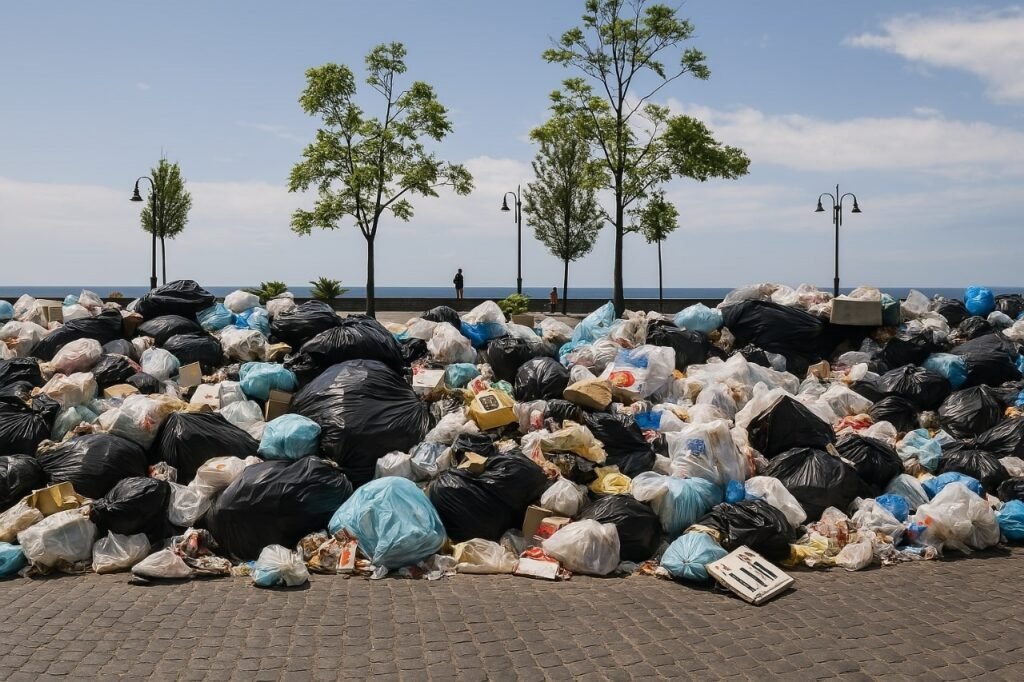
ISLAMABAD, May 11 (ABC): Pakistan plans to transition toward a zero-waste economy by 2050 under a long-term strategy focused on recycling, waste reduction, and resource efficiency. The policy framework also includes plans to install up to 300 megawatts of waste-to-energy capacity by 2040 and expand wastewater treatment and recycling systems in major cities.
According to a policy document available with Wealth Pakistan, the strategy aims to shift the country away from the traditional “take-make-dispose” economic model toward a circular economy that reuses materials and minimizes waste.
What is a zero-waste economy?
A zero-waste economy is a system designed to reduce waste generation by reusing, recycling, repairing, and recovering materials instead of discarding them after use.
The document describes Pakistan’s proposed transition as an effort to maximize resource efficiency and convert waste into new economic inputs. This includes improving waste management systems, promoting recycling industries, and developing technologies that recover energy and materials from discarded products.
The strategy also sets a target for all major cities to have functional wastewater treatment and recycling plants by 2030.
What waste-to-energy targets has Pakistan set?
Pakistan plans to install between 50 and 100 megawatts of waste-to-energy capacity by 2030, including at least one major waste-to-energy plant in every major city.
By 2040, the target rises to as much as 300 megawatts.
Waste-to-energy projects convert municipal or organic waste into usable energy, such as electricity, heat, or fuel. Policymakers view the technology as a way to reduce landfill waste while supporting energy production.
Why is Pakistan focusing on a circular economy?
The policy document states that rapid urbanization, industrial growth, and increasing environmental pressures have made existing consumption and waste patterns difficult to sustain.
Officials say the current economic model places pressure on natural resources and contributes to pollution and waste accumulation.
The proposed circular economy approach is intended to reduce waste, extend the lifespan of materials, and improve the use of water, energy, and industrial resources across sectors.
What recycling targets are included in the plan?
Pakistan plans to establish its first industrial-scale lithium-ion battery recycling facility by 2027.
The strategy also sets phased targets for recovering and recycling end-of-life electric vehicle batteries and electronic waste. The recovery target is at least 30% by 2030, increasing to 75% by 2040 and approaching full recovery by 2050.
These measures are linked to the expected growth of electric vehicles, battery storage systems, and electronic consumption in coming decades.
What projects are being proposed?
The document outlines several projects intended to support the development of a circular economy.
One initiative led by Biowaste Energy Ventures Ltd. aims to convert organic waste into biomethane, pellets, and compost. The project is expected to reduce methane emissions and help replace imported re-gasified liquefied natural gas (RLNG).
According to the document, the project involves an estimated investment of $8 million and could avoid up to 491,000 tonnes of carbon dioxide equivalent emissions annually. It is also expected to generate financial savings for farmers through alternative energy and waste management solutions.
Another proposed initiative focuses on textile waste recycling. The project aims to process 270,000 tonnes of textile waste each year into products such as rugs and cushions, most of which are intended for export markets.
The estimated investment for the textile recycling initiative is around $20 million, with support expected from government institutions and development partners.
What happens next?
The document describes the proposed projects as part of broader efforts to encourage green investment and expand sustainable industrial activity in Pakistan.
Implementation of the strategy will depend on infrastructure development, regulatory frameworks, financing arrangements, and coordination between public and private sector stakeholders.
Future progress is also expected to rely on improvements in waste collection systems, recycling capacity, and environmental management policies.