
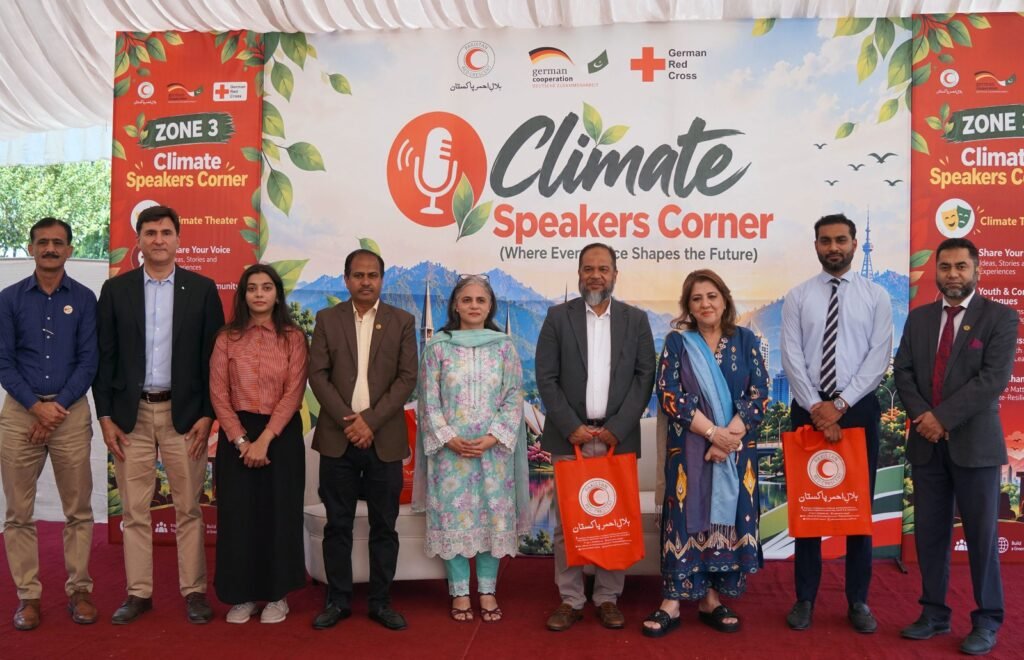
ISLAMABAD: The Pakistan Red Crescent Society (PRCS) has called for climate-affected communities to have a stronger voice in international climate negotiations, urging greater investment in disaster preparedness, adaptation and local resilience ahead of the 31st United Nations Climate Change Conference (COP31).
The appeal came during a pre-COP31 event organised by PRCS with support from the German Red Cross at its National Headquarters in Islamabad. Diplomats, humanitarian partners, climate experts, academics, young people and volunteers gathered to discuss how the experiences of vulnerable communities could influence global climate decisions and translate into practical action.
Held under the theme “Community Voice to COP31: From Negotiations to Implementation,” the event focused on bridging the gap between international climate commitments and the needs of communities already facing climate-related disasters.
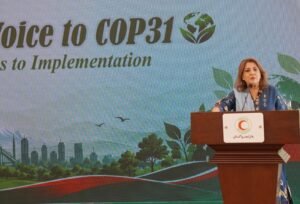
PRCS Chairperson Farzhana Naek said climate change had become a growing humanitarian challenge, affecting people’s livelihoods, health, food security, water availability and overall well-being.
She stressed that communities affected by climate emergencies should play a meaningful role in shaping decisions on climate adaptation, financing and disaster risk reduction.
“Community voices must not simply be heard at climate events; they must shape decisions, investments and implementation,” she said.
Naek called for increased investment in preparedness, anticipatory action and community resilience, saying the success of climate initiatives should be measured through reduced risks, protected livelihoods and improved safety for vulnerable populations.
PRCS, German Red Cross highlight local climate priorities
PRCS Secretary General Muhammad Abaidullah Khan said the event provided an opportunity to bring the concerns and experiences of climate-affected communities into discussions ahead of COP31.
He briefed participants on the organisation’s climate adaptation programmes and ongoing institutional development initiatives aimed at improving transparency, accountability and sustainability.
German Red Cross Regional Representative for Asia Emilio Teijeira welcomed PRCS’s work in disaster preparedness, early action and community-based adaptation.
He said locally led climate initiatives demonstrated how humanitarian organisations could help communities prepare for and respond to climate-related challenges.
Teijeira also emphasised the importance of ensuring that the priorities of affected communities were reflected in the outcomes of the upcoming international climate conference.
PRCS Climate Change Programme Head Sajjad Kandhir outlined the organisation’s ongoing climate activities and their role in strengthening community resilience.
Climate finance and disaster preparedness discussed
A panel discussion brought together specialists in humanitarian response, climate policy, climate finance, adaptation and disaster risk reduction.
The discussion examined how climate commitments could be translated into practical measures, particularly through improved preparedness, locally driven adaptation and stronger support for vulnerable communities.
Participants also exchanged views during an interactive question-and-answer session on the challenges facing communities exposed to climate-related emergencies.
German Red Cross representative in Pakistan Asif Aman thanked the panellists for their contributions and acknowledged the participation of representatives from different sectors.
The programme included a documentary on joint PRCS and German Red Cross initiatives and a theatre performance titled Tapish, highlighting climate-related concerns.
An interactive Green Action Hub featured a green market, recycling booths for paper, plastic and metal, and a climate gallery inviting participants to identify priorities they wanted addressed at COP31.
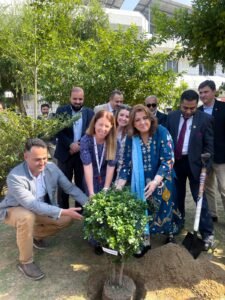
Visitors also recorded their commitments on a climate pledge tree, while a plantation activity titled Plant a Promise marked the conclusion of the event.
PRCS said the recommendations and concerns collected during the Islamabad gathering would help shape its climate message for COP31, with a focus on turning international commitments into measurable improvements in disaster preparedness, adaptation and community protection.