
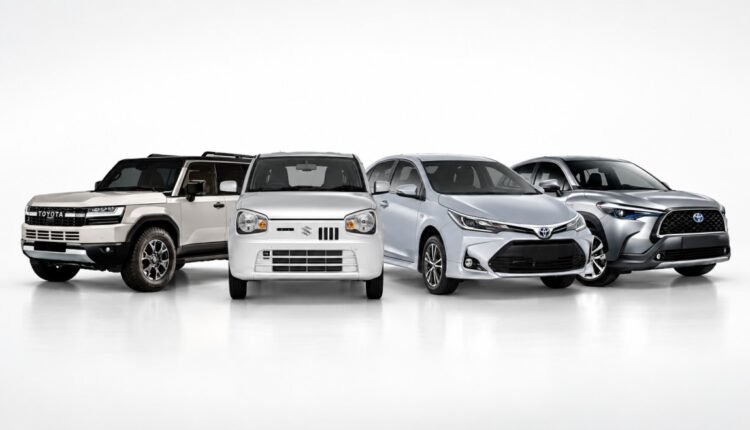
ISLAMABAD: Pakistan’s draft Auto Policy 2026–31 proposes an Automotive Development Levy of up to 10 percent on conventional petrol and diesel vehicles, a move aimed at encouraging the adoption of electric and other new-energy vehicles by making them more competitive in the local market.
According to the proposed policy framework, the levy would apply to locally manufactured and imported vehicles based on engine capacity, with the highest rate reserved for vehicles exceeding 2,000cc.
However, the policy remains a draft and is subject to approval by the International Monetary Fund (IMF) and the Economic Coordination Committee (ECC). The proposed levy rates have not yet been implemented.
Proposed automotive development levy rates in Pakistan
The draft outlines five engine-capacity categories covering passenger cars, SUVs, jeeps and double-cabin vehicles.
| Engine capacity | Locally manufactured | Imported |
|---|---|---|
| Up to 1,000cc | 0% | 0% |
| 1,001–1,300cc | 2% | 2% |
| 1,301–2,000cc | 2% | 2% |
| 2,001–3,000cc | 10% | 10% |
| Above 3,000cc | 10% | 10% |
Under the proposed structure, vehicles with engines up to 1,000cc would be exempt from the new levy, while those between 1,001cc and 2,000cc would face a two percent charge.
Vehicles exceeding 2,000cc would attract a significantly higher levy of 10 percent, regardless of whether they are manufactured locally or imported.
The proposed exemption for smaller cars would apply only to the Automotive Development Levy. Other applicable taxes and duties would remain in place.
Why is the government proposing a new vehicle levy?
The proposed measure forms part of the government’s broader strategy to encourage the transition from internal combustion engine vehicles to new-energy vehicles, including battery electric vehicles and plug-in hybrids.
The draft policy argues that reducing taxes on electric vehicles alone may not be sufficient to address their higher upfront prices compared with conventional vehicles.
By introducing an additional levy on petrol and diesel vehicles, policymakers aim to narrow the price difference and encourage consumers to consider cleaner alternatives.
The proposal follows the government’s earlier Climate Support Levy approach under Budget 2025–26, which included engine-based rates of one, two and three percent for conventional and hybrid vehicles.
However, the draft does not establish whether the proposed Automotive Development Levy would replace, overlap with or operate separately from existing vehicle levies.
That relationship would need to be clarified through the final approved policy and implementing legislation.
Electric and hybrid vehicles could receive lower sales tax
Alongside the proposed levy on conventional vehicles, the draft Auto Policy 2026–31 outlines preferential sales tax rates for different categories of new-energy vehicles.
Proposed sales tax rates for new-energy vehicles
Battery electric vehicles (BEVs)
1%
6%
9%
The proposed sales tax structure would favour fully electric vehicles, followed by range-extender electric vehicles and plug-in hybrids.
Combined with the proposed levy on conventional vehicles, these measures are intended to influence the relative purchase costs of different vehicle technologies.
How could the new levy affect car prices in Pakistan?
If approved and passed on to consumers, the Automotive Development Levy could increase the tax burden on affected petrol and diesel vehicles.
For example, a vehicle falling within the 2,001cc to 3,000cc category would be subject to the proposed 10 percent levy, while a vehicle with an engine between 1,301cc and 2,000cc would face a two percent charge.
However, the proposed levy cannot be used on its own to calculate final showroom price increases.
The broader auto policy also includes proposed changes to customs duties and other taxes, which could offset or alter the overall impact on individual vehicle models.
Manufacturers’ pricing decisions and the final tax treatment would also determine how much of any additional cost reaches buyers.
When will the new automotive levy take effect?
No implementation date has been confirmed for the proposed Automotive Development Levy.
The Auto Policy 2026–31 must first complete the required approval process, including consideration by the IMF and ECC, before the proposed measures can be implemented through the relevant legal framework.
Until the policy is finalised and officially notified, existing vehicle taxes and duties remain applicable.
For Pakistani car buyers, particularly those considering larger-engine SUVs and imported vehicles, the final policy could have significant implications for purchase costs and the growing competition between conventional and electric vehicles.