
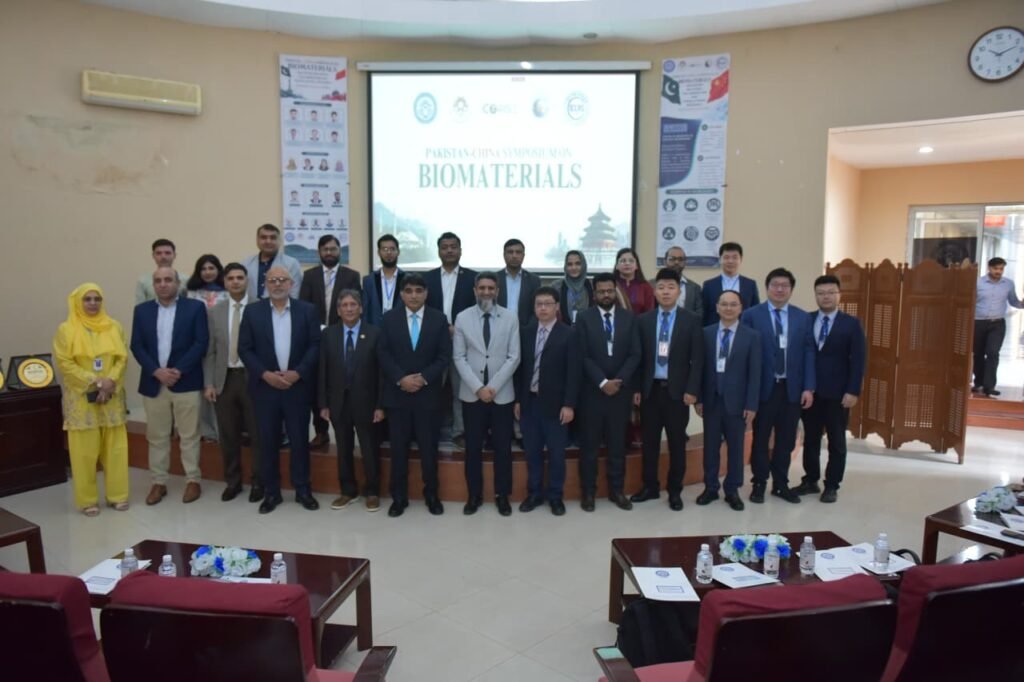
ISLAMABAD, October 26, 2026: The National University of Sciences and Technology (NUST) is hosting SinoPak BioConnect 2026, a two-day Pakistan-China symposium aimed at strengthening scientific cooperation in biomaterials, biomedical technologies and advanced materials research.
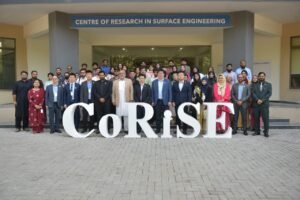
Organised by NUST’s School of Chemical and Materials Engineering (SCME) through its Centre of Research in Surface Engineering (CoRiSE), the symposium is being held in collaboration with the Pakistan Academy of Sciences (PAS) and the Chinese Academy of Sciences (CAS).
The event brings together scientists, academic leaders, researchers and students from Pakistan and China to explore opportunities for long-term institutional partnerships and collaborative research.
According to NUST, the symposium seeks to facilitate joint research proposals, funding applications, collaborative publications, postgraduate training, joint academic supervision and researcher and student exchanges.
A central objective is to strengthen cooperation in biomaterials, biomedical technologies and related scientific disciplines, with particular emphasis on translating research into practical applications.
Addressing the symposium as chief guest, Additional Secretary at the Ministry of Science and Technology Ali Bahadur Qazi highlighted ongoing Pakistan-China research collaboration in climate change, disaster management, engineering and marine sciences.
He acknowledged the ministry’s support for CoRiSE at NUST and emphasised the importance of scientific partnerships in addressing challenges shared by the two countries.
Professor Dong Qiu, who is leading the Chinese Academy of Sciences delegation, stressed the significance of direct interaction between researchers in developing sustainable scientific relationships.
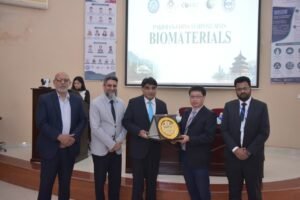
He said face-to-face engagement and knowledge exchange could help create opportunities for future joint research and strengthen institutional cooperation between Pakistan and China.
Earlier, NUST Pro-Rector Academics Dr Osman Hassan, who attended as guest of honour, highlighted the potential of Pakistan’s young population to contribute to scientific innovation.
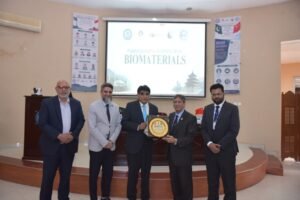
Noting that more than 60 percent of Pakistan’s population is under 30, he described NUST as a national institution bringing together talented students from different parts of the country.
He emphasised the need to connect Pakistani researchers and students with scientific expertise in China through joint research programmes and academic exchanges.
Dr Umair Manzoor, Principal and Dean of SCME, also attended the session.
The symposium is being led by Project Director Dr Usman Liaqat, who also serves as Head of the Materials Engineering Department at SCME.
CoRiSE supports research and innovation in advanced materials, providing a platform for scientific collaboration and the development of research-based technologies.
Through SinoPak BioConnect 2026, NUST and its partner institutions aim to establish a foundation for sustained academic engagement, collaborative research and knowledge exchange between Pakistan and China.