
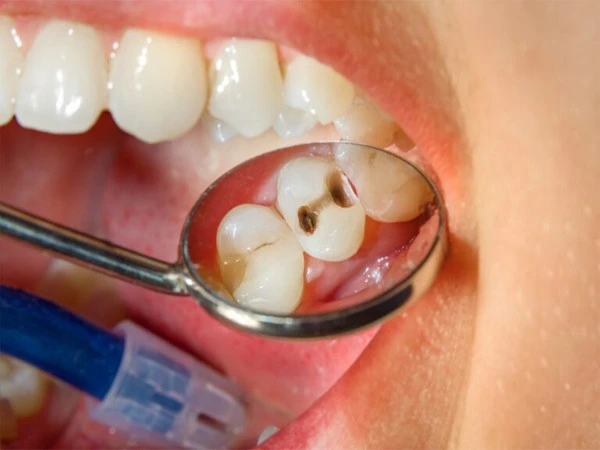
A large US clinical trial has found that 38% silver diamine fluoride, a quick and non-invasive dental treatment, can effectively stop the progression of severe tooth decay in many young children.
The liquid is applied directly to the decayed area of a tooth with a small brush, without injections, drilling or surgery. Researchers say the approach could make treatment easier for children who are too young, anxious or unable to undergo conventional dental procedures.
The Phase III clinical trial involved 830 generally healthy children aged between 12 and 71 months who had severe early childhood caries. The study was conducted at multiple sites linked to the University of Michigan, New York University and the University of Iowa.
Children were randomly assigned to receive either 38% silver diamine fluoride, commonly known as SDF, or a placebo. The treatment was applied at the beginning of the study and again after six months, while dental examinations were conducted at several stages.
According to findings published in JAMA Pediatrics on July 27, 2026, one application of SDF stopped the progression of approximately 54% of treated cavities after six months, compared with 22.5% in the placebo group.
At three months, 57.5% of cavities treated with SDF had been arrested, compared with 18.8% among children who received the placebo. The researchers concluded that SDF was significantly more effective than the comparison treatment.
Unlike conventional “drill-and-fill” treatment, SDF does not remove the damaged part of the tooth or restore its original structure. Instead, it helps harden the affected tissue and prevents the decay from continuing to spread.
The treatment may be particularly helpful for very young children who might otherwise require sedation or general anaesthesia for extensive dental work. Severe untreated cavities can cause pain, infection, eating difficulties and tooth loss.
Researchers reported that treatment-related adverse events were similar in the SDF and placebo groups, while most reported events were mild or moderate. However, the treatment can permanently turn the decayed portion of the tooth dark or black, an important cosmetic consideration for parents.
Lead researcher and University of Michigan dentistry professor Margherita Fontana said the findings support the use of SDF as a practical, non-invasive option for children at high risk of severe dental decay.
In the United States, silver diamine fluoride has been cleared for treating tooth sensitivity, but its use specifically to stop cavities remains off-label. Researchers said the trial was designed to provide evidence supporting consideration for formal US Food and Drug Administration approval for dental caries treatment.
Dental specialists stress that SDF should be applied by a qualified healthcare professional following a proper examination. It does not replace regular brushing, fluoride toothpaste, healthy eating habits or routine dental check-ups.
Read more : Milk Alone Won’t Keep Your Bones Strong — Here’s What Else You Need