
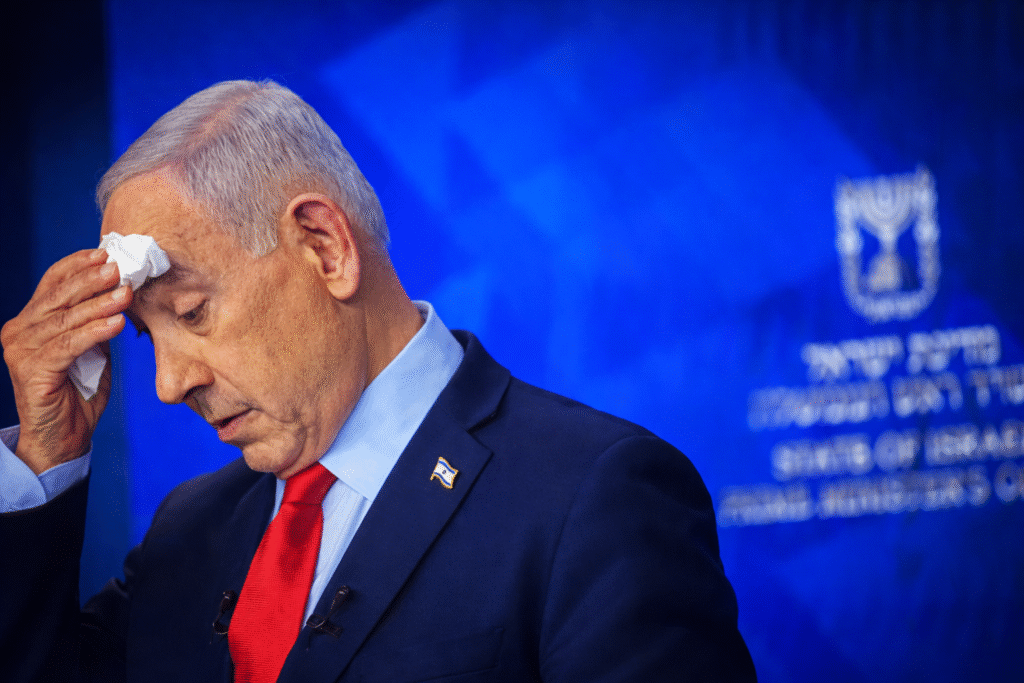
JERUSALEM, October 29, 2026: Israeli Prime Minister Benjamin Netanyahu faces an uncertain political future after preliminary election results showed his coalition falling short of a parliamentary majority, raising the prospect of difficult negotiations to form the next government.
With approximately 90 percent of votes counted, Netanyahu’s electoral alliance was projected to secure 53 seats in the 120-member Knesset, eight short of the 61 required for a simple majority.
The opposition bloc was projected to win 48 seats, while two Arab political groupings were expected to secure a combined 19 seats, potentially giving them a decisive role in the formation of a new government.
According to the preliminary figures, the Joint List was projected to win 12 seats, while the United Arab List was expected to secure seven.
Netanyahu’s Likud party emerged as the largest individual party, with a projected 26 seats. However, his far-right coalition partners, led by Itamar Ben-Gvir and Bezalel Smotrich, appeared to have suffered significant electoral losses.
The two parties were projected to secure a combined 13 seats, compared with 20 in the previous parliament.
Ben-Gvir and Smotrich have been prominent supporters of Israel’s military operations in Gaza.
The projected results leave neither Netanyahu’s alliance nor the opposition with a clear parliamentary majority. The combined strength of the Arab parties could therefore prove important in determining whether either bloc can secure sufficient support to form a government.
However, the formation of a coalition involving Arab parties remains uncertain, as the major political blocs have not indicated a willingness to include them in a governing alliance.
The final outcome will depend on the remaining vote count and subsequent coalition negotiations.
Netanyahu would remain in office in a caretaker capacity until a new government is formed, with the final parliamentary balance determining whether he can secure another term as prime minister.