
Pakistan’s defeat to India in the Asian Games final has once again raised questions about the balance of authority between the captain and coaching staff, particularly head coach Mike Hesson.
Only a few months ago, Pakistan failed to progress beyond the Super 8 stage of the T20 World Cup. A subsequent report placed much of the blame on Hesson, alleging that he had effectively taken over the captain’s responsibilities while Salman Ali Agha was left with little more than the title.
According to the criticism surrounding the team at the time, Hesson had pushed for Babar Azam’s inclusion in the initial squad despite the selection committee’s decision, while messages sent during matches allegedly placed additional pressure on the captain.
There were also questions over decisions involving Fakhar Zaman and Usman Tariq, with some critics attributing selection and bowling decisions to Hesson and bowling coach Ashley Nofke.
At one stage, it appeared almost certain that Hesson would be removed. Instead, circumstances changed dramatically. He retained his position and later assumed additional responsibilities during the Test series in England after other members of the coaching staff were removed.
This is the peculiar nature of Pakistan cricket. A coach who appeared to be facing dismissal can suddenly become one of the most influential figures in the setup.
Hesson’s Growing Influence
Hesson’s influence has again come under scrutiny following Pakistan’s Asian Games final against India.
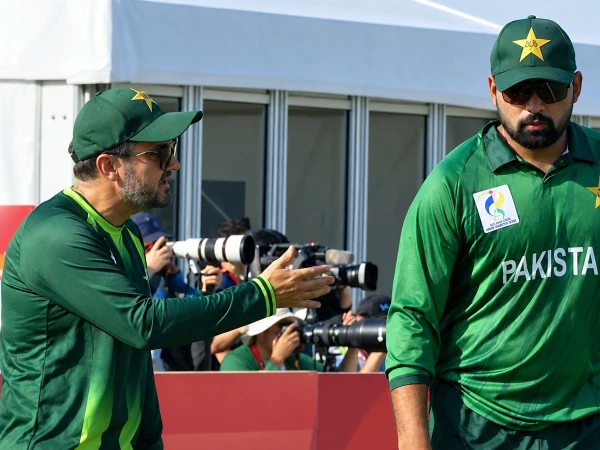
Pakistan had a golden opportunity to win the gold medal, but questionable decisions over the playing XI and bowling strategy contributed to the defeat. Hesson appeared highly active on the boundary throughout the match, with players seemingly following his instructions.
This has renewed the debate over whether Pakistan’s head coach has effectively become a “non-playing captain.”
The issue is not simply about one defeat. It is about who should ultimately have authority over the team’s key cricketing decisions.
Who decides the playing XI? Who determines when a bowler should be introduced? Who decides the batting order and makes tactical changes during a match?
Traditionally, these decisions have rested primarily with the captain.
Pakistan Needs an Empowered Captain
Pakistan’s major tournament victories have generally come when the captain possessed strong authority and independence.
Whether it was Imran Khan, Younis Khan or Sarfaraz Ahmed, the captain had significant freedom to make decisions on the field. The coach provided support and guidance, but the captain remained the central decision-maker during matches.
A coach standing near the boundary and constantly directing the captain is a very different model.
Pakistan now needs an empowered leader—whether that is Babar Azam, Shaheen Shah Afridi, Sahibzada Farhan or Shadab Khan—who is given genuine authority rather than being expected simply to implement decisions made elsewhere.
If the captain is ultimately held responsible when the team loses, he must also have the authority to make the decisions that determine the outcome.
What About the Next Captain?
Salman Ali Agha appears unlikely to continue as captain, and Sahibzada Farhan could emerge as a potential replacement after leading Pakistan’s young squad at the Asian Games.
Shaheen Shah Afridi’s name may also be discussed, particularly given his leadership experience in limited-overs cricket. However, questions about his future involvement in the T20 setup could complicate that possibility.
Shadab Khan also has considerable experience and has a close professional relationship with Hesson through Islamabad United, but his appointment as captain does not appear certain.
The bigger question, however, is not simply who becomes captain. It is whether the next captain will actually be allowed to lead.
The Selection System Needs Reform
The Pakistan Cricket Board should also consider establishing an independent selection committee comprising individuals separate from the team management.
The head coach should certainly be consulted, but the final responsibility for selecting the squad should not rest entirely with the coaching staff.
Critics argue that Hesson currently has substantial influence over both squad composition and the playing XI, and that this authority has sometimes produced unusual combinations.
At times, the team appears overloaded with all-rounders; at others, several specialist openers are accommodated simultaneously.
Saim Ayub is another example cited by critics. The attempt to develop him into an all-rounder has raised concerns that his development as a specialist batter has suffered, while frequent changes to his batting position have added further uncertainty.
Everyone Must Stay Within Their Domain
Pakistan does not need a coach who attempts to control every aspect of the team.
If Hesson can guarantee a World Cup victory through his approach, the argument goes, then he should be given the freedom to implement it. Otherwise, he should remain within his professional domain and allow the captain and selection committee to exercise their respective responsibilities.
Cricket is not a sport in which a “non-playing captain” can effectively operate from the boundary while the official captain carries the responsibility.
The Asian Games gold medal may already have slipped away, but Pakistan still has time to establish a clearer structure before the next major challenge.
The PCB should define the responsibilities of the captain, coach and selection committee, empower the captain to make decisions on the field, and ensure that no single individual has excessive control over the entire cricketing system.
Pakistan’s players and fans have endured enough defeats. What they need now is not another reshuffle of faces, but a clear system in which everyone knows who is responsible for what—and where the captain is genuinely allowed to captain.