
ISLAMABAD — Pakistan’s ageing thermal power plants could take on a new role in supporting the country’s transition to renewable energy, with power-sector stakeholders examining whether suitable generators can be converted to provide critical grid-support services instead of being completely retired.
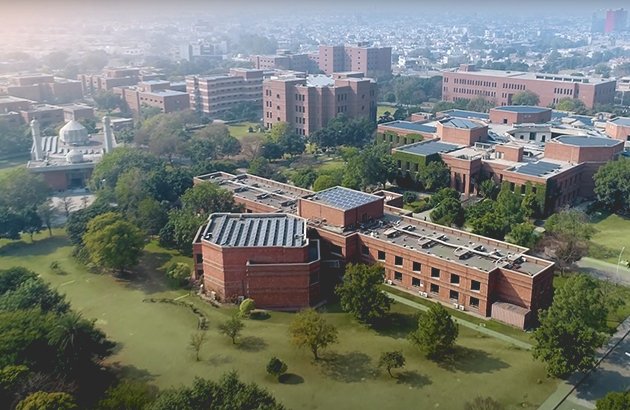
The proposal emerged during a national consultative workshop organised by the LUMS Energy Institute (LEI), which brought together government officials, regulators, power companies, plant operators, manufacturers and energy experts to discuss practical steps towards cleaner, affordable and reliable electricity.
The consultation builds on LEI’s report, “The Net Zero Transition: A Pathway to Clean and Sustainable Electricity by 2040,” and focused on translating its recommendations into an implementation roadmap for Pakistan’s power sector.
A central issue was the potential conversion of technically and economically suitable thermal generators into synchronous condensers as fossil-fuel-based electricity generation declines.
Such conversions could allow existing power infrastructure and grid connections to continue providing services including system inertia, dynamic reactive power support and short-circuit strength — functions considered important for maintaining grid stability as the share of variable renewable energy increases.
Participants, however, stressed that conversion should not be treated as a universal solution. Each project would need to be assessed against competing technologies on cost, performance, location and delivery time.
Representatives of thermal power plants and equipment manufacturers expressed interest in exploring conversion opportunities, potentially opening the way for plant-specific feasibility studies, engineering work and future projects.
Plant operators sought greater clarity on conversion costs, remaining equipment life, contractual obligations and potential revenue streams, while manufacturers stressed that technical and economic viability would have to be established separately for each facility.
Five Priorities Identified for Pakistan’s Energy Transition
The workshop identified five areas requiring attention as Pakistan increases renewable electricity generation: coordinating renewable projects with transmission expansion, increasing energy storage and demand-side measures, improving grid flexibility, securing essential grid-support services and clearly assigning institutional responsibilities through a phased implementation plan.
The regulatory discussion focused heavily on creating a technology-neutral framework in which different technologies could compete to provide ancillary services required by the electricity system.
Syed Faizan Ali Shah, adviser to the energy minister, said the framework should provide equal opportunities for technologies capable of supplying ancillary services, including new and advanced solutions.
National Grid Company Managing Director Engr Altaf Hussain Malik said investors would require clarity on tariffs, licensing, performance requirements, interconnection standards and how grid-support services would be valued.
He also called for comparisons of the life-cycle costs and locational benefits of different technologies against the actual requirements of the power system.
Power Planning and Monitoring Company Managing Director Abid Latif Lodhi proposed separating ancillary services from electricity procurement and allowing different technologies to compete to provide them.
He said authorities first needed to determine system requirements, conduct plant-level feasibility assessments and establish clear regulatory and commercial arrangements for procurement and compensation.
Independent System and Market Operator Executive Director Omer Haroon Malik said work was already underway on a comprehensive ancillary-services framework alongside wider electricity-market reforms.
Under the proposed approach, the system’s requirements would first be established before services were competitively procured from synchronous condensers, generators or other technologies capable of meeting the required specifications.
Affordability Remains Key Question
WAPDA Member (Power) Muhammad Arfan Miana stressed that any new compensation mechanism should also protect electricity consumers.
He called for compensation to be linked to availability and performance rather than returning to earlier capacity-based models.
Participants said better integration of renewable energy and grid-support services could improve the reliability of Pakistan’s electricity system and reduce dependence on imported fuels. Any eventual savings for consumers, however, would depend on individual project economics and cost-recovery arrangements.
LUMS Energy Institute will now consolidate the recommendations from the consultation to help identify implementation priorities and responsibilities for relevant institutions.
The findings, including results from an ongoing pre-feasibility assessment of synchronous condenser conversions, are expected to be published before the end of 2026.
Dr Fiaz Ahmad Chaudhry, senior adviser at LEI, chairman of the National Grid Company board and independent director at ISMO, said the consultation was intended to turn the findings of LUMS’ net-zero electricity report into specific actions and institutional responsibilities for the pathway to 2040.
LUMS Provost Dr Tariq Jadoon said the university would continue working with government and industry to translate research into policy and practical solutions aimed at delivering cleaner, more reliable and affordable electricity.