
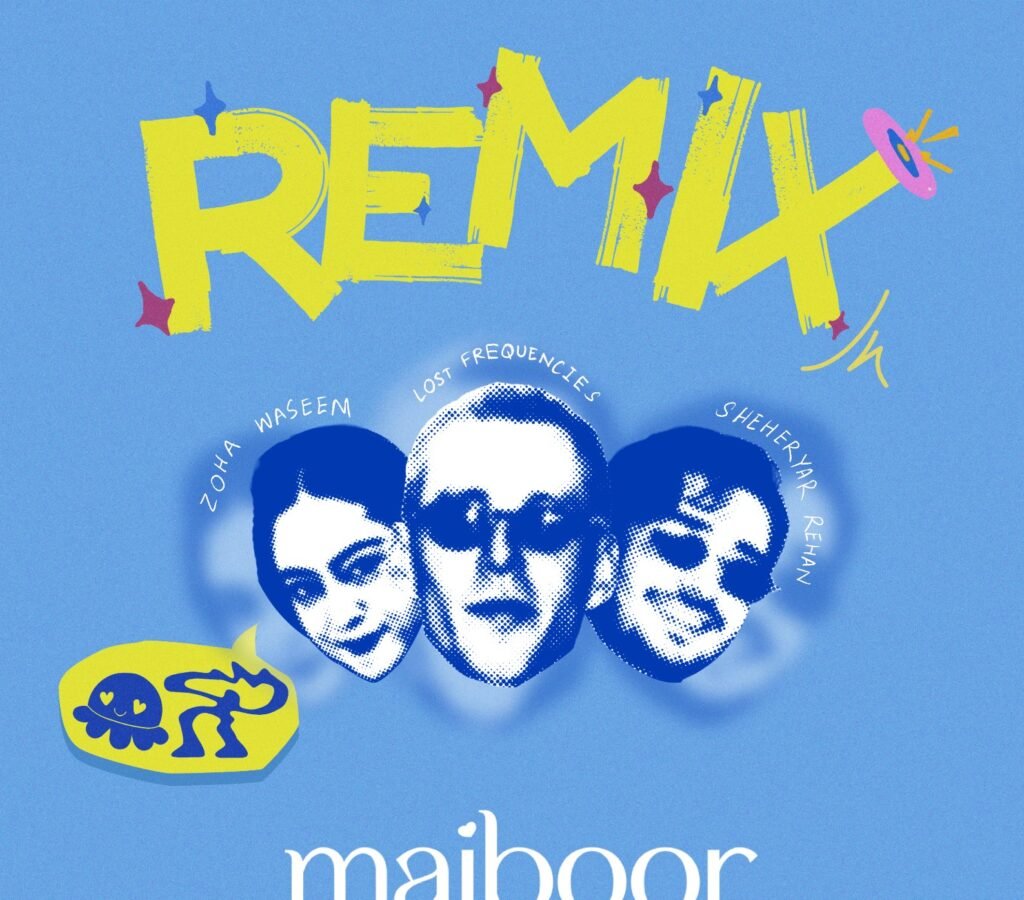
KARACHI, October 22, 2026: Belgian DJ and music producer Lost Frequencies has officially collaborated with Pakistani singers Sheheryar Rehan and Zoha Waseem on a remix of their hit song Majboor, bringing a new electronic sound to a track that has already achieved more than 250 million streams worldwide.
The collaboration marks another international milestone for the Pakistani song, which gained widespread popularity across South Asia and the Middle East following its release in 2025.
The original Majboor reached the Top 3 on Spotify, YouTube and Apple Music, entered the global Top 100, appeared among YouTube’s top music videos and secured a place on Spotify’s Global Viral Top 50.
The song attracted particularly strong audiences in Pakistan, India, Bangladesh and the United Arab Emirates, establishing itself as a cross-border success.
From viral Pakistani hit to international remix
The collaboration began after Lost Frequencies started incorporating his reinterpretation of Majboor into his live performances.
The Belgian producer subsequently shared footage of one of those performances on Instagram, drawing further attention to his version of the Pakistani track.
The official Majboor – Lost Frequencies Remix combines the song’s original melodies and emotional character with electronic production, introducing it to audiences familiar with the DJ’s international dance music catalogue.
Sheheryar Rehan, who wrote and composed the original song, described the collaboration as an exciting development in its journey.
“When I first released Majboor, I knew it was a song that meant a lot to me, but you can never fully predict how far a song will travel or who it will connect with,” he said.
“Seeing it resonate across borders has been a really special journey. Lost Frequencies has done a great job with the remix, bringing a fresh musical perspective to the song while retaining the emotion of the original.”
Rehan said he was excited to see the song continue evolving and reaching new listeners worldwide.

Lost Frequencies praises Majboor’s melodies
Lost Frequencies, whose real name is Félix De Laet, said he was drawn to the song’s musical character and the opportunity to reinterpret it.
“There’s something timeless about Majboor. I loved blending those beautiful melodies with my own sound and bringing it to the dance floor,” he said.
The Belgian DJ rose to international prominence with Are You With Me, which topped charts in 18 countries and made him the first Belgian artist to reach No. 1 in the United Kingdom.
His music has also appeared on the Billboard Hot 100, while his Spotify audience has previously exceeded 36 million monthly listeners. According to the release, he currently attracts approximately 21.2 million monthly listeners.
Xulfi highlights global opportunities for Pakistani music
Xulfi, Producer, Chief Operating Officer and Co-Founder of Giraffe Music, described the remix as an example of how Pakistani music can connect with international audiences.
“Music has a way of taking our stories to places we may never have imagined. Majboor had already begun that journey, connecting with people all around the world,” he said.
Xulfi recalled seeing Lost Frequencies perform Majboor in India, describing the moment as a demonstration of music’s ability to connect artists and audiences across borders.
He said such collaborations could create further opportunities for Pakistani music to gain international recognition.
Original artists remain central to collaboration
The original Majboor combined Sheheryar Rehan’s songwriting with Zoha Waseem’s ghazal-influenced vocal style, creating a contemporary Pakistani pop song that found listeners across multiple countries.
The official remix features Sheheryar Rehan, Zoha Waseem and Lost Frequencies, with the Belgian DJ handling production.
Andres Algaba mixed and mastered the remix, while the original track was produced by Kabeer Khan, with guitar contributions from Sherry Khattak and mixing and mastering by Julysonic.
The collaboration reflects the growing international reach of Pakistani music through streaming platforms, social media and live performances, allowing locally produced songs to reach new audiences and musical genres.