
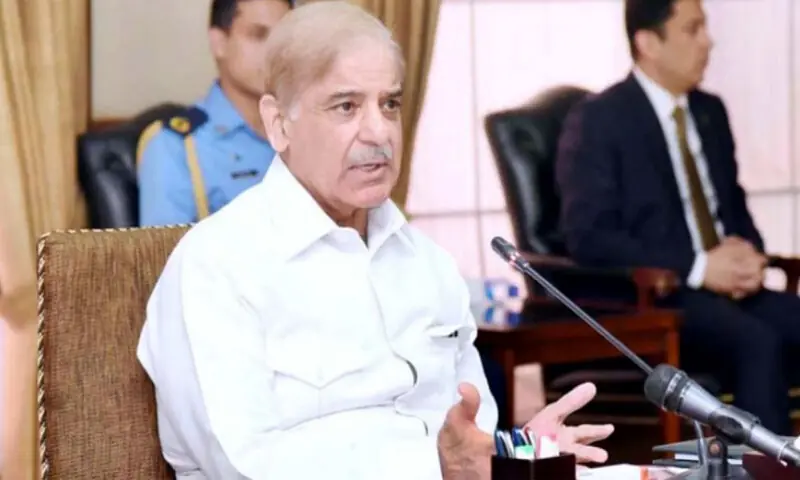
ISLAMABAD, October 11, 2026: A high-level cabinet committee chaired by Prime Minister Shehbaz Sharif reviewed the security and governance situation in Khyber Pakhtunkhwa on Sunday as special assessments by the provincial police and intelligence agencies reported a sharp increase in terrorist attacks and highlighted major gaps in law-enforcement capacity.
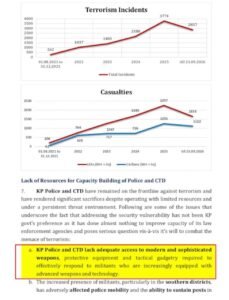
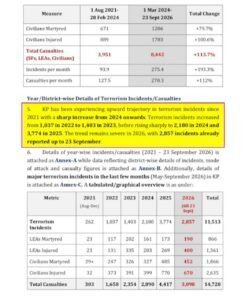
According to the security assessments, terrorist incidents in Khyber Pakhtunkhwa increased by 195% between March 1, 2024 and September 23, 2026, underscoring the scale of the security challenge confronting the province. The figures have also been reported by multiple Pakistani news outlets covering the cabinet deliberations.
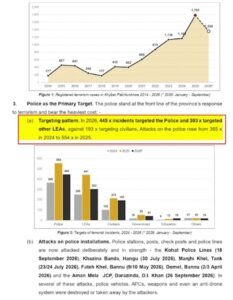
The reports said police and other security institutions remained the primary targets of militant violence, accounting for 73% of terrorist attacks recorded in the province during 2026.
The committee examined the changing nature of militant threats, institutional weaknesses and the preparedness of provincial law-enforcement agencies, including the Khyber Pakhtunkhwa Police and Counter Terrorism Department (CTD).
Drone Attacks Emerge as Major Security Threat
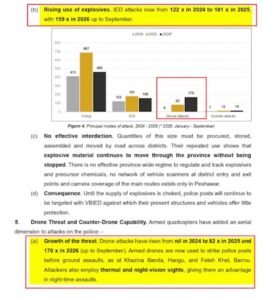
One of the most significant concerns highlighted in the assessments was the increasing use of drones by militants.
According to the reports, no drone attacks targeting police or security institutions were recorded in 2024, while the number of such attacks reached 170 in 2026.
The assessments separately cited an approximately 107% year-on-year increase in militant drone attacks, signalling a shift in tactics being used against law-enforcement personnel and installations.
The reports also highlighted a sustained threat from improvised explosive devices. They said 181 IED attacks were recorded in 2025, while another 159 had been reported by September 2026.
Officials reviewing the assessments stressed the need to strengthen the capabilities of police and other security agencies as militant tactics continue to evolve.
Security Reports Highlight Afghanistan-Based Militants and Local Facilitation
The intelligence assessments attributed the growing threat to several factors, including militant elements operating from Afghanistan, local facilitation networks and alleged shortcomings in provincial counterterrorism preparedness.
They also raised concerns over what the assessments described as weaknesses in provincial policy and insufficient focus on effective counterterrorism measures.
The claims concerning provincial policy represent the assessment of the security agencies and have not been independently established.
The reports further described links between militant networks, local facilitators and illegal activities as a serious security challenge requiring a coordinated response.
More Than 9,000 KP Police Posts Vacant
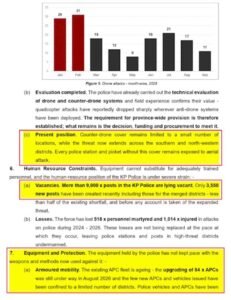
The assessments also identified significant manpower and equipment shortages within the Khyber Pakhtunkhwa Police and CTD.
According to the reports, more than 9,000 positions in the provincial police remain vacant, while police and CTD units face shortages of modern weapons, operational equipment and surveillance technology.
Law-enforcement agencies were also reported to have insufficient night-vision and thermal-imaging equipment, potentially limiting their ability to operate effectively in difficult terrain and during nighttime operations.
The problem is particularly serious in the terrorism-hit southern districts, where shortages of armoured and protected vehicles have affected police mobility and operational capacity, according to the assessments.
Safe City Project Still Limited to Peshawar
The reports noted that the Safe City initiative intended to strengthen surveillance and security across Khyber Pakhtunkhwa remains largely limited to Peshawar.
They also highlighted shortages of training, equipment and operational capacity among police forces in the merged districts.
The CTD, despite serving as the province’s specialised counterterrorism force, was reported to be facing a shortage of specially trained personnel and remains dependent on regular police staff for some manpower requirements.
Its district-level offices, operational facilities and specialised infrastructure were also described as insufficient in relation to the scale and changing nature of the terrorist threat.
The assessments called for dedicated, modern and strengthened CTD infrastructure along with improved surveillance, intelligence and operational capabilities.
Cabinet Reviews Governance and Counterterrorism Preparedness
The cabinet committee expressed concern over the rise in terrorist incidents, institutional shortcomings and broader governance challenges in Khyber Pakhtunkhwa, according to reports surrounding the meeting.
The review focused on the causes behind the worsening law-and-order situation, weaknesses in provincial preparedness and gaps in counterterrorism measures.
The security assessments have placed renewed attention on the need to improve staffing, equipment, intelligence capabilities and coordination among law-enforcement agencies as Khyber Pakhtunkhwa faces an increasingly complex militant threat.