
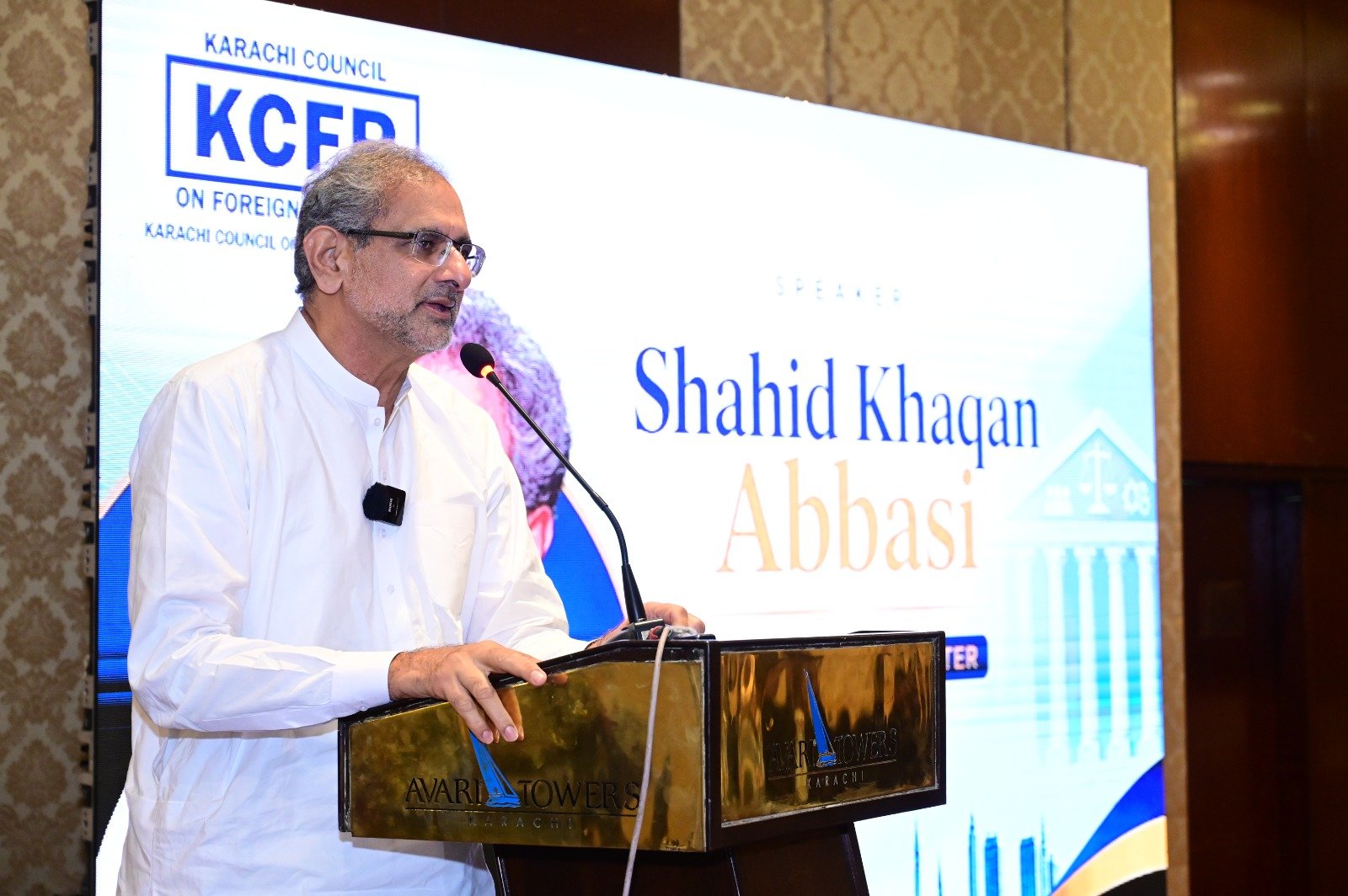
KARACHI, August 29, 2026: The Karachi Council on Foreign Relations (KCFR) hosted a high-level public debate on “Rethinking Governance in Pakistan”, bringing together political leaders, policymakers, parliamentarians, academics and analysts to discuss institutional and administrative challenges facing the country.
The discussion focused on strengthening institutions, improving coordination between federal and provincial governments, increasing transparency and accountability, and developing governance systems that better respond to citizens’ needs.
Calls for Institutional Accountability
KCFR Chairperson and philanthropist Nadira Panjwani stressed the importance of institutional accountability, sustainable development and human-centred policymaking. She said governance should be viewed not only as administration but also as a commitment to the well-being and dignity of citizens.
Analyst and host of Global Sach, Dr Nasir Baig, highlighted structural trust, digital transformation and citizen empowerment as key areas for governance reform. He said Pakistan’s resilience and workforce remain among its major strengths and argued that meaningful reforms require long-term thinking and a genuine commitment to public interest.
Political and Fiscal Reforms Discussed
Former Sindh Governor Imran Ismail spoke about structural barriers to effective public administration, with particular emphasis on political reform and fiscal decentralisation.
He highlighted the limited authority available to Karachi’s local government compared with major cities elsewhere and called for greater accountability among senior administrative officials.
Dr Farooq Sattar said Pakistan’s decades-long political and institutional development had reached a stage requiring structural reforms. He called for a more participatory democratic model and argued that the country’s population had outgrown the representational capacity of existing elected institutions.
Sattar also highlighted Karachi’s economic potential and said stronger governance could help improve investor confidence.
Shahid Khaqan Abbasi Calls for Institutional Reform
Former Prime Minister Shahid Khaqan Abbasi shared his views on Pakistan’s political and administrative system, focusing on institutional reform, democratic governance, public service delivery and accountability.
He highlighted Pakistan’s neonatal mortality rate as a major public policy concern and called for stronger implementation of the rule of law alongside meaningful institutional reforms.
International Delegates Attend Seminar
The event was attended by political and diplomatic figures, academics, analysts and foreign delegates, including representatives from Russia, the United States and the Consul General of Bangladesh.
A special group photograph was also arranged with students from the Ida Rieu Welfare Association, an institution serving visually impaired and deaf students, along with the speakers.
Members of KCFR’s Board of Governors joined the speakers for a separate photograph, following which KCFR Chairperson Nadira Panjwani presented mementos to Dr Nasir Baig, Imran Ismail, Dr Farooq Sattar and Shahid Khaqan Abbasi.
The seminar concluded with a group photograph of speakers, guests and delegates following discussions on the future of governance in Pakistan.
Also Read : JUI Constitution and Manifesto Discussed at Islamabad Consultation