
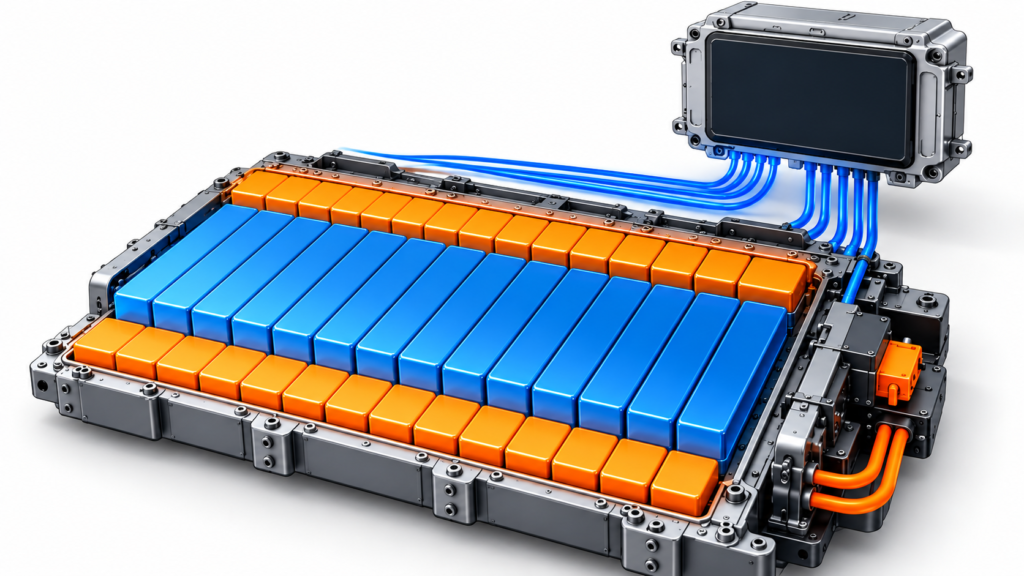
ISLAMABAD, October 29, 2026: Electric vehicle buyers in Pakistan are being advised to distinguish between gross and net battery capacity, as the advertised battery size does not always represent the amount of energy available for driving.
Gross battery capacity refers to the total rated energy a battery can store, while net capacity represents the energy available for use. The difference, known as the battery buffer, is managed electronically to protect battery cells and regulate their performance.
For example, the Audi Q6 SUV e-tron quattro has a gross battery capacity of 100 kilowatt-hours (kWh), but its usable capacity is 94.9 kWh. The remaining 5.1 kWh falls outside the vehicle’s published usable operating range.
Manufacturers maintain battery buffers to help prevent excessive charging and discharging, manage operating limits and reduce conditions that accelerate battery degradation.
However, the size of the buffer varies between manufacturers and battery technologies.
Battery capacity and driving range
Net battery capacity is generally more useful when estimating an electric vehicle’s driving range, although energy consumption, driving conditions and vehicle configuration also influence performance.
The ZEEKR 7X Long Range RWD and Performance AWD variants advertised in Pakistan both feature 100 kWh batteries, but their manufacturer-published WLTP range figures differ.
The Long Range RWD offers a stated range of 615 kilometres, compared with 543 kilometres for the Performance AWD, demonstrating that vehicles with similar advertised battery capacities can deliver different driving ranges.
The manufacturer’s Pakistan-market brochure does not clearly identify whether the advertised 100 kWh figure represents gross or usable capacity.
Experts also caution against directly comparing driving ranges measured under different testing standards, including WLTP, CLTC and NEDC.
Charging costs and battery health
Battery capacity also affects how owners calculate charging expenses.
Electricity drawn from a charger can exceed the energy stored in the battery because some energy is lost during charging.
For instance, adding 48 kWh of energy to a battery at an assumed charging efficiency of 90 percent would require approximately 53.3 electricity units.
Battery health is another important consideration, particularly for buyers of used electric vehicles.
Lithium-ion batteries gradually lose storage capacity through ageing and use. Buyers should therefore seek documented battery health assessments rather than relying solely on dashboard range estimates.
Charging recommendations also vary according to battery chemistry. Some manufacturers recommend limiting routine charging to 80 percent, while certain lithium iron phosphate batteries may require periodic charging to 100 percent.
Buyers urged to verify specifications
Prospective EV buyers should ask dealers whether advertised battery capacity is gross or net and obtain verified usable-capacity figures where available.
They should also confirm the vehicle’s driving-range testing standard, battery warranty, charging specifications and availability of authorised repair facilities in Pakistan.
Clear disclosure of battery specifications can help consumers compare electric vehicles more accurately and make informed purchasing decisions.