
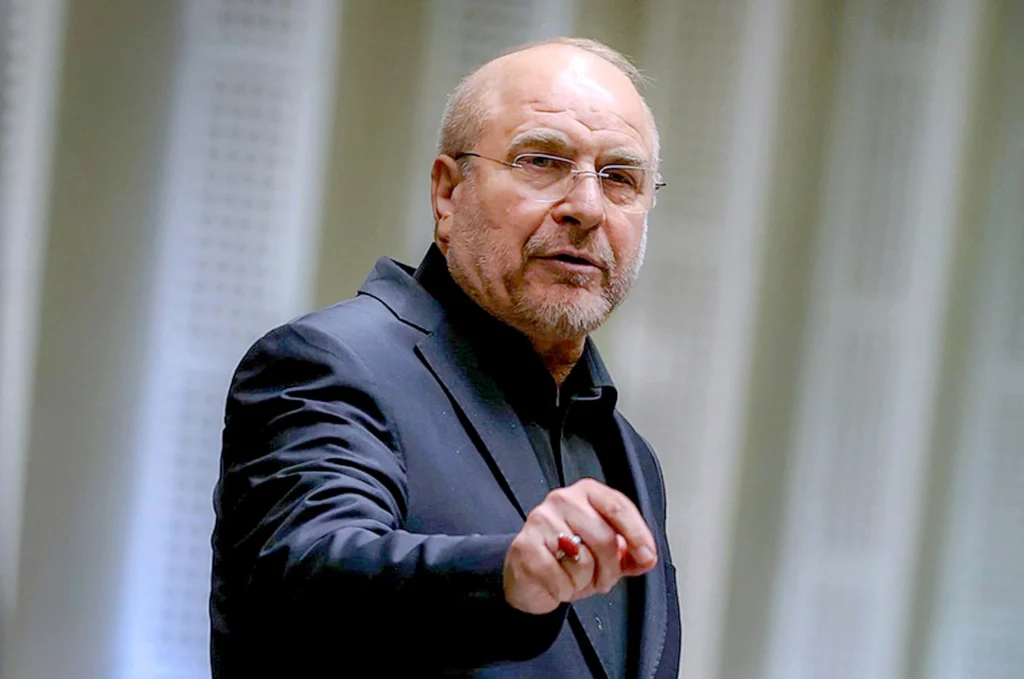
TEHRAN, November 4, 2026: Iran’s Parliament Speaker Mohammad Bagher Ghalibaf has portrayed the Republican Party’s setbacks in the US midterm elections as a rejection of President Donald Trump’s war policies, warning Washington against ignoring what he described as a growing anti-war sentiment among American voters.
Ghalibaf’s comments followed Republican losses in both chambers of Congress during the November 3 elections, an outcome he interpreted as a political message against military conflict and its economic consequences.
Writing on social media platform X, the Iranian parliamentary speaker said Americans had effectively voted against war, whether motivated by moral opposition to military action or the financial pressures facing households.
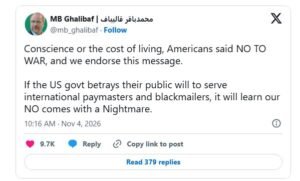
https://x.com/mb_ghalibaf/status/2117848485580128287?a=7lhtCsZPjBBQ5kZZlvM&s=20
He said Iran supported the position expressed by American voters, framing the election outcome as evidence of public dissatisfaction with Washington’s approach to conflict.
Ghalibaf went further, cautioning the Trump administration that disregarding public opinion to accommodate international interests and influential pressure groups could have serious consequences.
His warning centred on the administration’s responsibility to respond to voters rather than pursue policies that, in his assessment, run counter to their expressed preferences.
The remarks came as the Republican Party faced electoral setbacks in both the Senate and House of Representatives, prompting political reactions beyond the United States.
For Tehran, the results have provided an opportunity to challenge Washington’s military policies, with senior Iranian officials presenting the Republican losses as a sign of opposition to war among the American electorate.
Ghalibaf’s statement reflects that interpretation of the midterm results, linking the electoral setbacks to the wider debate over military engagement and its economic impact on Americans.