
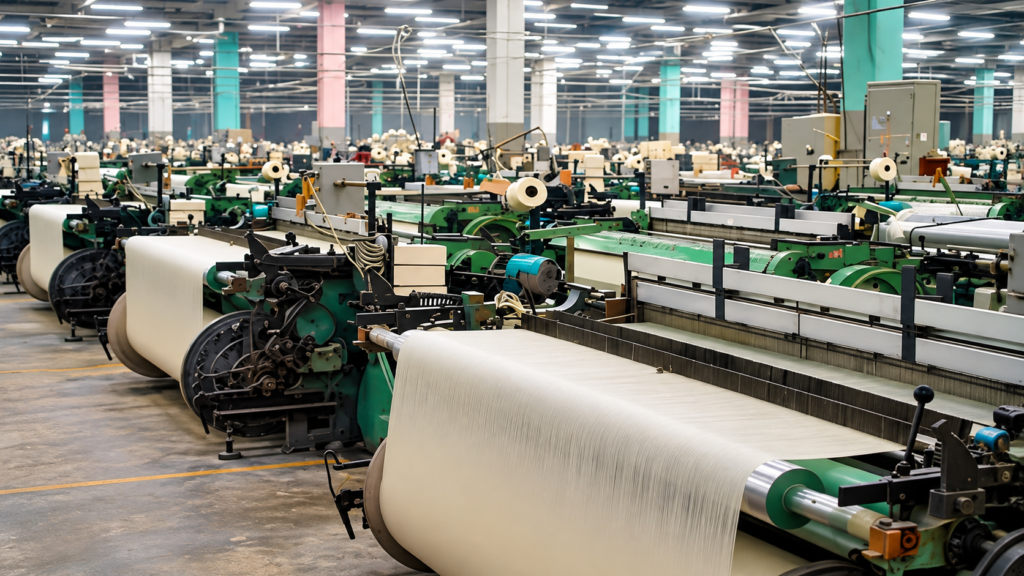
ISLAMABAD, October 26, 2026: The Federal Board of Revenue (FBR) has made video surveillance cameras mandatory at registered textile spinning units across Pakistan, setting a November 15, 2026, deadline to install the equipment as part of an expanded electronic monitoring system for fibre processing.
The directive, issued through Sales Tax General Order (STGO) No. 30, requires textile spinning units to install cameras at designated production and processing points to enable real-time monitoring through video analytics.
The new system will cover the processing of natural, synthetic and blended fibres, including cotton, polyester, viscose, wool and acrylic, particularly when these materials are handled in loose, unbaled or other non-bale forms.
According to the FBR, the measure will extend electronic surveillance beyond the existing monitoring of cotton bales, which is already regulated under Sales Tax General Order No. 08 of 2025.
Cameras required at key processing points
Under the new directive, spinning units must install surveillance cameras at locations where fibres are opened, blended, transferred or prepared for processing.
These include hopper bale openers, hopper feeders, weighing hoppers used for mixing natural and synthetic fibres, and blending feeders.
Cameras must also be installed along dedicated blow-room lines for synthetic fibres, waste openers and recycling lines.
The requirement extends to areas where fibres are stored or mixed before being transferred to the blow room for further processing.
The FBR has directed approved video analytics vendors to integrate the cameras with their monitoring systems.
These systems must be capable of identifying, counting and determining the quantities of fibres supplied or processed in loose and unbaled forms.
Real-time monitoring and data transmission
The order sets out technical requirements for the electronic surveillance system, including continuous real-time video recording of production activities.
The system must provide immediate access to production-related data and support the identification and counting of materials being processed.
It must also transmit information directly to the FBR’s central control unit without delay.
Additional requirements include secure record retention, detection of unexpected production stoppages and quantitative analysis of manufacturing activities.
The system must also support data analytics for enforcement and legal proceedings where required.
These capabilities are intended to allow tax authorities to monitor fibre movement and production activity through electronic records and automated analysis.
Existing cotton monitoring rules remain in force
The FBR clarified that Sales Tax General Order No. 08 of 2025, which governs the monitoring of cotton bales, will remain effective.
The latest directive introduces additional surveillance requirements and must be read alongside the existing order.
While the new instructions take effect immediately, registered textile spinning units have until November 15, 2026, to complete camera installation at the specified locations.
The measure expands the FBR’s use of technology-based production monitoring in Pakistan’s textile sector, with the stated objective of improving oversight of fibre processing and strengthening access to production data.