
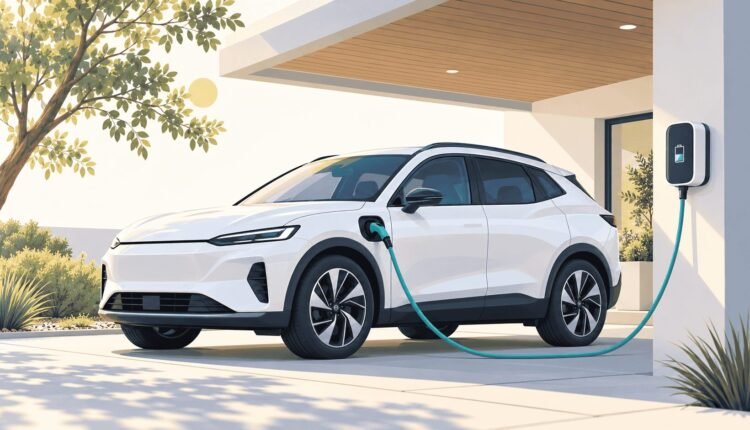
Islamabad: Good charging habits begin well before the battery warning appears. Whether you drive a fully electric vehicle or a plug-in hybrid, following a consistent charging routine can make day-to-day ownership easier and help support battery health.
Charging recommendations can vary from one vehicle to another, so owners should always follow the guidance provided in their model’s manual.
1. Charge Regularly Before the Battery Gets Too Low
There is no need to wait until the battery is nearly empty before plugging in.
Regular top-ups can help keep the vehicle ready for everyday use. Owners should avoid leaving the battery at a critically low charge, particularly if the car will remain parked for an extended period.
It is recommended that the vehicle be plugged in promptly when the charge level falls below 50% after a trip.
2. Follow the Charging Limit Recommended for Your Car
An 80% daily charging limit works well for many EVs, but battery chemistry can affect the ideal routine.
Some manufacturers recommend occasional full charges for vehicles equipped with lithium iron phosphate, or LFP, batteries.
Nishat Motors, which owns Omoda and Jaecoo in Pakistan, recommends charging to around 80% for daily use and completing a full charge at least once a month.
Owners should still check their own vehicle manual before following the same routine, although the recommended range is generally similar.
3. Plan Ahead Before Long Trips
Before setting out on a long journey, charge the vehicle in advance and identify compatible charging stations along the planned route.
Check charger availability and keep at least one backup option in mind.
Plug-in hybrid owners should also follow the recommended charging routine even when petrol backup is available. Planning ahead is far easier than searching for a charger once the range warning appears.
4. Use AC Charging for Everyday Use
Where practical, AC charging at home or at work should be the main option for routine top-ups.
DC fast charging is better kept for longer journeys or situations where time is limited.
Tesla’s battery care guidance recommends using slower charging whenever possible and relying on fast charging mainly for road trips and extended drives.
5. Use Proper Charging Equipment and Installation
Owners should use charging equipment recommended for their vehicle and have a qualified electrician assess the home’s electrical capacity before installing a dedicated charger.
Extension cords and multiplug adapters should be avoided.
Charging cables and connectors should also be checked regularly, and any equipment showing signs of damage should no longer be used.
6. Pay Attention to Heat
In hot weather, owners should park in shaded areas where possible.
If the vehicle supports battery preconditioning, the manufacturer’s instructions should be followed before fast charging.
Charging speed can vary depending on battery temperature and the existing charge level, so a slower charging session does not necessarily indicate a fault.
7. Prepare the Battery Before Long-Term Parking
A vehicle left unused for several weeks requires a different charging routine from one driven every day.
Owners should follow the manufacturer’s recommended storage charge level and check whether the vehicle should remain plugged in during the period of inactivity.
The battery should not be left close to empty or completely full for long periods where the manufacturer advises against doing so.
Small Charging Habits Can Make a Difference
Regular charging, proper planning and following the manufacturer’s guidance can help support battery health and make EV ownership more convenient.
Simple habits such as avoiding critically low charge levels, using AC charging for routine use, protecting the battery from excessive heat and preparing it correctly for long-term parking can make everyday ownership easier.