
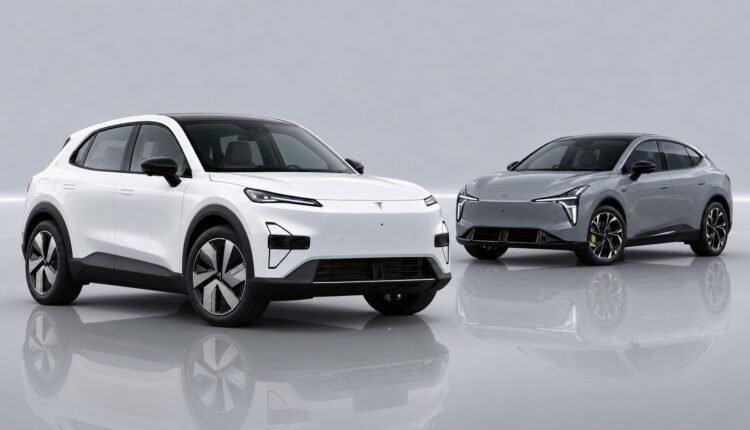
ISLAMABAD, October 25, 2026: Pakistan’s electric vehicle market is entering 2027 with a growing selection of affordable city cars, family hatchbacks, electric SUVs and premium models, giving motorists more options as they consider switching from petrol-powered vehicles.
With electric cars now available across several price categories, buyers planning a purchase in 2027 will need to look beyond showroom prices and advertised driving ranges. Charging availability, electricity costs, battery warranties, maintenance facilities and resale prospects are among the factors that could determine whether an EV is a practical investment.
Although electric vehicles can significantly reduce daily driving expenses, their overall affordability depends on how frequently they are used, where they are charged and the cost of ownership over several years.
Electric car prices in Pakistan ahead of 2027
Pakistan’s EV market now includes vehicles priced from approximately Rs1.1 million to more than Rs50 million, covering everything from small urban vehicles to luxury electric SUVs.
For buyers seeking an affordable electric car primarily for city travel, several options are available below Rs5 million.
The Alektra Metro is listed between Rs1.095 million and Rs1.395 million. However, it is classified as a low-speed urban vehicle and should not be considered equivalent to a conventional passenger car.
The Inverex Xio starts at Rs3.499 million, while the Honri Ve is available between Rs3.599 million and Rs4.399 million.
Other choices include the Kaiyi e-Qute 04, starting at Rs3.99 million, and the JMEV EV3, priced at approximately Rs4.9 million to Rs5 million.
These vehicles may appeal to buyers with predictable daily commutes, particularly those who have access to home charging.
Electric hatchbacks between Rs5 million and Rs7 million
Motorists seeking more interior space, additional features and greater everyday practicality can explore several models in the Rs5 million to Rs7 million category.
The Chery Q Premium is listed at Rs5.554 million, while the Dongfeng Box ranges between Rs5.5 million and Rs6.8 million.
The MG Binguo is priced at Rs5.699 million, followed by the GAC Aion UT at Rs6.399 million and the Kaiyi X3 Pro EV at Rs6.79 million.
The MG4, priced at Rs6.999 million, is another option for buyers considering an electric hatchback.
For families, rear-seat comfort, luggage capacity, ground clearance and the availability of authorised service facilities should carry as much importance as the vehicle’s advertised range.
Electric SUVs offer more choices for families
The growing availability of electric crossovers and SUVs is providing additional options for buyers who prefer larger vehicles.
In the Rs7 million to Rs10 million segment, the BYD Atto 2 is listed at Rs7.29 million, while the ORA 5 costs approximately Rs8.599 million.
The GAC Aion V is priced at Rs8.899 million, and both the BYD Atto 3 and Omoda E5 are listed at Rs8.99 million.
The Jaecoo J6 is available between Rs8.799 million and Rs10.8 million, depending on the variant.
Other options include the Dongfeng Vigo, priced between Rs6.999 million and Rs7.85 million, and the JMEV Elight electric sedan, listed between Rs8.499 million and Rs9.999 million.
Buyers should compare the actual equipment, battery capacity, drivetrain and safety features offered in each Pakistan-specification variant rather than relying solely on international specifications.
Premium electric cars in Pakistan
Pakistan’s higher-priced EV segment includes vehicles offering larger batteries, additional technology and premium features.
The Hyptec HT is listed between Rs12 million and Rs14 million, while the Dongfeng 007 costs approximately Rs11.9 million to Rs13.9 million.
The Deepal L07 is priced at Rs14 million, and the XPeng G6 ranges between Rs14.5 million and Rs18.5 million.
Other models include the BYD Seal, priced between Rs14.8 million and Rs17 million, Deepal S07 at Rs15 million, BYD Sealion 7 at Rs15.5 million and Deepal E07 at Rs19 million.
Luxury options include the MG Cyberster at Rs27 million to Rs29.9 million, XPeng X9 at Rs31.5 million and BMW iX at approximately Rs56 million to Rs58.1 million.
These figures reflect advertised prices available as of September 28, 2026. They should not be treated as confirmed 2027 prices, and buyers should obtain updated quotations before booking.
How much can EV owners save on fuel costs?
Lower running costs remain one of the strongest arguments for switching to electric vehicles, particularly for motorists who travel regularly and can charge their cars at home.
Unlike petrol-powered vehicles, EVs use electricity, meaning their running costs depend on the electricity tariff and energy consumption.
For illustration, an electric car consuming 15 kilowatt-hours per 100 kilometres, with an additional 12 percent allowance for charging losses, would cost approximately Rs10.08 per kilometre at an electricity rate of Rs60 per unit.
At Rs100 per unit, the same vehicle would cost approximately Rs16.80 per kilometre.
By comparison, a petrol car delivering 14 kilometres per litre would cost approximately Rs27.86 per kilometre if petrol were priced at Rs390 per litre.
Under these assumptions, a motorist travelling 1,500 kilometres monthly could save approximately Rs26,700 in energy expenses by charging an EV at Rs60 per unit instead of using the petrol vehicle.
However, these calculations are illustrative and do not represent verified electricity or petrol prices for 2027.
They also exclude additional ownership expenses, including vehicle financing, insurance, charger installation, tyres, maintenance and depreciation.
The actual financial benefit will depend on the buyer’s electricity tariff, driving habits and total vehicle cost.
Home charging could be the deciding factor
Access to reliable charging facilities is among the most important considerations for anyone planning to purchase an electric vehicle in 2027.
Home charging can make EV ownership considerably more convenient, particularly for motorists who have dedicated parking spaces and suitable electrical connections.
Buyers relying entirely on public charging stations should examine the availability of chargers along their regular routes, their operating hours, connector compatibility and customer charging rates.
Public charging facilities are expanding in Pakistan, but availability remains uneven across different locations.
Drivers planning intercity journeys should also verify charging station availability in advance rather than relying solely on locations displayed in mobile applications.
Before installing a home charger, buyers should have a qualified electrician assess their electricity supply, wiring, parking arrangements and existing household load.
They should also confirm whether the dealership provides a charging cable, wall-mounted charger or installation assistance.
Understanding electric car range before buying
Advertised driving range is another factor that can create confusion among prospective EV buyers.
Manufacturers use different testing standards, including WLTP, NEDC and CLTC, to calculate the distance an electric vehicle can travel on a single charge.
Because these testing procedures differ, their figures should not be compared directly.
For example, the Pakistan-specification Chery Q has been quoted with a range of 400 kilometres under NEDC testing and 310 kilometres under WLTP testing.
These figures represent different testing methods for the same vehicle rather than separate battery configurations.
Actual driving range can also change depending on road conditions, speed, temperature, air conditioning, passenger weight and driving habits.
Motorway travel generally requires more energy per kilometre than slower city driving, making realistic range estimates particularly important for motorists who frequently travel between cities.
Buyers should therefore consider their longest regular journeys and ensure that the selected EV offers sufficient range to reach available charging facilities with a comfortable battery reserve.
Battery warranty and after-sales support matter
Battery replacement costs and long-term maintenance remain important considerations for electric car buyers.
Although manufacturers commonly advertise extended battery warranties, consumers should examine the complete terms rather than relying on promotional claims.
Important details include warranty duration, kilometre limits, minimum battery health coverage and whether the warranty remains valid when the vehicle is sold to another owner.
Buyers should also confirm whether the electric motor, inverter and onboard charging system have separate warranty arrangements.
The availability of trained technicians, diagnostic equipment and replacement components in the buyer’s city is equally important.
A vehicle with an attractive purchase price may become inconvenient to own if specialist maintenance or replacement parts are difficult to obtain.
Buying a used electric car in 2027?
The used EV market may offer another option for motorists seeking lower purchase prices, but battery condition requires particular attention.
Unlike conventional vehicles, electric cars need specialised inspections to assess the condition of their high-voltage battery systems.
Prospective buyers should request a battery state-of-health report from an authorised service centre or qualified EV specialist.
They should also check for accident damage, flooding, charging faults, battery enclosure damage, software issues and incomplete service records.
Testing both AC and DC charging, where supported, can help identify potential problems before purchase.
The estimated driving range displayed on a vehicle’s dashboard should not be treated as proof of battery health.
What should buyers check before booking an EV?
Before paying a booking amount, consumers should obtain a written quotation confirming the vehicle’s complete on-road price, including applicable taxes, registration charges and delivery expenses.
They should also confirm the expected delivery period, booking refund conditions, battery specifications, charging equipment and warranty coverage.
A test drive on local roads can help buyers assess ride comfort, ground clearance, braking performance and overall practicality.
Checking whether authorised workshops and commonly required replacement parts are available nearby can also reduce potential ownership difficulties.
Is 2027 the right time to buy an electric car in Pakistan?
With more electric vehicles entering different price categories, motorists planning to switch in 2027 have a broader selection than before.
However, choosing an EV should depend on individual circumstances rather than advertised fuel savings alone.
For buyers who travel predictable distances, have reliable home charging and access to authorised maintenance facilities, an electric car could offer meaningful savings in daily operating expenses.
Those who regularly undertake long-distance journeys or depend entirely on public charging may need to evaluate charging infrastructure more carefully.
Ultimately, the best electric car will be one that balances purchase price, practical driving range, charging convenience, warranty protection and long-term ownership costs.
As Pakistan approaches 2027, buyers should use current market information as a starting point while confirming updated prices, specifications and delivery arrangements directly with authorised dealerships.