
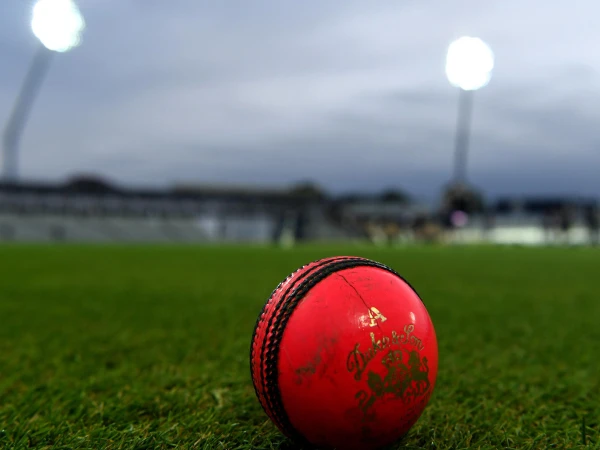
Persistent poor light during the Test between South Africa and Australia in Durban has reignited debate over the use of pink balls to reduce interruptions in Test cricket.
More than 60 overs were reportedly lost to poor light during the first three days of the match, raising questions about whether alternative playing conditions could help preserve more time on the field.
Despite the sun setting shortly after 6 p.m. in Durban during October, play on the opening day was halted at 3:23 p.m. local time. Only 65.2 of the scheduled 90 overs were bowled that day. Play also ended early on the second and third days.
Experts have attributed the conditions to coastal weather patterns, with sea breezes and rising humidity contributing to thick, low clouds that reduce visibility.
The International Cricket Council has recently permitted the use of pink balls in Test matches as a possible solution to poor-light interruptions. However, the option requires agreement from both teams before the match, and South Africa and Australia did not consider it for the Durban Test, according to the report.
Former South African fast bowler Shaun Pollock suggested that using a pink ball could have allowed approximately 45 additional overs to be played.
Former South African bowler Vernon Philander also proposed giving umpires the authority to introduce a pink ball when light deteriorates. Such a change, however, could raise questions about consistency and fairness if the ball is changed during a match.
The debate highlights the challenge of balancing player safety, fair playing conditions and the need to maximise playing time in traditional Test cricket.