
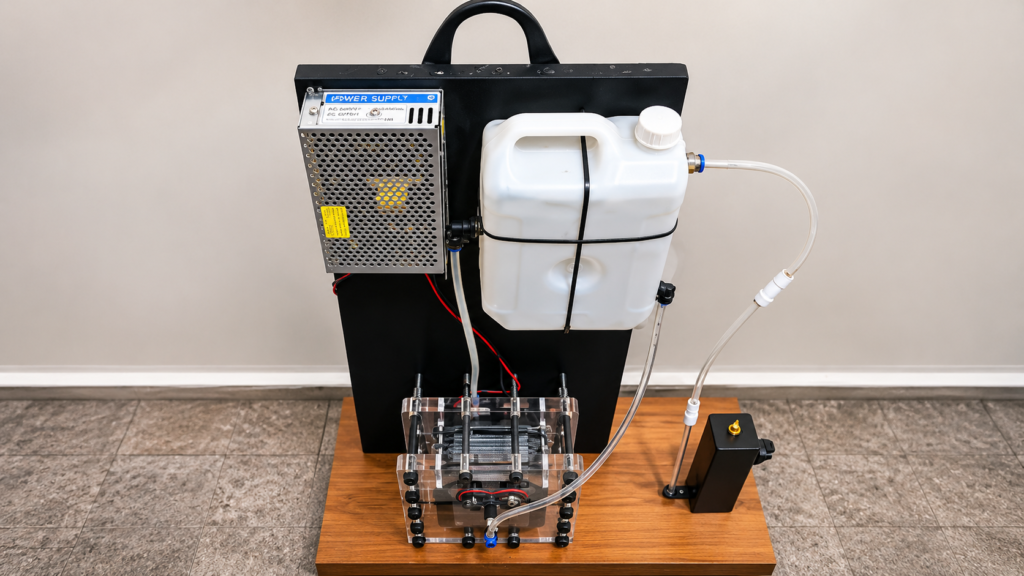
KARACHI, November 10, 2026: A team of young engineers in Karachi has developed a locally manufactured hydrogen generator capable of extracting hydrogen gas from water, introducing a potential alternative energy solution for industrial, commercial and domestic applications.
The innovation, developed under the Pakistani startup Pak Hydro, uses electrolysis technology to separate water into hydrogen and oxygen. The hydrogen produced can then be used to generate heat and flames for various applications, including welding, metalworking and industrial heating.
The project comes as Pakistan faces persistent energy challenges, rising imported fuel costs and increasing production expenses across several industries.
Pak Hydro aims to develop locally manufactured hydrogen technology that could help businesses explore alternatives to conventional fuels, including natural gas and liquefied petroleum gas (LPG).
The startup is led by founder and Chief Executive Officer Muhammad Ayan, an electrical engineering student at Sir Syed University of Engineering and Technology.
The team also includes co-founder and Chief Technology Officer Dr Usman Alauddin, a professor in the Mechanical Engineering Department at NED University, and co-founder and Chief Operating Officer Ameer Ali, an assistant professor of electrical engineering at Sir Syed University.
According to the developers, the prototype uses electricity to split water molecules into hydrogen and oxygen through electrolysis. The hydrogen can subsequently be burned to produce heat without directly releasing carbon dioxide.
Dr Usman Alauddin said the prototype could produce approximately one kilogram of hydrogen within six to eight minutes while consuming around eight to ten litres of water.
However, the reported production capacity has not been independently verified, and the team has not provided detailed electricity consumption figures or independently tested performance data.
The electricity required to produce hydrogen is a critical factor in determining the technology’s commercial feasibility, particularly because electrolysis is an energy-intensive process.
The developers said the generator could potentially operate using solar electricity, allowing hydrogen production to be powered by renewable energy sources.
The team identified several possible applications for the technology, including small manufacturing units, welding workshops, textile operations, bakeries, traditional ovens and other businesses requiring continuous heat.
These sectors frequently depend on LPG, natural gas and other fuels, making energy costs an important consideration for their operations.
Pak Hydro’s developers believe locally manufactured hydrogen systems could eventually provide businesses with additional energy options, subject to technical testing, operational efficiency and commercial viability.
Safety remains another major consideration because hydrogen is highly flammable and requires appropriate controls during production, transportation and combustion.
Muhammad Ayan said the prototype was designed to produce hydrogen according to demand rather than storing large quantities of gas.
The developers said the generator incorporates three levels of safety protection, although detailed technical specifications and independent safety certification were not provided.
Producing hydrogen on demand may reduce some risks associated with bulk gas storage, but it does not eliminate the need for proper ventilation, leak detection, flame protection and safe electrical operation.
The startup also reported that its initial prototype cost approximately Rs50,000 to manufacture, with major components sourced locally.
However, the prototype’s manufacturing cost does not represent the overall cost of hydrogen production, which must account for electricity consumption, equipment maintenance, water treatment and operational expenses.
Hydrogen is increasingly being explored as an alternative energy carrier because its combustion does not directly produce carbon dioxide.
Nevertheless, its overall environmental benefits depend on how the electricity used during electrolysis is generated.
Hydrogen produced using renewable electricity can significantly reduce associated carbon emissions, while hydrogen generated using fossil-fuel-based electricity may carry a substantial environmental footprint.
The Karachi-developed prototype highlights growing interest among Pakistani engineers in indigenous energy technologies and renewable hydrogen applications.
Further independent testing will be necessary to establish the system’s production efficiency, safety standards, operating costs and suitability for large-scale commercial deployment.
If commercially viable, the technology could support local innovation and contribute to Pakistan’s efforts to diversify its energy resources and reduce dependence on imported fuels.