
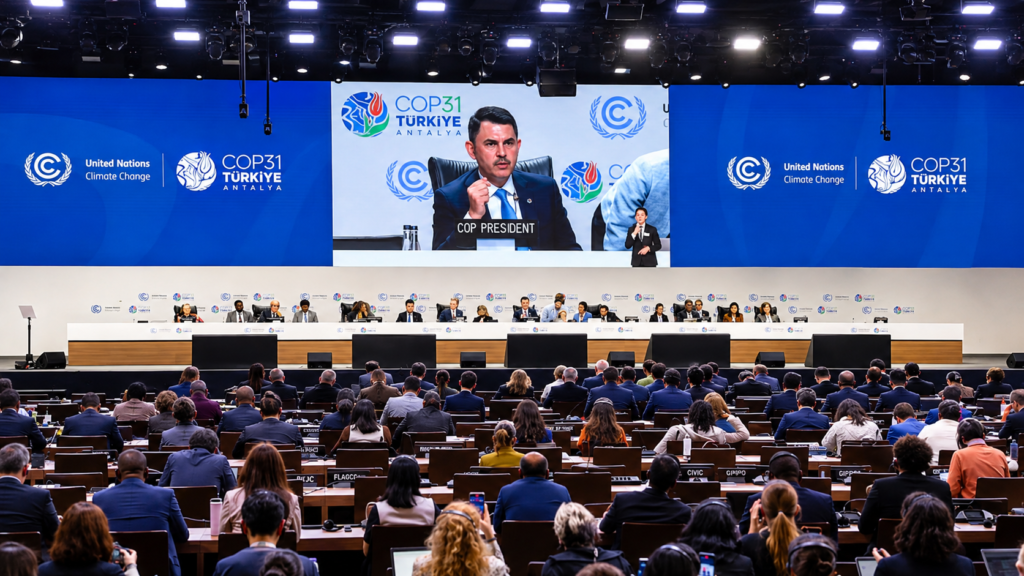
ANTALYA, Turkey, November 22, 2026: The United Nations COP31 climate summit ended without a consensus agreement on Sunday after the European Union and other countries rejected a proposed deal, leaving negotiations over global climate action unresolved.
The breakdown followed more than two weeks of negotiations led by Turkey and Australia. Talks originally scheduled to conclude on Friday continued through the weekend as delegates struggled to bridge differences over fossil fuels and the ambition of the proposed agreement.
Turkey’s COP31 President Murat Kurum confirmed at the closing plenary that the final text had not secured the approval required for adoption, Reuters reported.
“It is clear that there are parties in this hall who oppose this text. We recognize that there is no consensus on this document. Therefore, these decisions have not been adopted,” Kurum told delegates.
The European Union and Panama were among those refusing to accept the proposed final decision, with disagreements over references to fossil fuels remaining unresolved.
Australia, which led the negotiations, worked alongside host country Turkey to produce several versions of the proposed agreement.
The drafts attempted to balance the demands of countries facing severe climate-related risks with the interests of nations whose economies depend heavily on fossil fuel production or consumption.
One significant element of the proposed text acknowledged that global warming was on course to exceed the internationally agreed threshold of 1.5 degrees Celsius.
It also called for accelerating the development of carbon-removal technologies to help reverse the temperature overshoot in the future.
However, critics considered the proposed measures insufficient, preventing negotiators from reaching the consensus necessary for a final agreement.
The failure comes amid growing climate-related challenges, including extreme heat across Europe and glacial flooding in Nepal, while international conflicts and rising living costs have competed for governments’ attention.
The outcome represents a major setback for international climate diplomacy. The last comparable breakdown occurred at the 2009 Copenhagen climate summit, where countries failed to adopt the Copenhagen Accord through consensus.
The annual COP negotiations remain the principal international forum for coordinating efforts to reduce global warming and mobilise financial support for countries affected by climate change.
Despite the failure to adopt a political declaration in Antalya, commitments made at previous climate summits remain in force, along with the existing legal and technical frameworks governing international climate cooperation.