
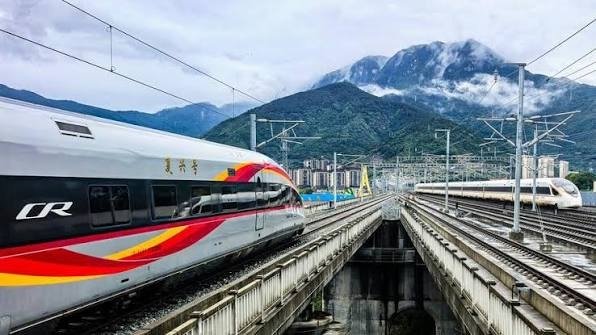
ISLAMABAD, Oct 21 (INP-Wealth Pakistan): China’s expanding high-speed railway network offers important lessons for Pakistan’s planned Main Line-1 (ML-1) modernisation, with experts stressing that integrated transport corridors, reliable freight services and stronger links between industrial centres and ports are essential to unlocking the economic benefits of railway investment.
China opened four high-speed railway sections in September 2026, connecting Xiong’an with Shangqiu, Xi’an with Ankang, Yichang with Xingshan and Harbin with Yichun. The new routes have strengthened connectivity across northern, northwestern, central and northeastern China, reducing travel times and improving access between major economic centres.
The expansion comes as China continues to invest heavily in railway infrastructure amid growing passenger demand.
According to China State Railway Group Co., Ltd., railway fixed-asset investment reached 511.8 billion yuan during January-August 2026, up 1.5 percent from the corresponding period last year. Passenger journeys rose 3.9 percent to a record 3.32 billion during the same period.
Dr Hassan Daud Butt, Senior Advisor to Energy China and former Project Director of the China-Pakistan Economic Corridor (CPEC), told Wealth Pakistan that China’s railway development demonstrated the economic advantages of connecting individual infrastructure projects to a wider national transport network.
“Connectivity produces the greatest economic return when a new line does not end with the cities it directly serves but links into other corridors, industrial centres and markets,” he said.
Butt explained that such integration expanded the economic reach of railway infrastructure and encouraged investment beyond the areas directly served by new routes.
He said Pakistan should adopt a similar approach by treating railway modernisation as part of a broader economic development strategy rather than focusing on isolated transport projects.
“Pakistan needs to think increasingly in terms of economic corridors rather than standalone transport projects. Railways should connect ports, industrial zones, agricultural markets and major urban centres in a way that reduces logistics costs and creates commercially useful movement across the network,” he said.
Highlighting the proposed modernisation of the Karachi-Peshawar ML-1 corridor, Butt said the project could generate wider economic benefits by improving freight reliability, reducing transportation costs and strengthening connections between industrial zones and seaports.
He emphasised that the economic value of railway investment depended not only on infrastructure quality but also on its integration with production centres, logistics networks and commercial markets.
While China’s newly opened high-speed railway sections primarily improve passenger connectivity, Pakistan’s railway modernisation priorities also include freight efficiency, cargo handling and the movement of goods between industrial centres and ports.
Engr. Saqlain Ahmed, Assistant Professor at HITEC University, Taxila, said Pakistan’s geographical position offered significant opportunities to develop transport connections linking China, Central Asia, Afghanistan and maritime trade routes serving international markets.
However, he cautioned that geographical advantages alone would not make Pakistan a competitive regional transit hub.
“Competitive transit services require efficient border procedures, compatible transport arrangements, reliable logistics infrastructure and predictable movement of cargo,” Ahmed told Wealth Pakistan.
He said railway modernisation should be accompanied by improvements in operational efficiency, technical expertise and institutional capacity.
Ahmed also called for broader cooperation with China in railway engineering, signalling systems, maintenance technology, logistics management and professional training.
“Pakistan can benefit from Chinese expertise in railway engineering and network management, but the objective should be to strengthen domestic operational capabilities,” he said.
He suggested training railway engineers, technicians and logistics professionals, introducing modern maintenance practices and adopting data-driven freight management systems to improve the long-term performance of Pakistan Railways.
According to Ahmed, modern railway networks require more than upgraded tracks and infrastructure. Efficient operations, reliable maintenance and technological integration are equally important for improving services and reducing transportation costs.
He said strengthening these capabilities would help Pakistan make better use of its existing railway infrastructure while preparing for future expansion and closer integration with regional trade corridors.
Ahmed also highlighted the importance of realistic financing arrangements, particularly given Pakistan’s fiscal constraints.
He said railway projects should be supported by sustainable investment planning and improvements in operational capacity to ensure they deliver lasting economic returns.
Experts believe China’s experience demonstrates how coordinated railway development can improve regional connectivity, encourage industrial investment and strengthen economic integration.
For Pakistan, they said, the priority should be to align ML-1 modernisation and other railway initiatives with industrial development, freight efficiency and regional trade requirements while ensuring the financial and technical capacity needed to sustain operations.