
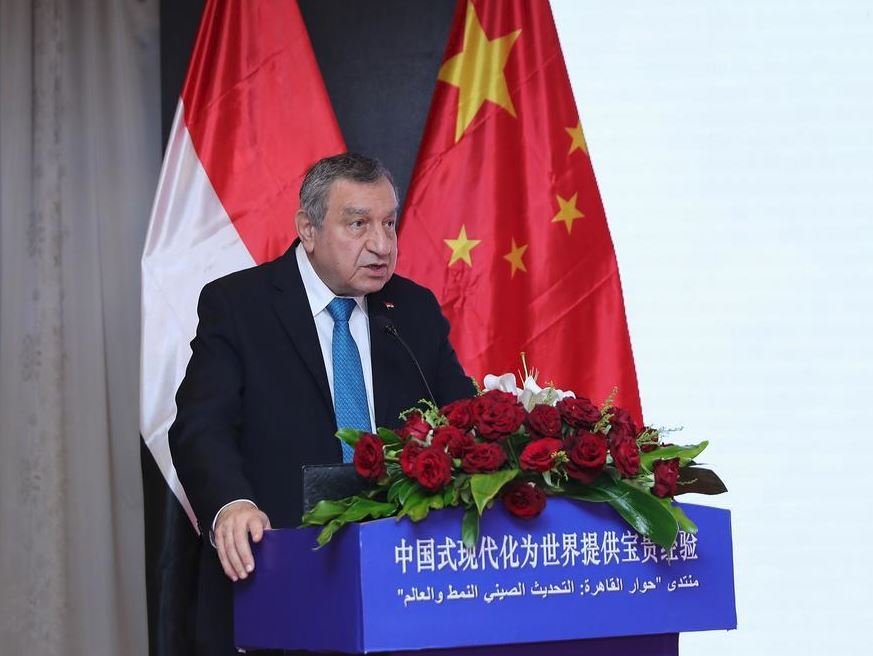
CAIRO, Sunday, September 20, 2026: China’s Global Development Initiative is helping developing countries gain a stronger voice in global governance while expanding opportunities for sustainable development, former Egyptian Prime Minister Essam Sharaf has said.
In a recent interview with Xinhua, Sharaf said the Global Development Initiative (GDI) had helped return development to the centre of international attention at a time when geopolitical tensions, economic competition and successive global crises risk pushing development priorities aside.
Sharaf, founder and chairman of the Sharaf Foundation for Sustainable Development, said China’s decades of economic and social transformation had given it substantial development experience that it was increasingly willing to share, particularly with countries in the Global South.
“Development should not become a victim of these conflicts, but should remain a shared priority for the international community,” he said.
Sharaf links development with peace and stability
Sharaf argued that development and sustainable peace were closely connected, saying widening development gaps could undermine stability while conflict made meaningful economic and social progress more difficult.
Investing in development, he said, should therefore also be viewed as an investment in stability, peace and the future.
He said the GDI represented a broader approach to development extending beyond economic growth and infrastructure projects to issues directly affecting people’s lives.
These include poverty reduction, food and energy security, healthcare, education and strengthening societies’ ability to withstand crises.
Greater role for developing countries in global governance
Sharaf said another significant aspect of the initiative was its emphasis on multilateralism and greater participation by developing countries in international decision-making.
He described this approach as a shift from governance conducted “for countries” towards governance shaped “with the participation of countries.”
Sharaf said greater representation was particularly important as major international challenges — including climate change, food security, energy security and digital transformation — required cooperation among countries.
True multilateralism, he argued, was not simply about bringing many countries together but ensuring that participants had a meaningful voice and that their interests were considered when international decisions were made.
Digital divide emerges as key development challenge
Looking ahead, Sharaf identified digital development and artificial intelligence as areas likely to become increasingly important for the GDI.
He warned that unequal access to advanced technologies could deepen existing development inequalities and create a more serious digital divide between wealthier and developing countries.
Sharaf said support for what he called the “Digital South” should extend beyond improving internet access and digital infrastructure.
Developing countries, he said, also require investment in human capacity, knowledge transfer, digital education, scientific research and equitable access to emerging technologies.
He said the GDI could help connect technological advancement with broader development goals and enable developing countries to benefit from advances in artificial intelligence.
AI cooperation could shape next phase
Sharaf also pointed to the China-led establishment of the World Artificial Intelligence Cooperation Organization, which he said was intended to promote international cooperation on AI governance and encourage the safe, equitable and inclusive development of artificial intelligence.
He said international cooperation would become increasingly important as AI and other emerging technologies reshape economies, employment, education and development.
“The future of technology should not be a future for a limited number of countries, but a shared future for humanity,” Sharaf said.