
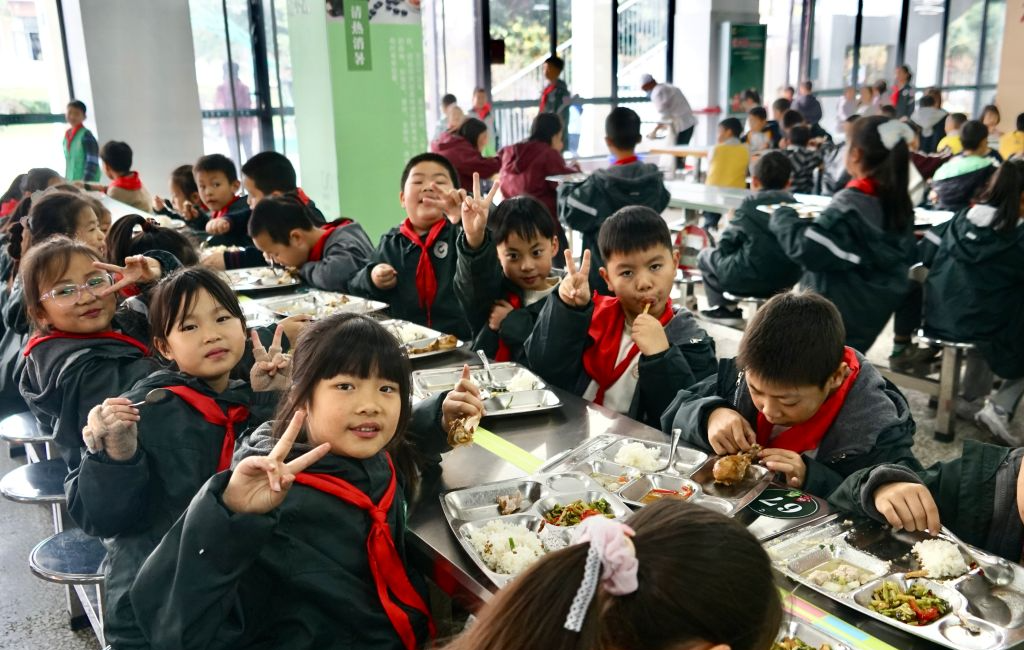
CHENGDU: A digital monitoring system introduced in Mianzhu, a county-level city in southwest China’s Sichuan Province, is strengthening school food safety, improving financial transparency and preventing corruption in school meal programmes.
The platform monitors food procurement, deliveries, inspections and expenditure across 48 schools and 56 canteens, serving approximately 39,500 students.
By integrating digital tracking, artificial intelligence (AI) and financial oversight, local authorities aim to ensure that students receive safe and nutritious meals while preventing the misuse of public funds.
Corruption Investigation Leads to Digital Reforms
The initiative emerged following a corruption investigation in 2024, when a local school head faced disciplinary action after investigators uncovered inflated food deliveries, forged supply receipts and kickbacks involving suppliers and school personnel.
Investigators identified weaknesses in procurement, delivery, inspection and payment procedures that allowed discrepancies to remain undetected.
In response, 10 government departments, including education, market regulation and finance, collaborated to establish a citywide digital oversight platform.
The system connects procurement orders, delivery records, invoices and payments, enabling authorities to identify irregularities and strengthen accountability.
Digital Tracking Strengthens Food Safety
The platform monitors food ingredients throughout the supply chain, from suppliers to school kitchens.
Delivery vehicles and transportation temperatures are monitored, while inspection and quarantine documents for each shipment can be accessed digitally.
Upon arrival, food shipments are jointly inspected by kitchen staff, school administrators and selected teachers, with photographs and acceptance records uploaded to the system.
The platform also automatically flags unusual purchasing volumes and prices outside predetermined ranges, helping authorities detect potential financial irregularities.
Financial Transparency and Centralised Procurement
Mianzhu has introduced stricter financial controls by requiring all school canteen revenues to be deposited into dedicated government treasury accounts.
Expenditure is restricted to authorised purposes, accounting procedures have been standardised and financial records are made publicly available.
Bulk food ingredients are now procured through public tenders and distributed centrally, replacing fragmented purchasing arrangements previously managed by individual schools.
The reforms have helped reduce procurement costs while strengthening supplier accountability.
AI Monitoring and Parental Participation
Artificial intelligence-powered monitoring systems have also been introduced in school kitchens to detect hygiene violations, including improper use of protective caps and face masks.
Parents have been incorporated into the oversight process, with 66 parents employed as canteen staff across the city.
Under a new arrangement, parents can also decide when to visit school kitchens and which aspects of food preparation and hygiene they wish to inspect.
The initiative forms part of a broader nationwide campaign launched in 2024 to address corruption and misconduct affecting public services.
According to Chinese authorities, more than 130,000 instances of misconduct involving school meal funds and procurement have been investigated and addressed nationwide.
Mianzhu’s experience highlights how digital technology, institutional reforms and community participation can work together to improve school food safety and public accountability.