
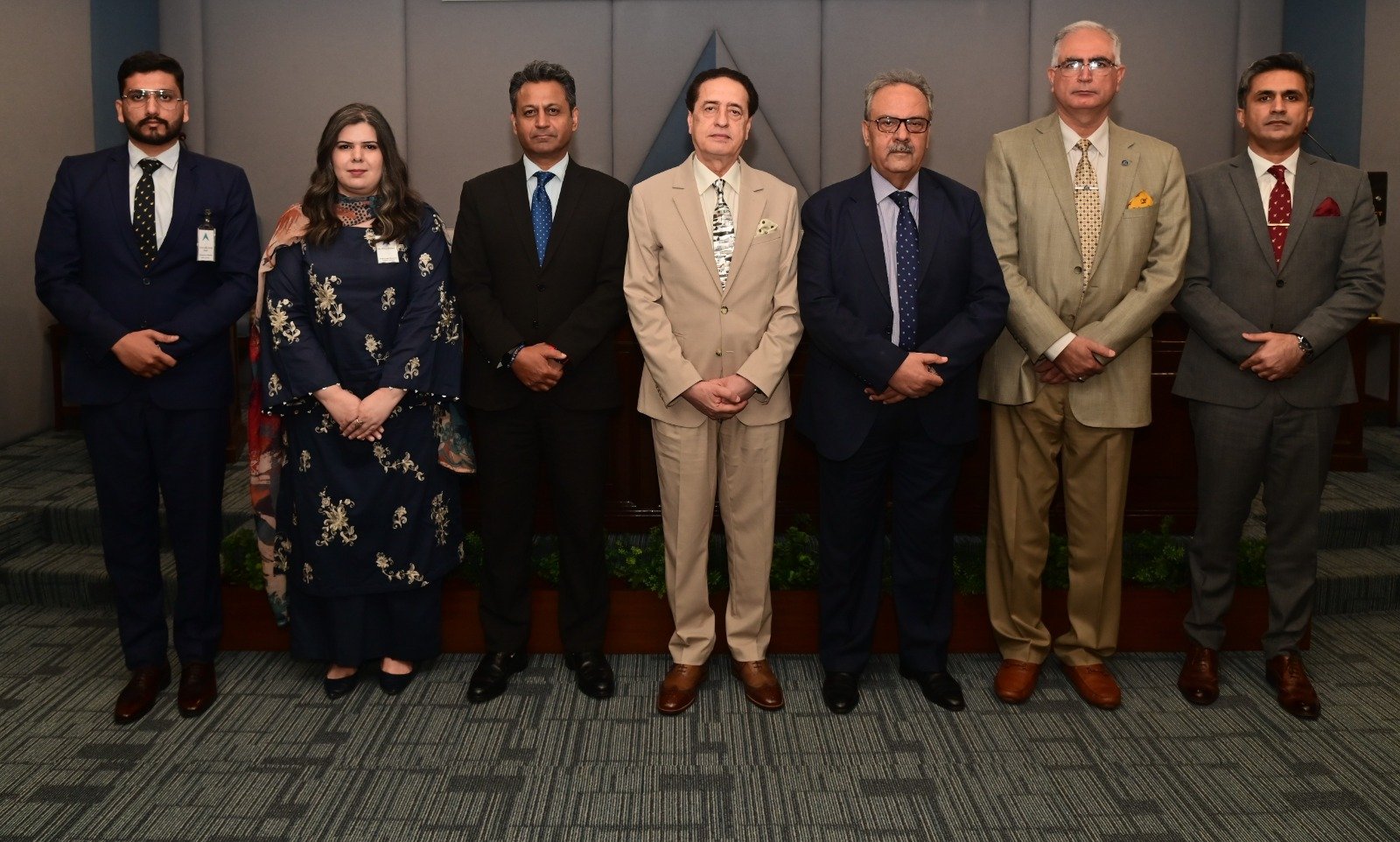
LAHORE: The Centre for Aerospace and Security Studies (CASS) Lahore has highlighted the changing nature of modern warfare, focusing on the growing role of technology, artificial intelligence, strategic communication, and diplomacy during a seminar on lessons from the Iran-Israel-US conflict.
Titled “One Conflict, Three Battlefields: Aerial, Geopolitical and Cognitive Lessons from Iran-Israel-US Conflict,” the seminar was held on August 5, 2026, and brought together academics, intellectuals, serving and retired military officers, and security experts to discuss emerging challenges in 21st-century conflicts.
The session featured discussions on aerial warfare developments, geopolitical dynamics, and the increasing importance of the information and cognitive domains in modern battlefields.
Technology Reshaping Future Air Warfare
Speaking at the seminar, Air Marshal Abdul Moeed Khan (Retd), Vice Chancellor Air University, highlighted key operational lessons from the conflict, particularly the growing importance of asymmetric capabilities.
He said technologies including drones, missiles, distributed air defence systems, artificial intelligence, commercial technologies, and networked sensors are transforming the future of aerial warfare.
Air Marshal Khan also discussed the significance of the low-altitude “air littoral” and stressed that innovation, adaptability, and indigenous technological development would remain critical for maintaining operational resilience.
Diplomacy and Energy Security Among Key Geopolitical Lessons
Former Pakistan Ambassador to Iran Ambassador Asif Ali Durrani (Retd) discussed the geopolitical implications of the conflict, saying sustainable peace cannot be achieved through military means alone.
He emphasized the need for clear political objectives, effective diplomacy, and strategic geopolitical engagement. He also highlighted the importance of energy security, particularly in view of developments involving the Strait of Hormuz.
Durrani further noted that external security guarantees can be fragile and stressed the importance of regional security frameworks and confidence-building measures.
Information Warfare Becomes a Critical Battlefield
Executive Director Express 24/7 TV Fahd Husain highlighted the cognitive dimension of modern conflicts, stating that wars are increasingly being fought simultaneously in physical and information spaces.
He said artificial intelligence-generated content, social media platforms, open-source intelligence (OSINT), commercial satellite imagery, and widespread smartphone usage have significantly transformed the information environment.
According to Husain, controlling narratives and maintaining information superiority have become key elements of modern warfare, requiring stronger integration between military operations and cognitive strategies.
CASS Highlights Need for Multi-Domain Preparedness
In his concluding remarks, CASS Lahore President Air Marshal Asim Suleiman (Retd) said the Iran-Israel-US conflict reflects the evolving character of warfare and challenges traditional assumptions about military operations.
He emphasized that future success would depend on integrating military capabilities with intelligence, technology, doctrine, industrial capacity, diplomacy, and strategic communication.
Drawing parallels with Pakistan’s recent military experience, he highlighted the importance of coordinated airpower, intelligence, electronic warfare, precision capabilities, and strategic communication in modern operations.
The seminar concluded with an interactive discussion, where participants emphasized the importance of technological innovation, strategic communication, and indigenous capacity building to strengthen national resilience against emerging security challenges.
Also Read: CASS Discusses Pakistan’s Roadmap for Indigenous Aerospace Technology Development