
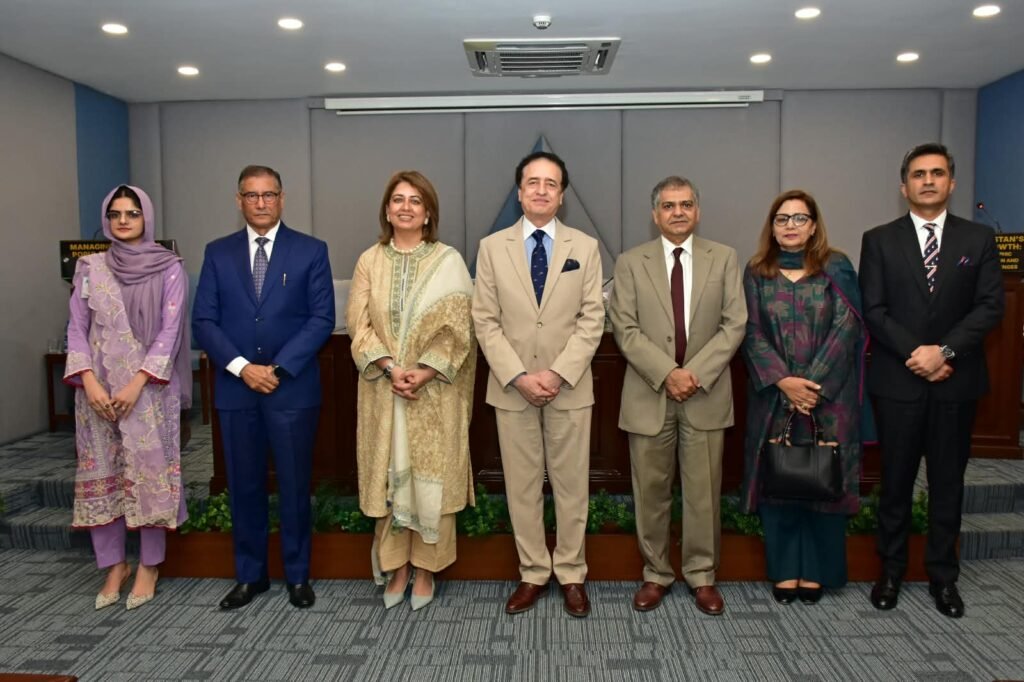
LAHORE: The Centre for Aerospace & Security Studies (CASS) Lahore organised a seminar on Pakistan’s growing population, urbanisation and human security challenges, bringing together academics, policymakers and experts to discuss demographic pressures and strategies for sustainable development.
The seminar, titled “Managing Pakistan’s Population Growth: Dissecting Demographic Pressures, Urbanisation and Human Security Challenges,” was held on October 21, 2026, with participants examining the implications of rapid population growth for public services, healthcare, natural resources, employment and national development.
Air Marshal Irfan Ahmad (Retd), Director at CASS Lahore, delivered the opening address. The event was attended by academics, intellectuals and specialists working on population, public policy and human security issues.
Experts highlight demographic pressures on Pakistan
Minhaj ul Haque, Chief Executive Officer of Population Centre Pakistan, delivered a presentation on “Pakistan’s Demographic Trends Driving Its Population Growth: Strategic Implications for the Country.”
He highlighted the increasing pressure of population growth on public services, natural resources and socioeconomic development.
He called for stronger family planning programmes, improved access to education for girls, women’s empowerment, better healthcare facilities and greater investment in skills development.
He also emphasised the need for coordinated population management policies covering education, employment and resource allocation to support Pakistan’s sustainable development.
Dr Razia Safdar, Senior Policy Advisor and Head of the Centre for Health Policy Innovation (CHPI) at the Sustainable Development Policy Institute (SDPI), Islamabad, discussed the relationship between population growth, urbanisation and human security.
Speaking on “Population Growth, Urbanisation and Human Security: Emerging Challenges for Pakistan,” she said demographic expansion, rapid urban development and climate change were placing increasing pressure on healthcare systems and essential resources.
She stressed the importance of domestic health financing, integrated population management and women’s empowerment in addressing these challenges.
Dr Safdar also advocated adopting the One Health approach, which integrates human, animal and environmental health into a coordinated policy framework.
Sustainable urban planning and investment urged
Dr Shabana Haider, Member (Population) at the Planning Commission, Ministry of Planning, Development and Special Initiatives, addressed the seminar on “Building a Resilient Pakistan: Way Forward for Managing Population Growth and Sustainable Urban Development.”
She highlighted the challenges arising from rapid population growth and urbanisation, calling for increased investment in healthcare, education, skills development and women’s economic participation.
Dr Haider emphasised that stronger governance, institutional coordination and sustainable urban planning were necessary to manage demographic pressures effectively.
She said integrated population management could help Pakistan transform its demographic challenges into opportunities for inclusive economic growth and national resilience.
Population management a national priority, says CASS president
Concluding the seminar, Air Marshal Asim Suleiman (Retd), President of CASS Lahore, said Pakistan’s growing population must be recognised as a strategic national priority.
He noted that the 18th Constitutional Amendment had made population welfare largely a provincial responsibility, increasing the importance of coordination between federal and provincial governments.
He emphasised that managing Pakistan’s demographic transition required a whole-of-society approach involving government institutions, policymakers and other stakeholders.
According to the CASS president, Pakistan’s future would depend not merely on the size of its population but on its productive potential.
The seminar concluded with an interactive discussion covering women’s education, human capital development, population growth, government initiatives and mechanisms for implementing population management policies.
Participants exchanged views on the need for coordinated policies and institutional cooperation to address Pakistan’s demographic and human security challenges.