
MANILA: Benazir Income Support Programme Chairperson Senator Rubina Khalid has highlighted Pakistan’s efforts to link social protection with skills development, employment and climate resilience during the Asia-Pacific Social Protection Week 2026 organized by the Asian Development Bank in Manila.
Speaking at a high-level roundtable on skills, employment and social protection, Khalid said BISP was expanding its role beyond cash assistance by connecting vulnerable families, particularly young people and women, with market-relevant skills, digital opportunities and employment pathways.
The three-day forum, held from October 6 to 8, brought together government leaders, policymakers, development partners and social protection experts from across the region.
BISP Focuses on Skills and Employment
Khalid said Pakistan’s large youth population needed skills aligned with changing labour-market demands and added that BISP was working with the ADB to expand skills development within the social protection framework.
She highlighted the Benazir Hunarmand Programme, saying it had been approved by the BISP Board as a regular initiative to respond to emerging employment and skills challenges.
According to Khalid, training under the programme is based on market-driven trades identified through national assessments, while success is measured by employability and income generation rather than certification alone.
The roundtable also included senior representatives from the Philippines, Tonga, Nepal and Bangladesh, while closing remarks were delivered by ADB Deputy Director General Ayako Inagaki.
Climate-Resilient Social Protection Comes Into Focus
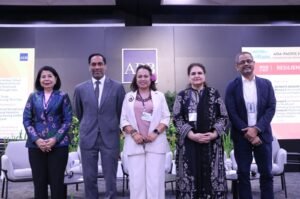
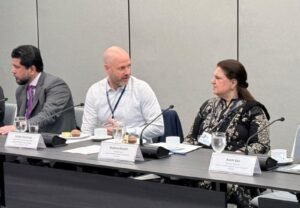
Khalid later participated in a panel discussion at the ADB Adaptive Social Protection Forum under the broader theme, “Boosting Resilience to Face Polycrises and Megatrends.”
She outlined Pakistan’s experience in developing an adaptive and shock-responsive social protection system to protect vulnerable families from climate and economic shocks.
Khalid said Pakistan contributes relatively little to global carbon emissions but remains highly exposed to the effects of climate change, particularly among vulnerable communities.
She called for stronger international support to expand adaptive social protection and help communities better withstand future climate shocks.
BISP Cites 2022 Flood Response
Khalid said BISP provided Rs70 billion in emergency cash assistance to 2.7 million families during the 2022 floods.
She also said the National Socio-Economic Registry now covers more than 40 million households and has been made dynamic, with climate-related questions added to help identify families facing greater climate risks.
The panel also featured representatives from the Marshall Islands, Malaysia and the World Food Programme.
Pakistan, Philippines Discuss Cooperation
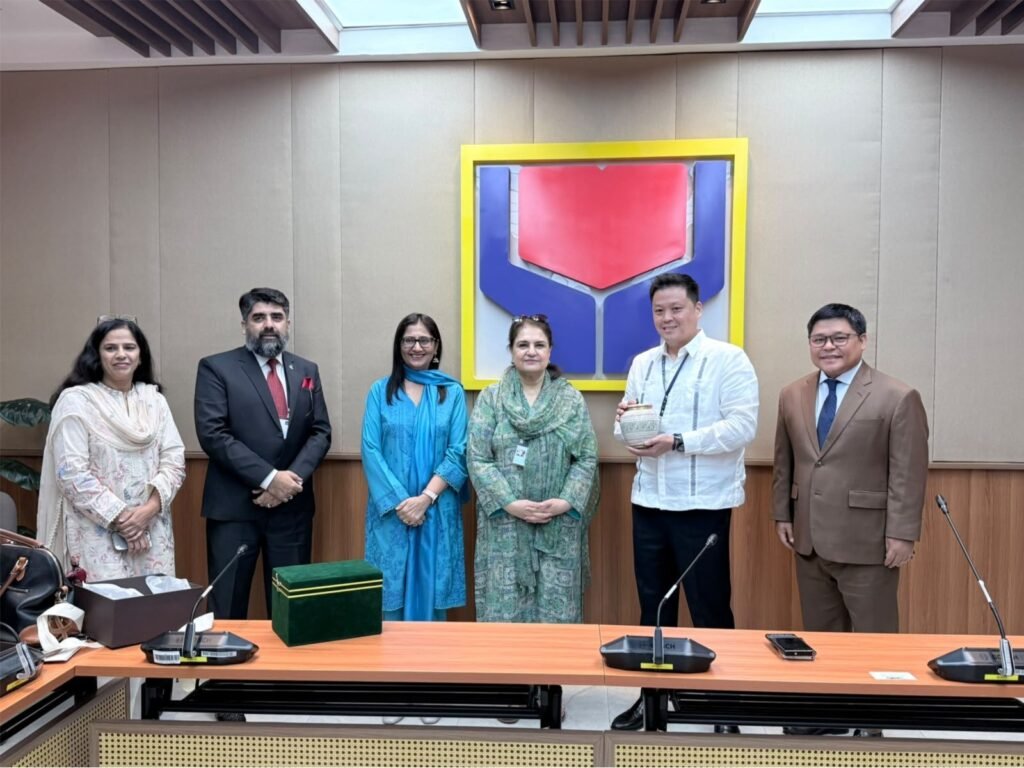
During her visit, Khalid also met Philippine Social Welfare and Development Secretary Rex Gatchalian.
The meeting focused on adaptive social protection, out-of-school children, skills development, career pathways and possible cooperation in technical education and vocational training.
Khalid presented a souvenir of Pakistan to Gatchalian as a goodwill gesture.
Pakistan’s Ambassador to the Philippines Dr. Asima Rabbani and BISP DG NSER/CCT Dr. Asim Ijaz were also present.