
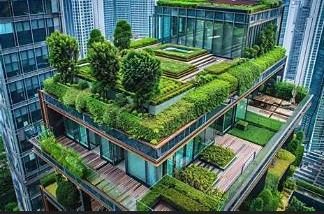
BEIJING, September 13: Beijing is turning underused rooftops into viewing decks, cultural venues and leisure spaces as part of a wider urban renewal drive aimed at revitalising historic districts without large-scale demolition.
The rooftop terrace trend is particularly visible in Dongcheng district, where authorities launched the “Breeze Terrace” initiative in 2025 to convert idle roofs into public spaces for dining, reading, cultural activities and city views.
The programme has since attracted more than 1 million visits, according to local planners, and expanded this summer with around 300 terraces linked through themed routes covering Beijing’s Central Axis, hutongs, literary spaces and night-time attractions.
Historic Beijing Meets Modern Skyline
One of the best-known examples sits above a commercial complex at the site of the historic Longfu Temple, where visitors can see Beijing’s modern skyline to the east and older landmarks including the Palace Museum, Jingshan Hill and Beihai Park to the west.
The contrast has made rooftop terraces increasingly popular with visitors and social media users looking for new perspectives on the capital.
Beijing’s central districts are subject to building height restrictions that help preserve a relatively low skyline around historic areas, including traditional hutongs, courtyard homes and imperial architecture.
The rooftop projects are designed to make better use of existing buildings while protecting that urban character.
Rooftops Become Part of Beijing’s Consumption Economy
The initiative forms part of Beijing’s broader plan for high-quality urban development, which includes revitalising historic streets, reusing industrial heritage and creating new commercial and cultural spaces.
At Jinbao Place shopping mall, for example, a rooftop garden now hosts activities ranging from yoga and herb picking to cultural events, dining and weddings.
Urban planners say the approach allows cities to create new public and commercial spaces without major redevelopment.
Social media has also helped fuel interest in rooftop venues. Content creators say images taken from terraces often attract strong engagement, particularly on Chinese lifestyle platforms.
Cleaner Air Adds to Rooftop Appeal
Beijing’s improved air quality has also made outdoor rooftop spaces more attractive.
The city’s annual average PM2.5 concentration fell from 89.5 micrograms per cubic metre in 2013 to 27 last year, according to official figures.
Planners say clearer skies, relatively low rainfall and Beijing’s temperate climate have helped create favourable conditions for the growing rooftop leisure economy.
Xing Yan, deputy chief planner at the Beijing Tsinghua Tongheng Urban Planning and Design Institute, said rooftop terraces could support new forms of consumption, improve public space and help bring new life to historic neighbourhoods.
He said future urban renewal efforts could extend more systematically across street level, building facades and rooftops to make fuller use of existing urban space.