
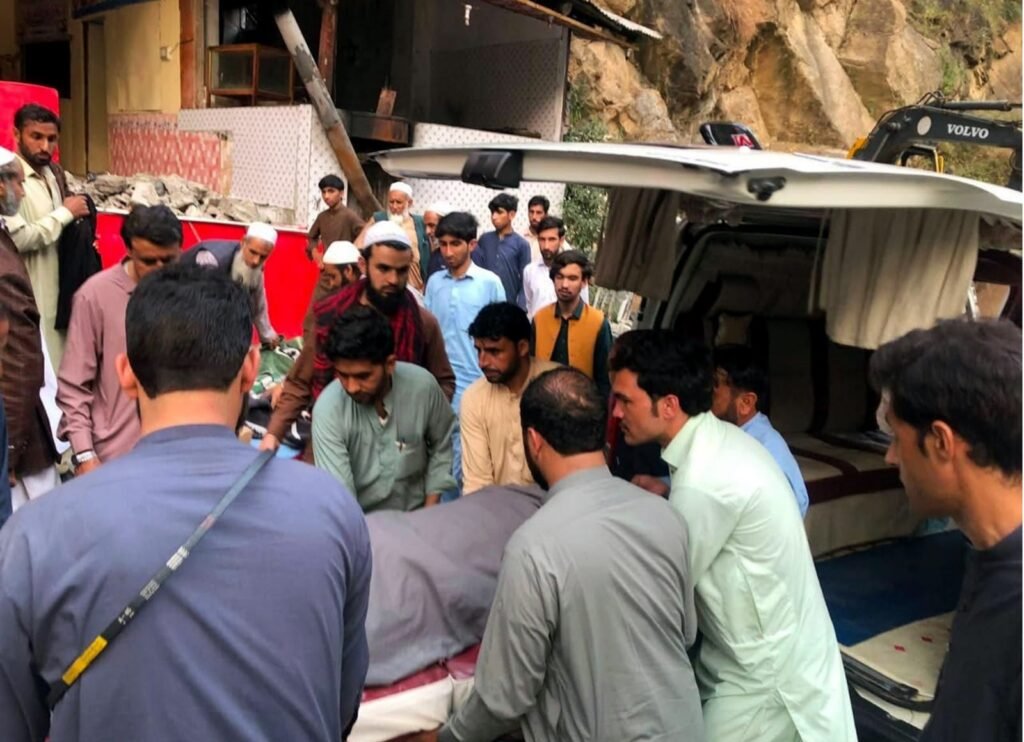
SHANGLA — Another miner from Shangla has lost his life in a mining accident, once again highlighting the hazardous working conditions faced by thousands of workers associated with the mining sector and raising concerns over inadequate safety arrangements at mining sites.
The deceased was identified as Hayatullah, son of Fazal Elahi, a resident of Pir Abad Banda in Shangla. According to local sources, Hayatullah was working at an emerald mine in Fizagat, Swat, when he was involved in an accident during mining operations. He sustained critical injuries and later succumbed to them.
The incident has caused grief among the deceased’s family, relatives and residents of the area. Fellow miners and local labour circles have also expressed serious concern over the repeated loss of lives in mining-related accidents.
Hayatullah was among thousands of workers from Shangla who travel to different mining areas in search of employment. Mining remains an important source of livelihood for people in the district, where limited employment opportunities have forced generations of residents to undertake dangerous work in underground mines.
The latest death has once again brought occupational safety in the mining sector into sharp focus. Mine workers and social circles said that despite mining being one of the most hazardous occupations, adequate safety arrangements, modern equipment, emergency response systems and preventive measures are still lacking at many mining sites.
They said workers often operate deep underground in difficult conditions and face multiple risks, including mine collapses, falling rocks, explosions, suffocation and other potentially fatal accidents.
In the event of an accident, they added, the absence of immediate rescue and medical facilities can further increase the severity of injuries and the risk of fatalities.
Thousands of families in Shangla are directly or indirectly dependent on the mining sector. The district has historically relied heavily on mining-related employment due to limited industrial development and a shortage of alternative livelihood opportunities.
People from Shangla have been associated with mining for decades and work in emerald, coal and other mineral mines in different parts of the country. In many families, mining has effectively become a generational occupation, with fathers, sons and other family members continuing the same profession.
Despite the dangerous nature of the work, young people continue to enter the mining sector because of limited employment alternatives and the need to support their families.
Labour circles and mine workers have called for comprehensive safety measures at mining sites, proper registration of workers, modern rescue and emergency systems, access to medical facilities and a broader welfare package for miners and their families.
They said protecting workers’ lives should be treated as a priority alongside mining production and called on the relevant authorities to strengthen monitoring and enforcement of safety standards across the mining sector.