
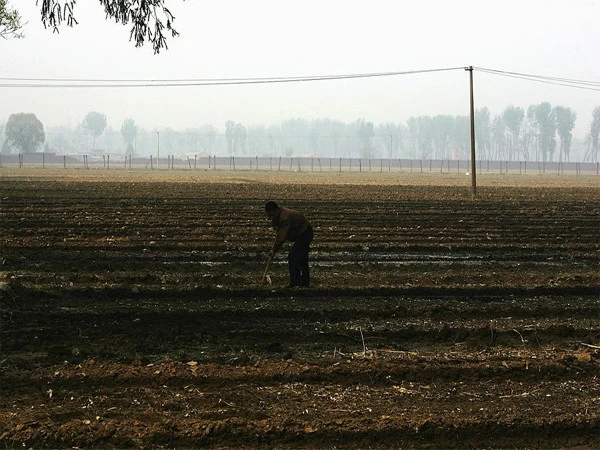
BEIJING: A 67-year-old farmer in China has reportedly lost his entire sesame crop after following pesticide and weed-control advice generated by an artificial intelligence assistant.
The farmer, identified in local reports as Wu from Chuzhou in Anhui province, had been using an AI application for agricultural guidance for about a year. He sought advice on various aspects of farming, including crop care, fertiliser use and pest and weed management.
After initially seeing positive results from the technology, Wu became increasingly confident in its recommendations. He later followed an AI-generated pesticide recommendation without first verifying it with an agricultural specialist.
According to reports, Wu asked the AI application for advice on controlling weeds and pests in his sesame field. The system recommended a chemical treatment, which he applied to his crop.
The results became apparent within a day. The sesame seedlings across approximately 150 mu, or about 24.7 acres, were severely damaged and largely destroyed.
Agricultural research has previously shown that some herbicides can cause serious damage to sesame. A field study published in Crop Protection found that plots treated with flufenacet had poor sesame emergence and little or no yield in the conditions studied.
Reports on the Chinese case said the farmer later returned to the AI system to ask why the damage had occurred. The incident has raised concerns about using AI-generated recommendations for agricultural decisions where incorrect information can have immediate and costly consequences.
The case also highlights a broader limitation of AI systems: even when an AI tool has provided useful information repeatedly, individual recommendations can still be inaccurate or unsuitable for a specific situation.
Experts and agricultural specialists therefore recommend independently verifying AI-generated advice before applying pesticides, herbicides or other agricultural chemicals, particularly because the appropriate product, dosage and application method can depend on the crop, growth stage, soil, weather and local regulations.
The incident has become another example of why AI should be treated as an information-support tool rather than a substitute for qualified professional advice in agriculture and other high-stakes fields.
Also Read :Ginger May Offer More Than Just Flavor