
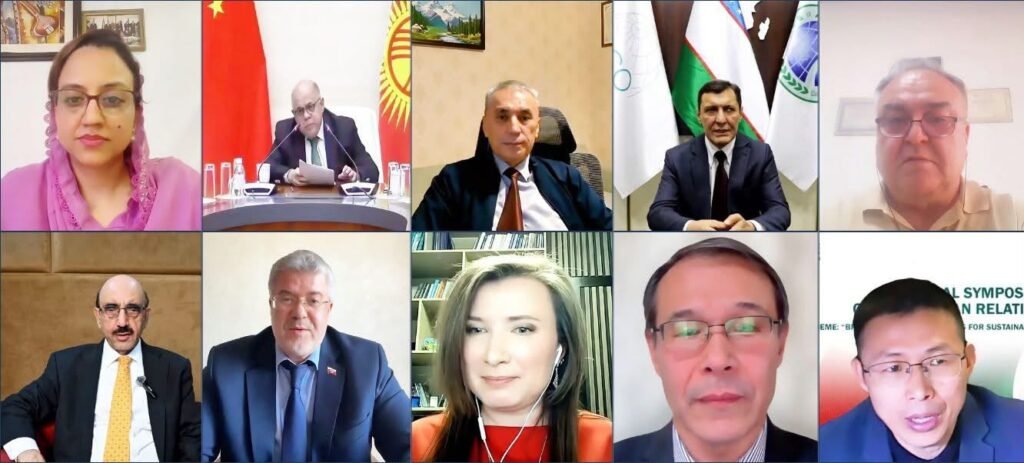
ISLAMABAD: The Institute of Peace and Diplomatic Studies (IPDS) hosted a regional dialogue on Pakistan’s upcoming Shanghai Cooperation Organisation chairmanship in 2027, bringing together diplomats, policy experts and academics from across Eurasia to discuss the bloc’s priorities, challenges and future direction.
The webinar, titled “Post Bishkek SCO Summit 2026: Decisions, Challenges and Pakistan’s Chairmanship 2027,” featured participants from Pakistan, Russia, Uzbekistan, Tajikistan, China, Kyrgyzstan and Kazakhstan.
Ambassador Sohail Khan, Deputy Secretary-General of the SCO, reviewed the key outcomes of the 26th SCO Summit and outlined major areas expected to shape Pakistan’s 2027 chairmanship.
These included information technology and artificial intelligence, energy, poverty reduction and development, humanitarian cooperation and broader regional coordination.
Dr. Farhat Asif, President of IPDS, highlighted Pakistan’s engagement with the SCO and the institute’s growing research work through initiatives including the SCO Observatory and SCO Commitment Tracker.
Participants also examined regional connectivity, investment cooperation, logistics, human security, multipolar diplomacy and people-to-people engagement.
The discussion focused on how Pakistan could use its 2027 chairmanship to translate regional consensus into practical cooperation and address unresolved challenges facing the SCO.
Speakers included former Pakistani ambassador Masood Khan, Prof. Kubanychbek Taabaldiev of Kyrgyzstan, Stanislav Korolev of Russia’s National Center for People’s Diplomacy of the SCO, Sheradil Baktygulov of Kyrgyzstan’s Institute for World Politics Study, Dr. Shamsiddin Karimov of Tajikistan, Dr. Lidiya Parkhomchik of Kazakhstan and Kabuljon Sabirov of Uzbekistan.
The event continued IPDS’ post-SCO Summit dialogue series, aimed at bringing regional perspectives together on the future of cooperation across Eurasia.