
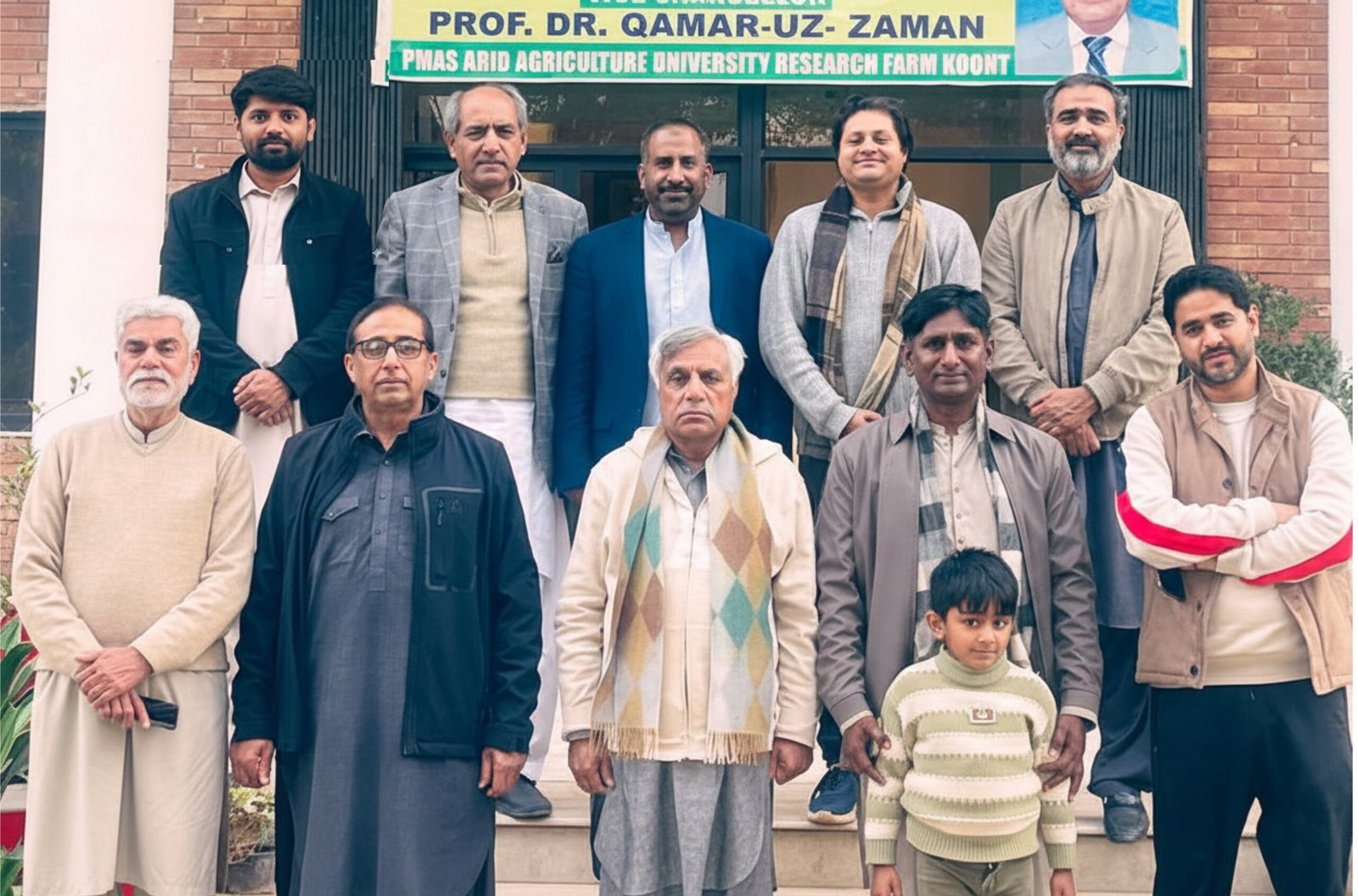
RAWALPINDI: Vice Chancellor of Pir Mehr Ali Shah Arid Agriculture University Rawalpindi (PMAS-AAUR), Qamar-uz-Zaman, visited the Center for Modern Agriculture and Water-Efficient Technologies at the University Research Farm (URF), Koont, to review ongoing research and development initiatives focused on sustainable and technology-driven farming practices.
During the visit, the Vice Chancellor received detailed briefings on key projects being implemented at the research farm, including the Artificial Insemination Project, the Honey Bee Development Project, and research trials on various field crops and vegetables. He also toured field laboratories where scientists and students are engaged in experiments aimed at improving crop genetics, soil health, and resource-efficient agricultural systems.
Also Read: Dr. Muhammad Waqas earns PhD from Agriculture University Peshawar
Dr. Tahir Iqbal, Focal Person of the Pak-China Center for Modern Agriculture, briefed the Vice Chancellor on mechanized wheat cultivation projects being carried out under high-efficiency irrigation systems. The briefing highlighted the application of precision agriculture technologies and innovative irrigation methods designed to enhance water productivity and crop yields, particularly in arid and semi-arid regions of Pakistan.
Director University Research Farm, Dr. Ghulam Qadir, provided an overview of ongoing research activities and emphasized collaborative efforts between faculty members, postgraduate students, and partner organizations. He noted that these initiatives aim to introduce modern farming techniques while improving farmers’ livelihoods through practical and field-oriented innovations.
Appreciating the efforts of researchers and faculty, Prof. Dr. Qamar-uz-Zaman stressed the importance of applied research that directly benefits farmers and contributes to strengthening Pakistan’s agricultural economy. He urged scientists to prioritize projects that enhance productivity, conserve natural resources, support national food security, and create opportunities for export-oriented agricultural growth.
“The goal is to make research impactful from lab to land,” the Vice Chancellor said, adding that every initiative must focus on improving productivity, conserving water and other resources, and uplifting the farming community to ensure Pakistan’s agriculture remains globally competitive.
The visit concluded with an interactive session with researchers and staff, during which the Vice Chancellor highlighted the importance of collaborative research and continuous innovation to address challenges related to climate change, water scarcity, and rising food demand in the country.



 Today's E-Paper