
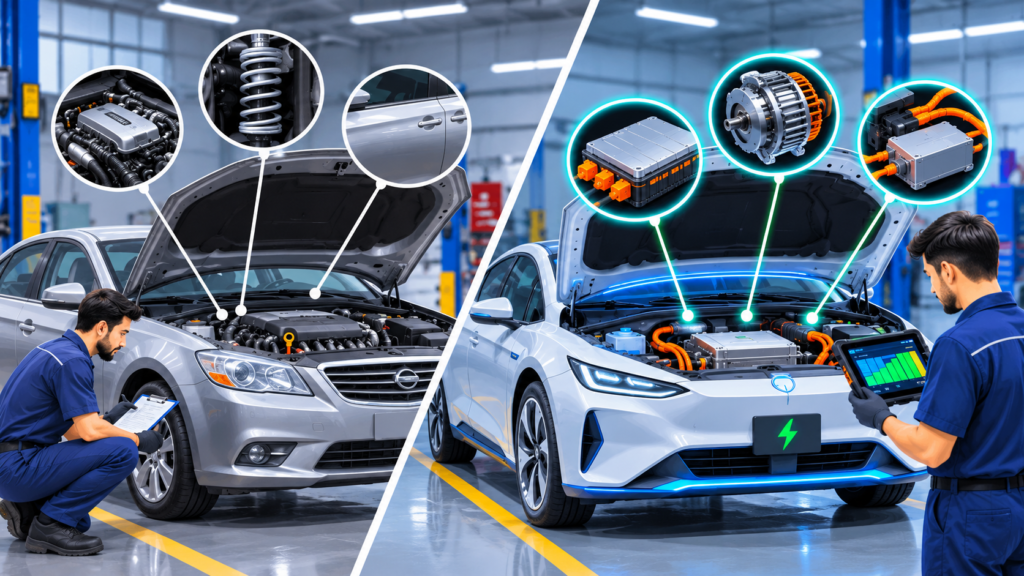
Buying a used hybrid or electric vehicle (EV) can offer significant fuel savings and lower running costs. However, hidden battery problems, damaged electrical components and undocumented repairs can turn an apparently attractive deal into an expensive investment.
Unlike conventional petrol-powered vehicles, hybrid and electric cars feature sophisticated electrical systems that require additional inspection before purchase.
According to an automotive guide published by PakWheels, conventional vehicle inspections remain essential, but buyers should also arrange specialist assessments of traction batteries, electric motors, inverters and charging systems.
Popular vehicles such as the Toyota Aqua, Toyota Prius, Honda Vezel, Nissan Leaf and BYD Atto 3 have different powertrain configurations, making model-specific inspections particularly important.
Why Hybrid and Electric Cars Require Special Inspections
A conventional petrol car primarily relies on its engine, transmission and fuel system. Hybrid vehicles combine a combustion engine with an electric motor, while fully electric vehicles depend entirely on electric propulsion.
These differences introduce additional components that may require specialised diagnostic equipment.
| Inspection Area | Petrol | Hybrid | Electric |
|---|---|---|---|
| Body and chassis | Required | Required | Required |
| Suspension and steering | Required | Required | Required |
| Engine and fuel system | Required | Required | Not applicable |
| Traction battery | Not applicable | Required | Required |
| Electric motor and inverter | Not applicable | Required | Required |
| High-voltage wiring | Not applicable | Required | Required |
| External charging system | Not applicable | Plug-in models only | Required |
| Diagnostic scanning | Required | Required | Required |
Six Essential Checks Before Buying a Used Hybrid or EV
1. Check Battery Health, Not Just Charge Level
The traction battery is among the most expensive components of a hybrid or electric vehicle.
Buyers should understand the difference between two important battery indicators:
State of Charge (SOC): Indicates how much of the available battery capacity is currently charged.
State of Health (SOH): Estimates the battery’s condition compared with its original or reference performance.
For example, an electric vehicle originally equipped with 50kWh of usable battery capacity may retain only 40kWh after degradation. Although its dashboard may display a 100 percent charge, its retained capacity would be approximately 80 percent of the original figure.
A specialist diagnostic assessment can help identify battery degradation, module voltage differences and recorded faults.
2. Inspect the Battery Cooling System
Pakistan’s high summer temperatures make battery cooling particularly important.
Some hybrid vehicles use air-cooled batteries, while others feature liquid cooling systems. Dust, debris, blocked ventilation, coolant leaks and malfunctioning pumps can affect cooling performance.
Prolonged exposure to excessive heat may accelerate battery deterioration and reduce its useful life.
3. Examine the Electric Motor and Inverter
The electric motor provides propulsion, while the inverter regulates the electrical power supplied to it.
Faults in these components can affect acceleration, power delivery and overall vehicle performance.
A professional inspection should identify unusual drivetrain noises, diagnostic errors, visible damage and evidence of previous electrical repairs.
High-voltage components must only be inspected or handled by appropriately trained technicians using suitable safety equipment.
4. Test the Charging System
Buyers of fully electric and plug-in hybrid vehicles should confirm that their cars are compatible with locally available charging infrastructure.
Imported vehicles may use different charging standards, including Type 2, CCS, CHAdeMO and GB/T.
The charging inspection should cover the condition of the charging port, cables, connectors and supported charging functions.
Successful AC charging does not necessarily mean that the vehicle’s DC fast-charging system is functioning correctly. Both should be tested separately where supported.
5. Assess the Regenerative Braking System
Hybrid and electric vehicles recover energy during deceleration through regenerative braking.
Although this technology can reduce conventional brake pad wear, less frequent use of friction brakes may contribute to brake disc corrosion.
Buyers should inspect brake pads, discs, calipers and brake fluid while checking braking consistency during a professional test drive.
6. Inspect the 12-Volt Battery
Even vehicles equipped with large traction batteries commonly rely on a separate low-voltage battery to operate electronic systems, accessories and startup functions.
A weak 12-volt battery can trigger warning messages or prevent a vehicle from starting, even when its main battery is fully charged.
Has the Hybrid Battery Been Repaired or Replaced?
A seller’s claim that a hybrid battery has recently been replaced should not automatically be interpreted as the installation of a brand-new battery pack.
In some cases, individual battery modules may have been replaced or a reconditioned battery installed.
| Seller’s Claim | What Buyers Should Verify |
|---|---|
| Battery recently replaced | Whether the entire battery pack was replaced |
| Brand-new battery installed | Original purchase invoice |
| Battery repaired | Nature of the original fault and repair history |
| Battery under warranty | Warranty provider, coverage and validity |
| Excellent battery condition | Recent specialist diagnostic report |
Undocumented battery repairs should be professionally assessed before completing the purchase.
Accident and Flood Damage Can Pose Hidden Risks
Many electric vehicles have their traction batteries installed beneath the passenger compartment, making underbody inspections particularly important.
Road debris, unusually high speed breakers and accidents can potentially damage battery enclosures.
Flood exposure may also cause corrosion, connector damage and electrical insulation problems.
Buyers should pay particular attention to dents or deformation around the battery enclosure, structural repairs near battery mounting points, signs of water exposure and undocumented electrical work.
Vehicles suspected of having battery enclosure damage or water intrusion should undergo specialist assessment before being purchased or charged.
Used Hybrid and Electric Car Inspection Checklist
Pre-purchase inspection checklist
0/10 completed
Reset
Does a Hybrid Car Still Need an Engine Inspection?
Hybrid vehicles continue to rely on conventional combustion engines and require regular maintenance.
Buyers should inspect engine oil, coolant, potential oil leaks, unusual vibrations and maintenance records.
Transmission systems also differ between models. For example, the first-generation Honda Vezel Hybrid features a seven-speed dual-clutch transmission, while the Toyota Aqua uses a hybrid transaxle.
Even a healthy hybrid battery cannot compensate for serious engine or transmission problems.
Verify Documents and Battery Warranty
Buyers of imported Japanese vehicles should verify auction sheets, registration documents and import records.
However, an auction sheet only reflects the vehicle’s recorded condition at the time of inspection before export.
Buyers should also request battery diagnostic reports, maintenance records, repair invoices, manufacturer recall records and warranty documentation.
For privately imported electric vehicles, it is particularly important to establish whether the manufacturer’s battery warranty remains valid in Pakistan.
A Professional Inspection Can Prevent Costly Repairs
A conventional vehicle inspection provides valuable information about mechanical, structural and general electrical components. However, specialist battery capacity testing, high-voltage insulation assessments and charging diagnostics may require additional expertise and equipment.
Buyers should confirm the scope of an inspection before booking it.
While hybrid and electric vehicles offer attractive running costs, expensive battery, inverter or transmission repairs can significantly reduce their financial benefits.
The condition of the vehicle, anticipated repair expenses and available warranty coverage should be considered alongside its purchase price before making a final decision.