
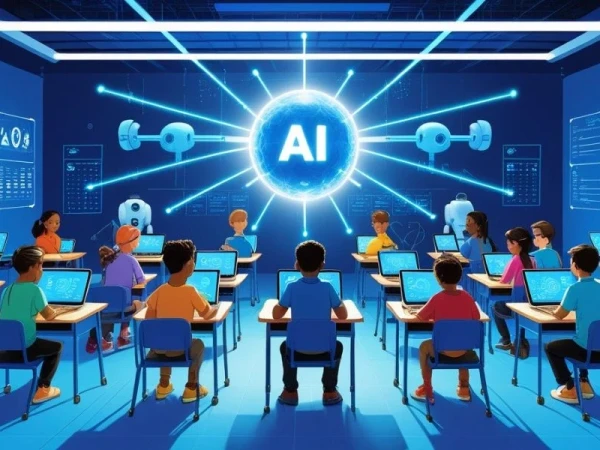
October 11, 2026: The use of artificial intelligence in American classrooms is growing rapidly, with more than half of US teenagers now saying they have turned to AI chatbots for help with schoolwork.
A Pew Research Center survey found that 54% of US teens aged 13 to 17 have used AI chatbots for schoolwork, while one in 10 said chatbots help them complete all or most of their assignments.
The findings show how tools such as ChatGPT and other AI-powered assistants are becoming part of students’ everyday academic routines, from researching topics and solving problems to editing written work.
One in 10 Teens Use Chatbots for Most Schoolwork
According to Pew, 21% of teenagers said chatbots help with some of their schoolwork and another 23% said they use them for a small portion of their assignments.
Meanwhile, 45% said they do not use chatbots for schoolwork.
Research and mathematics were among the most common academic uses of AI, while 35% of teens said they had used chatbots to edit something they had written.
The survey also found that teenagers generally view the technology as useful. Around a quarter said chatbots had been extremely or very helpful with schoolwork, while another quarter described them as somewhat helpful.
73% of UCLA Students Report Using Generative AI
Separate research among university students has also pointed to widespread adoption of generative AI.
A UCLA survey of its Class of 2025 found that 73% of respondents had used generative AI tools to support their coursework.
Students most commonly used the technology to research topics, brainstorm for writing projects or presentations and prepare for exams.
The UCLA findings showed that 31% used AI to draft responses to written assignments, while 30% used it to generate code and 25% for language translation related to coursework.
The 73% figure therefore relates specifically to the UCLA survey and should not be interpreted as representing all students across the United States.
AI Use Widespread Across Global Universities
Another 2026 survey suggests AI use has become commonplace across higher education internationally.
Coursera surveyed more than 4,200 university students and faculty members in the United States, United Kingdom, India, Saudi Arabia and Mexico and found that more than 95% had used AI tools in an educational context.
The report also found that 81% of respondents believed AI was having a positive impact on higher education, although educators differed considerably in how prepared they felt to use the technology effectively.
AI Becomes Part of Everyday Learning
The findings highlight how quickly generative AI has moved from an emerging technology to a regular academic tool for many students.
AI chatbots can help students research subjects, understand difficult concepts, brainstorm ideas, solve problems and improve writing. At the same time, their growing role in assignments has intensified debate over academic integrity and how much work students should delegate to artificial intelligence.
Pew found that 59% of US teens believe students at their schools use AI to cheat at least somewhat often, showing that the rapid adoption of the technology is also creating challenges for teachers and schools.
As AI tools become more deeply embedded in education, schools and universities are increasingly faced with the task of deciding where legitimate AI-assisted learning ends and inappropriate reliance on the technology begins.