
WASHINGTON: The U.S. military is preparing contingency plans for potentially sustained, weeks-long operations against Iran if President Donald Trump authorizes military action, two U.S. officials told Reuters. The preparations come as U.S. envoys are set to resume nuclear talks with Iranian representatives in Geneva, placing diplomacy and military readiness on parallel tracks.
The officials, speaking on condition of anonymity due to the sensitivity of the planning, said the scope under consideration could extend beyond previous limited strikes. The development heightens tensions at a moment when negotiations are being mediated by Oman and regional security concerns remain elevated.
Expanded military deployment in the Middle East
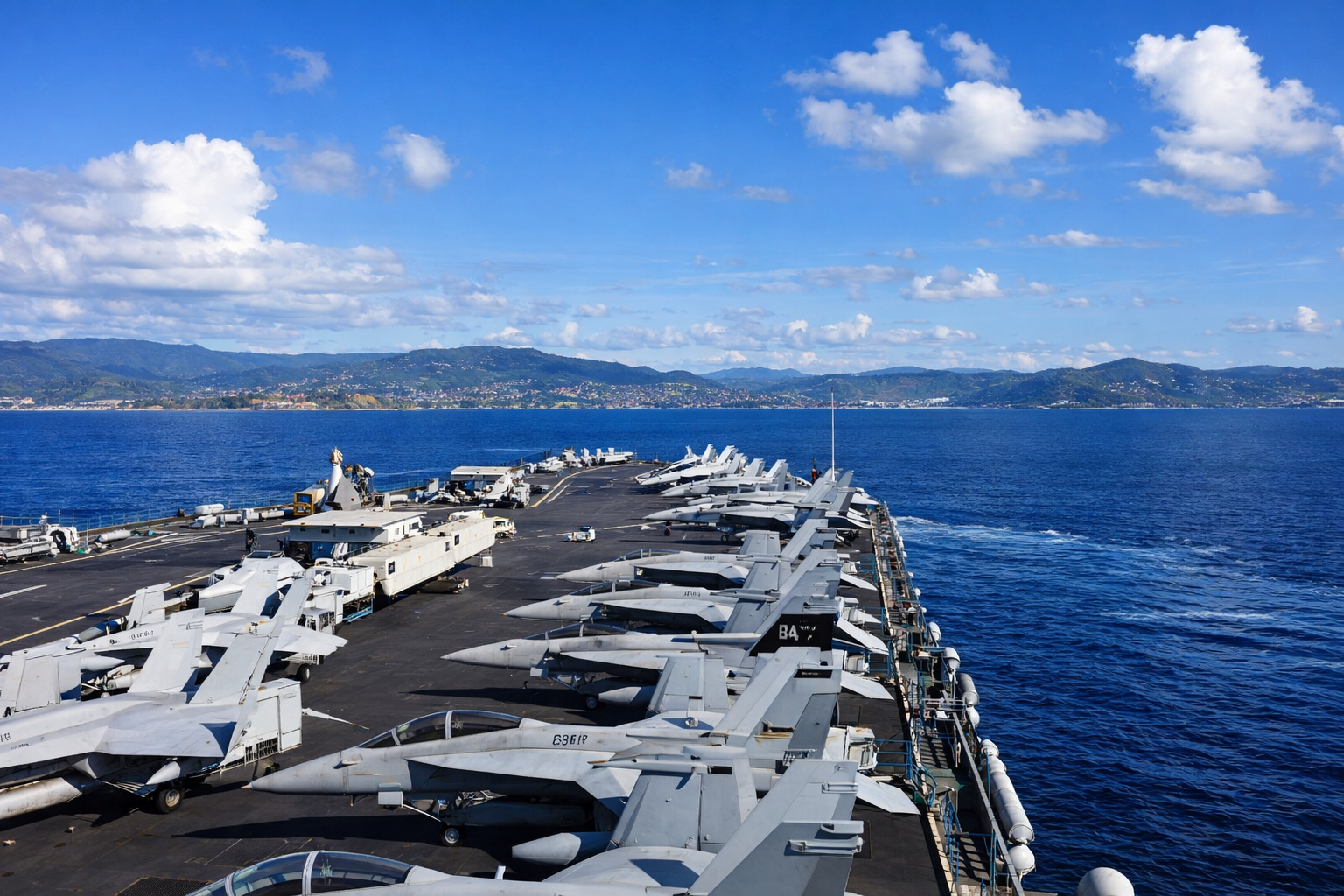
U.S. officials confirmed that the Pentagon is sending an additional aircraft carrier to the region, alongside fighter aircraft, guided-missile destroyers and thousands of troops. The deployment would strengthen both offensive strike capabilities and defensive protection for U.S. forces and regional bases.
Also Read: US deploys additional missile defenses amid rising Iran tensions
The United States maintains military installations in Jordan, Kuwait, Saudi Arabia, Qatar, Bahrain, the United Arab Emirates and Turkey. Iranian officials have previously warned that U.S. bases in the region could be targeted in response to any attack.
The Pentagon declined to comment on specific operational details.
More complex planning than prior operations
Last year, U.S. forces carried out a limited strike known as “Midnight Hammer,” in which stealth bombers flew from the United States to hit Iranian nuclear facilities. Iran responded with a limited retaliatory strike on a U.S. base in Qatar.
According to officials familiar with current contingency discussions, planning now involves scenarios that could include additional state and security infrastructure if authorized. One official said the United States expects Iran would retaliate in the event of sustained military action, potentially leading to extended exchanges.
President Trump has repeatedly said that all options remain available regarding Iran. Speaking after a military event at Fort Bragg in North Carolina, he said a change in Iran’s government “seems like that would be the best thing that could happen,” though he did not identify any specific alternative leadership. Trump has also previously expressed skepticism about deploying U.S. ground forces, stating that “the last thing you want to do is ground forces.”
The military assets positioned in the region indicate that current options under review focus primarily on air and naval power.
Nuclear diplomacy resumes in Geneva
Despite the military buildup, diplomatic engagement continues. U.S. envoys Steve Witkoff and Jared Kushner are scheduled to meet Iranian representatives in Geneva, with Oman acting as mediator.
Secretary of State Marco Rubio said the administration prefers a negotiated outcome but acknowledged that reaching an agreement would be difficult.
Iran has stated it is prepared to discuss limits on its nuclear programme in exchange for sanctions relief but has ruled out linking negotiations to its ballistic missile programme.
Israeli Prime Minister Benjamin Netanyahu met Trump in Washington this week and said that any agreement must include elements vital to Israel’s security.
Regional and political implications
Security experts have warned that sustained operations against Iran would carry significant risks, including the possibility of broader regional conflict. Iran maintains a substantial missile arsenal capable of targeting U.S. and allied facilities.
Any prolonged confrontation could affect shipping routes, energy infrastructure and global oil markets, which are sensitive to instability in the Middle East.
Meanwhile, Iranian opposition figure Reza Pahlavi said in an interview that U.S. military intervention could weaken Iran’s ruling establishment and potentially accelerate political change. His remarks highlight differing perspectives among Iranian political factions regarding external pressure.
U.S. officials stressed that contingency planning does not indicate an imminent strike. The trajectory of events may depend on the outcome of the Geneva talks and decisions made in Washington in the coming days.


 Today's E-Paper