
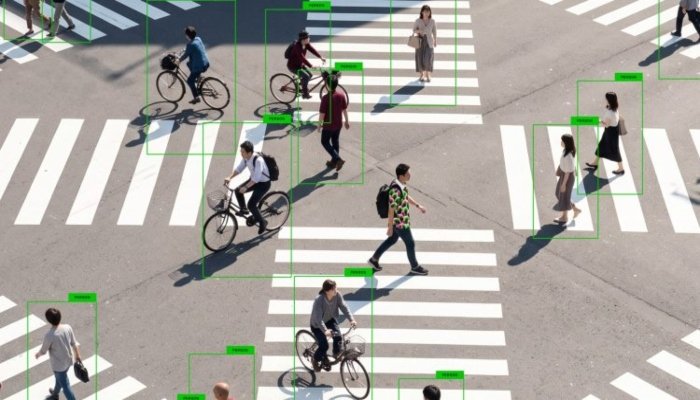
BERLIN: As artificial intelligence-powered surveillance becomes increasingly common, an unusual shirt has been designed to exploit weaknesses in the way some AI vision systems identify people.
Known as “Digital Camouflage,” the brightly patterned shirt was developed by artist and technologist Simon Weckert. Its unconventional design is intended to confuse AI-based camera systems and make it harder for them to recognize the person wearing it as a human.
Weckert says AI systems identify people by analyzing visual patterns learned from millions of training images. According to him, these systems rely on specific visual cues to determine what they are seeing, creating potential weaknesses that can be exploited.
The Digital Camouflage shirt uses a deliberately complex and colorful pattern designed to interfere with those visual recognition processes.
Although the shirt may appear unusual or unattractive to the human eye, Weckert says it performed differently when tested against certain AI systems. According to his demonstrations, the systems struggled to detect or correctly identify a person wearing the shirt.
The concept highlights a broader issue surrounding the growing use of AI-powered cameras in public and private spaces. As automated systems become more capable of recognizing and classifying people, researchers and artists are also exploring ways to understand their limitations.
However, the shirt should not be considered a universal method of avoiding AI surveillance. Its effectiveness can vary depending on the camera, AI model, lighting conditions, distance and recognition technology being used.
The project illustrates a growing technological arms race between increasingly sophisticated visual surveillance systems and techniques designed to expose or exploit their weaknesses.