

Power has always tested the character of those who possess it. When authority falls into the hands of an individual, the desires rooted deep within human nature often grow stronger. Yet history also bears witness to personalities who restrained their ambitions, controlled their impulses, and earned respect not through the display of power but through its careful limitation. The exercise of authority, therefore, has long remained a measure of moral discipline as much as political capability.
The history of the presidency of the United States offers an illuminating reflection of this enduring tension between power and restraint. Since the independence of the United States in 1776, forty-seven individuals have occupied the office of president. In the early decades of the republic, American leaders were primarily preoccupied with the consolidation of their young nation. But as the country gradually emerged from internal struggles and global conflicts with increasing economic and military strength, a profound transformation occurred. The United States began to perceive itself not merely as a sovereign state but as a power with global responsibilities and influence.
With this transformation came a new dimension to presidential authority. American presidents increasingly found themselves shaping not only domestic policy but also the political and military affairs of distant regions. As the twentieth century unfolded, many of them began to act with the conviction that global stability and international order could be influenced—or even directed—through American leadership. In certain moments this sense of responsibility inspired constructive engagement, but in other instances it encouraged the use of military power in ways that critics later questioned both politically and morally.
Historically, the United States has formally declared war only eleven times, all of them concentrated within five major conflicts. The authority to declare war constitutionally rests with Congress, yet the decisions leading to those declarations were shaped by presidential leadership. The first such declaration occurred during the presidency of James Madison, when the War of 1812 was declared against the United Kingdom. Decades later, President James K. Polk led the nation into the Mexican–American War in 1846, a conflict that ultimately ended with the Treaty of Guadalupe Hidalgo and dramatically expanded American territory.
At the close of the nineteenth century, President William McKinley presided over the Spanish–American War, which marked the beginning of America’s emergence as an overseas power. The early twentieth century brought even larger responsibilities when President Woodrow Wilson led the United States into the First World War in 1917, declaring war on Germany and later on Austria-Hungary. The final and most expansive declarations of war came under President Franklin D. Roosevelt following the attack on Pearl Harbor in December 1941, drawing the United States fully into the Second World War against Japan, Germany, and Italy, along with several allied states of the Axis powers.
Yet formal declarations of war represent only a fraction of the military engagements undertaken by the United States. Over the course of its history, the country has participated in dozens of armed conflicts without issuing an official declaration. Particularly after the Second World War, the pattern of military involvement changed significantly. Presidents increasingly relied on congressional resolutions, international mandates, or executive authority to deploy American forces abroad.
President Harry S. Truman’s decision to intervene in the Korean War in 1950 stands as a notable example. The conflict was described not as a war but as a “police action” conducted under the auspices of the United Nations, yet it involved large-scale combat against North Korean forces. His successor, Dwight D. Eisenhower, oversaw the conclusion of that conflict while also initiating early American involvement in Vietnam.
The Vietnam War later expanded dramatically under President Lyndon B. Johnson following the Gulf of Tonkin Resolution in 1964, which authorized extensive military operations against North Vietnam. President Richard Nixon continued the war until the Paris Peace Accords of 1973 brought an end to direct American involvement. These years illustrated how military engagements could evolve into prolonged conflicts even without formal declarations of war.
Later decades witnessed further examples of presidential military authority. President George H. W. Bush led the international coalition during the Persian Gulf War of 1990–1991 against Iraq following its invasion of Kuwait. His son, President George W. Bush, launched the war in Afghanistan in 2001 after the attacks of September 11 and later initiated the Iraq War in 2003. President Barack Obama continued military operations in both countries while authorizing intervention in Libya in 2011 against the forces of Muammar Gaddafi.
Beyond these major conflicts, numerous smaller-scale interventions have occurred. President Ronald Reagan ordered the invasion of Grenada in 1983 and conducted airstrikes against Libya in 1986. President Bill Clinton authorized NATO’s bombing campaign in Kosovo in 1999 and several operations against Iraq. President Donald Trump later ordered missile strikes against Syrian government targets in 2017 and 2018. These actions, often described as interventions rather than wars, nonetheless demonstrated the expanding scope of presidential authority in military affairs.
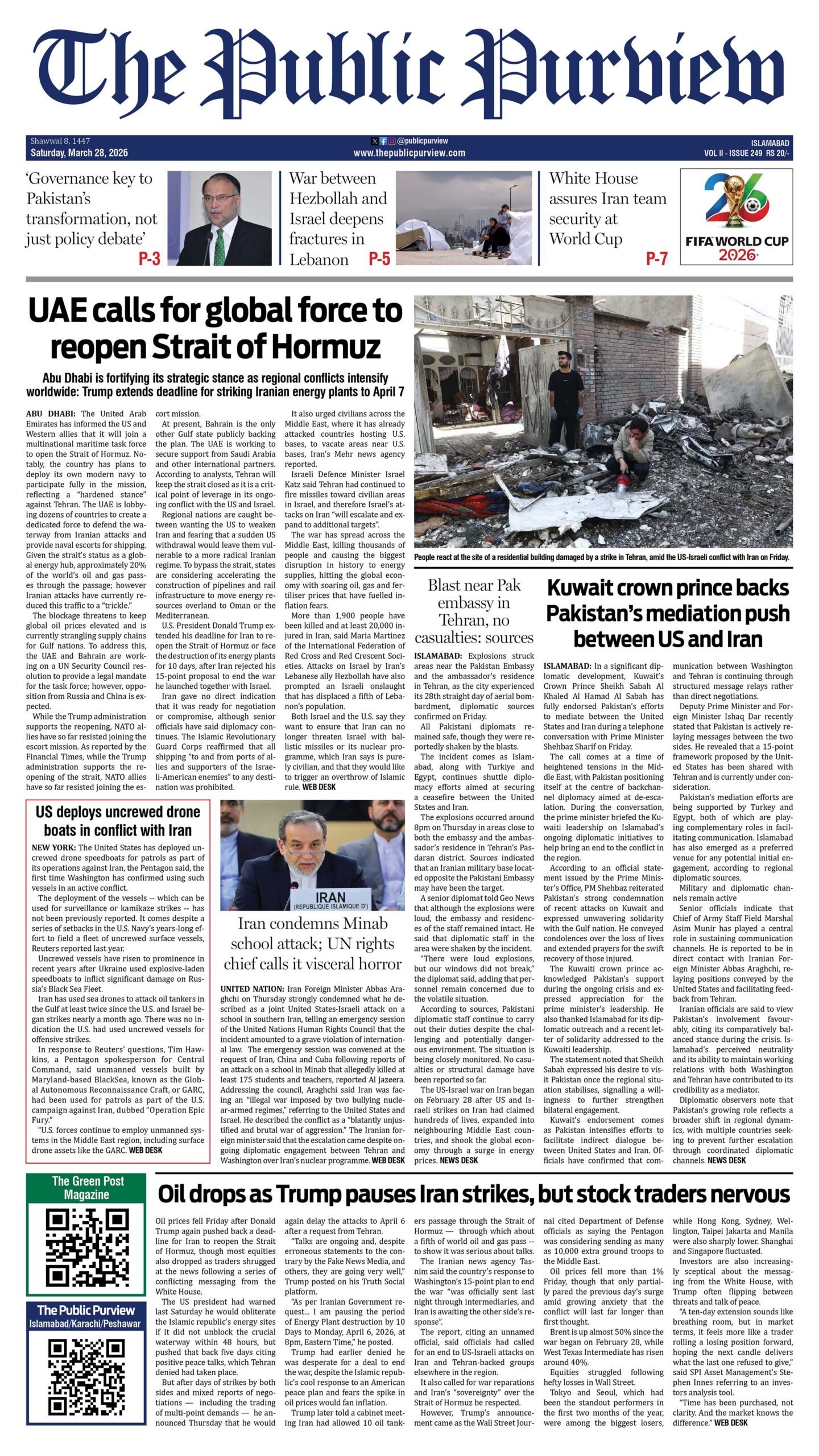
The pattern of engagement has continued into the present era. A significant escalation occurred on February 28, 2026, when the United States, alongside Israel, initiated large-scale military operations against Iran. The campaign, known as Operation Epic Fury by the United States and Operation Roaring Lion by Israel, followed weeks of mounting tensions, stalled nuclear negotiations, and allegations concerning Iran’s regional military activities. Coordinated airstrikes employing advanced weaponry—including cruise missiles, stealth aircraft, strategic bombers, and drones—targeted Iranian leadership compounds, missile installations, air defense systems, naval assets, and military infrastructure across several regions, including the capital, Tehran.
The military campaign soon ignited an intense constitutional debate in Washington. Several members of Congress argued that the United States Constitution grants the authority to declare war exclusively to Congress and that sustained military operations required explicit legislative approval. In response, a bipartisan group of lawmakers introduced resolutions under the War Powers framework seeking to restrict the continuation of the conflict unless formally authorized by Congress.
However, both chambers of Congress ultimately rejected these efforts. The United States Senate voted by a margin of 53 to 47 against a resolution intended to limit the president’s authority to continue military operations against Iran, effectively allowing the campaign to proceed. Shortly afterward, the House of Representatives also rejected a similar war powers measure by a narrow vote of 219 to 212, declining to compel the administration to halt military action.
These decisions reflected the deep political divisions within American politics over questions of war powers, national security, and presidential authority. Supporters of the administration argued that restricting military action during an ongoing confrontation could weaken American deterrence and endanger allied forces in the region. Critics, however, warned that bypassing Congress risked eroding constitutional safeguards designed to prevent unilateral decisions that might draw the nation into prolonged conflict.
Meanwhile, the military confrontation itself has already widened. Iran responded with missile and drone attacks against American military facilities and regional partners across the Gulf, including installations in Bahrain, Kuwait, Qatar, and the United Arab Emirates, while also directing strikes toward Israel. The cycle of action and retaliation has heightened fears that a regional crisis could gradually evolve into a broader and more destructive conflict.
Such developments once again revive enduring questions about the relationship between power and restraint. The presidency of the United States remains one of the most influential political offices in the modern world. Decisions taken in the Oval Office can alter the strategic balance of entire regions and shape the fate of millions far beyond American shores. History suggests that while power may tempt leaders toward decisive action, the true test of leadership lies in the wisdom to distinguish between necessity and ambition. The legacy of any statesman is ultimately measured not merely by the wars he wages, but by the peace he preserves.


 Today's E-Paper