
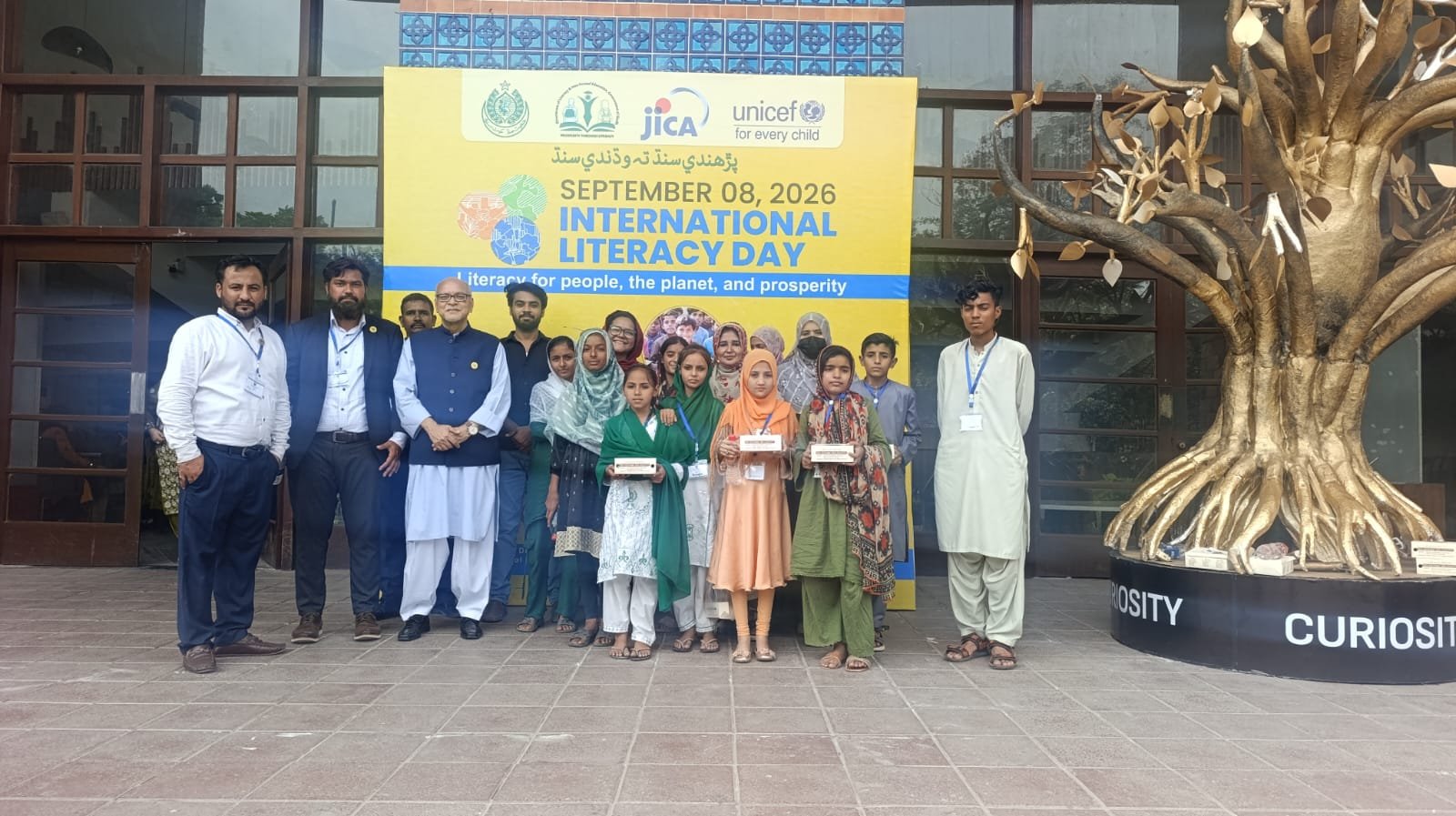
KARACHI, September 9, 2026: Teach the World Foundation (TTWF) marked International Literacy Day 2026 by showcasing its live Digital MicroSchool model at the Arts Council of Pakistan in Karachi.
The interactive classroom demonstration was a key feature of the flagship event organized by the Directorate of Literacy and Non-Formal Education, School Education & Literacy Department, Government of Sindh.
Held in line with this year’s International Literacy Day theme, “Literacy for People, the Planet and Prosperity,” the event brought together government officials, development partners, educationists and civil society organizations to highlight scalable approaches to inclusive and sustainable education.
TTWF recreated a fully functional digital non-formal learning environment at the event, allowing visitors to see how out-of-school children can develop foundational literacy and numeracy skills through software-equipped tablets, interactive gamified content and support from trained local facilitators.
A key feature of the demonstration was the Foundation’s mobile solar power unit, which operated the entire setup. The initiative highlighted how digital education can continue in communities facing unreliable electricity or limited access to the power grid while maintaining an environmentally responsible approach.
Speaking at the event, TTWF President Arshad Anis stressed the importance of practical innovation in underserved communities.
“With millions of out-of-school children across Pakistan, we cannot afford to rely on traditional solutions alone,” he said, adding that platforms such as the International Literacy Day event provide an opportunity to promote actionable solutions.
He said the Digital MicroSchool model provides a scalable framework for taking quality education directly to underserved communities while helping children transition toward formal schooling.
The model has been designed to address Pakistan’s education challenges through compact community-based learning spaces equipped with tablets loaded with adaptive educational software. Locally recruited facilitators guide students, while flexible daily shifts allow a single location to accommodate multiple groups of learners.
By combining digital learning tools with clean, mobile solar energy, TTWF aims to expand access to foundational education in communities where conventional school infrastructure and reliable electricity remain limited.
The Foundation said it continues to work with public institutions and development partners to expand access to basic education and promote more inclusive and sustainable learning opportunities.