
A visionary physician, Hakim Hafiz Abdul Majeed set up a small herbal drug shop in Delhi, India in 1906. Called the Hamdard Dawakhana, the small enterprise progressed, expanded and became a leading manufacturer of herbal medicines and products and a philanthropic institution, having high aims and objectives for the development and standardization of Eastern System of Medicine and selfless service to the humanity, in South Asia, spreading India, Pakistan and Bangladesh within half a century.
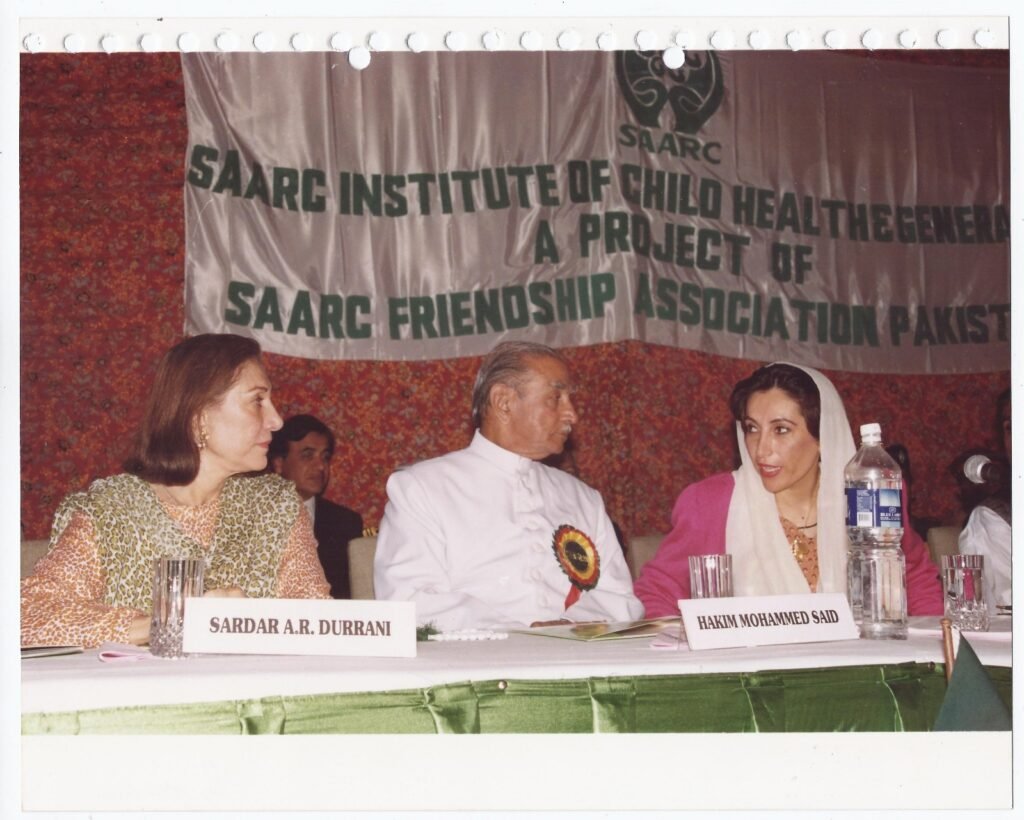
After creation of Pakistan Hakim Mohammed Said, the younger son of Hakim Abdul Majeed migrated to Karachi, the then capital of Pakistan, on 9th January 1948 and founded Hamdard Pakistan in the same year. He started his clinic and preparation of medicines and products at Aram Bagh, Karachi. In order to meet growing demand of Hamdard medicines and products, particularly its popular syrup – Rooh Afza, the first Hamdard Factory was built at Nazimabad, Karachi in 1953. Thereafter Hamdard factories were constructed at Lahore and Peshawar and a large manufacturing unit, Hamdard Industrial Complex (HIC) was also built in Karachi.
At the time when Hamdard enterprise became a lucrative business and Hamdard industry a viable proposition, Hakim Mohammed Said declared it a Waqf unto Almighty Allah on 1st April 1953. Hitherto, the industry and entire business had been the personal property of Hakim Mohammed Said. An Islamic Waqf, by definition, is absolutely irrevocable while a secular Trust is revocable. According to this decision, the profits accruing to Hamdard Laboratories (Hamdard pharmaceutical industry) were to be spent entirely on social uplift and welfare work, chiefly on the development of education, science and culture through Hamdard Foundation Pakistan, established by Hakim Mohammed Said for this purpose.
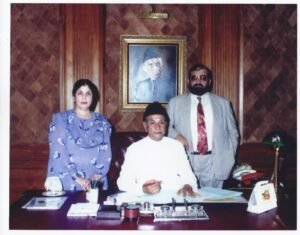
Hamdard’s great achievement is its gigantic project of Madinat al-Hikmah, a dream of Shaheed Hakim Mohammed Said, which has come true. It is a city of education, science and culture, spreading 260 acres of land at Bund Murad Khan on the borders of Sindh and Baluchistan provinces where Main Campus of Hamdard University, and its allied educational institutions, such as HIMS, HIIT and FEST, Hamdard Public School and Hamdard Village etc.
School for the free education of the children of villages, situated in the vicinity of Madinat al-Hikmah, and a hospital for Eastern Medicine, providing free health facilities to the village people and research institutes are running. A vast and well-equipped library of this region Bait al-Hikmah, is situated there and a Centre for Horticulture which is providing free service, guidance and training to the farmers of Sindh is also working there. Recent addition of Environmental Studies Centre and Solar Energy Lab are also made there.
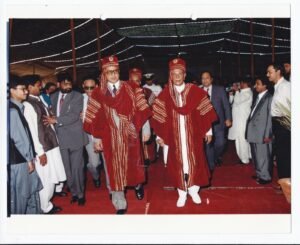
Establishment of Hamdard University, which has two campuses in Karachi and one in Islamabad is no doubt, a great service of Shaheed Hakim Mohammed Said to the nation. This is a seat of learning and excellence which looks always beyond horizon and thinks beyond tomorrow. The mission of Hamdard University as envisage by its Founder is to extend knowledge, stimulate learning and promote understanding for the benefits, of nation and humanity.
After the tragic martyrdom of Hakim Said, the mantle of leadership fell on the unassuming shoulders of his daughter, Mrs Sadia Rashid. She is Chairperson of the Hamdard Laboratories (Waqf) Pakistan – the manufacturing, thus ‘earning’, arm of the organization – and President of Hamdard Foundation Pakistan, which dispenses the funds earned by the former on the various philanthropic and nation-building projects of Hamdard.
Hakim Mohammed Said Shaheed, wrote, edited or compiled over 200 books and journals is Urdu and English on Islam, Education, Pakistan, Science, Medicine and Health. Besides writing travelogues of countries he visited, he also wrote books travelogues especially for youth and children. He also edited some journals such as Hamdard Islamicus, Hamdard Medicus, Journal of the Pakistan Hiastorical Society “Histricus”, Hamdard-e-Sehat and Hamdard Naunehal. For several years he was also editor of ‘PAYAMI” – Urdu edition of UNESCO’S journal “Courier”.
Hakim Mohammed Said Shaheed participated in various international conferences on medicine, science, education and culture and traveled widely to many countries of the world. While in Pakistan he himself organized numerous international and national conferences on topics of prime importance.
Shaheed Hakim Mohammed Said founded “Sham-i-Hamdard” in 1961 to boost literary activities in the country. Later on in 1995 he turned this forum into Shura Hamdard Pakistan, a think tank, to provide brain food to the nation and practical suggestions and recommendations to the powers that be to solve the country’s problems.